
Selecting the wrong IT partner can cost businesses an average of $1.2 million annually in downtime and security breaches. Most companies struggle to evaluate technical capabilities and hidden costs when choosing providers.
We at Clouddle have seen countless businesses make expensive mistakes with outsourced IT solutions. The right partnership transforms operations, while poor choices create ongoing headaches and budget overruns.
What Should You Audit Before Outsourcing IT
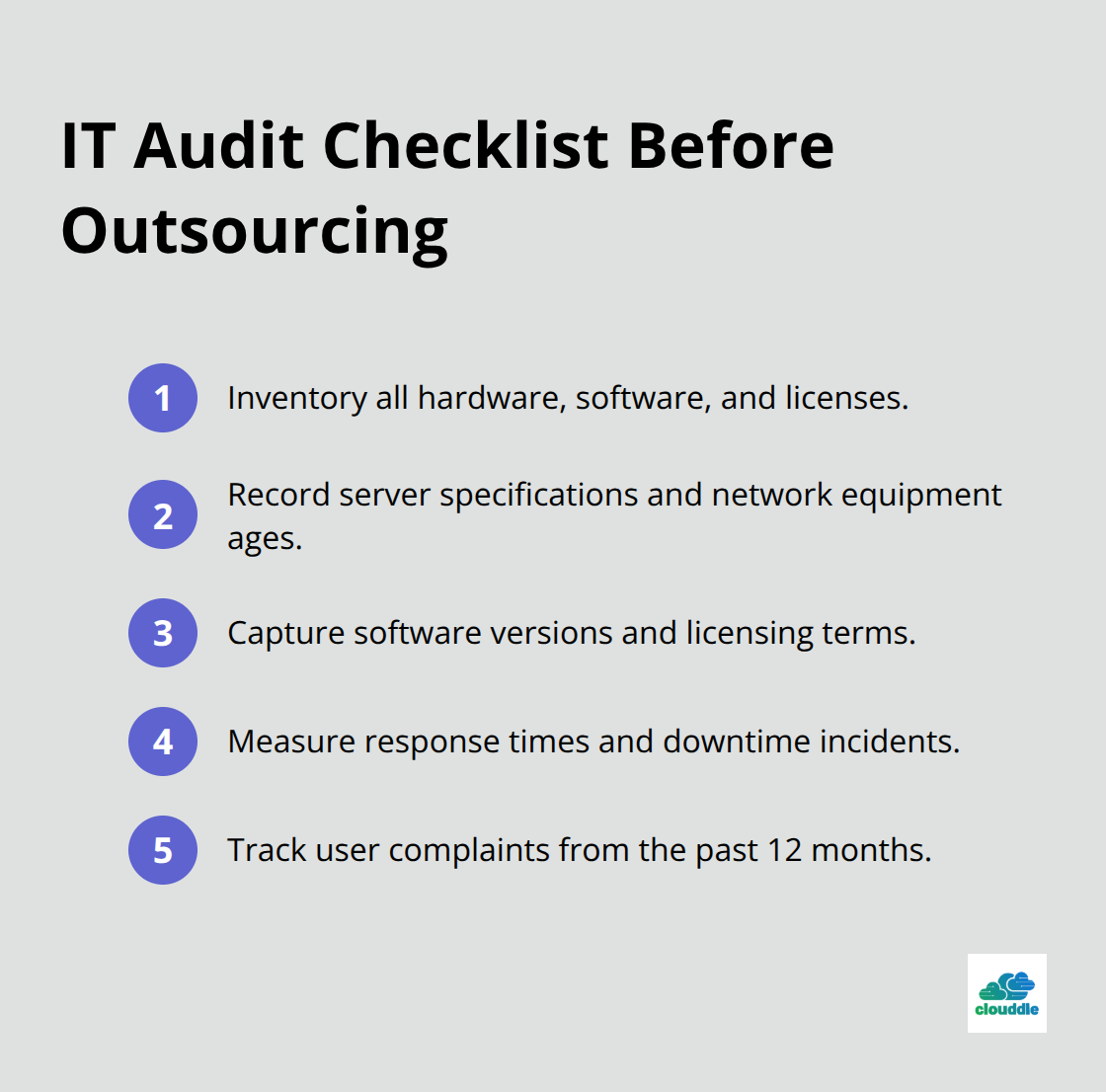
Document every device, software license, and system that currently runs in your organization. Create a comprehensive inventory that includes server specifications, network equipment ages, software versions, and licensing agreements. Map out performance bottlenecks by measuring current response times, downtime incidents, and user complaints over the past 12 months.
Security Assessment Requirements
Run vulnerability scans across all systems and document findings immediately. Check compliance status for regulations that affect your industry, whether HIPAA, SOX, or PCI DSS. Review current backup procedures, disaster recovery plans, and incident response protocols. Most businesses overlook endpoint security gaps and outdated firewall configurations during this phase.
Financial Planning for IT Transformation
Calculate your total current IT spending (including hidden costs like emergency repairs, software renewals, and staff overtime). Project technology needs for the next three years based on planned business growth, new locations, or increased headcount. Factor in one-time migration costs, potential downtime during transitions, and training expenses for new systems. Set aside 15-20% of your projected outsourcing budget for unexpected integration challenges and scope changes that typically emerge during implementation.
Performance Baseline Establishment
Measure current system performance metrics before you engage any provider. Track network speeds, server response times, and application load speeds across different times of day and peak usage periods. Document user productivity levels and identify which systems cause the most frustration or delays. This baseline data becomes essential when you evaluate potential providers and their promised improvements.
Once you complete this comprehensive audit, you’ll have the foundation needed to evaluate potential IT partners effectively.
What Makes an IT Partner Worth Your Investment
Technical expertise separates competent providers from expensive mistakes. Demand certifications from Microsoft, Cisco, CompTIA, and other major vendors that align with your technology stack. Ask for specific examples of similar implementations in your industry and request contact information for three recent clients who faced comparable challenges. The global IT outsourcing market is about to reach $812.71 billion by 2029, surging at a CAGR of 8.28 percent. Verify their team’s credentials and request resumes of key personnel who will work on your account, including their years of experience with your specific systems and compliance requirements.
Response Time Standards That Actually Matter
Service level agreements must include specific metrics with financial penalties for non-compliance. Demand 15-minute response times for critical issues, 2-hour response for high-priority problems, and 24-hour response for standard requests. IT leaders struggle with business disruption during planned downtime and data recovery during unplanned downtime, both leading to revenue loss during outages. Insist on guaranteed resolution times: 4 hours for critical issues, 24 hours for high-priority, and 72 hours for standard problems. Reject vague language like “best effort” or “reasonable timeframe” in SLAs. Test their emergency response capabilities before you sign contracts and ask how they handled recent client emergencies.

Growth-Ready Infrastructure Planning
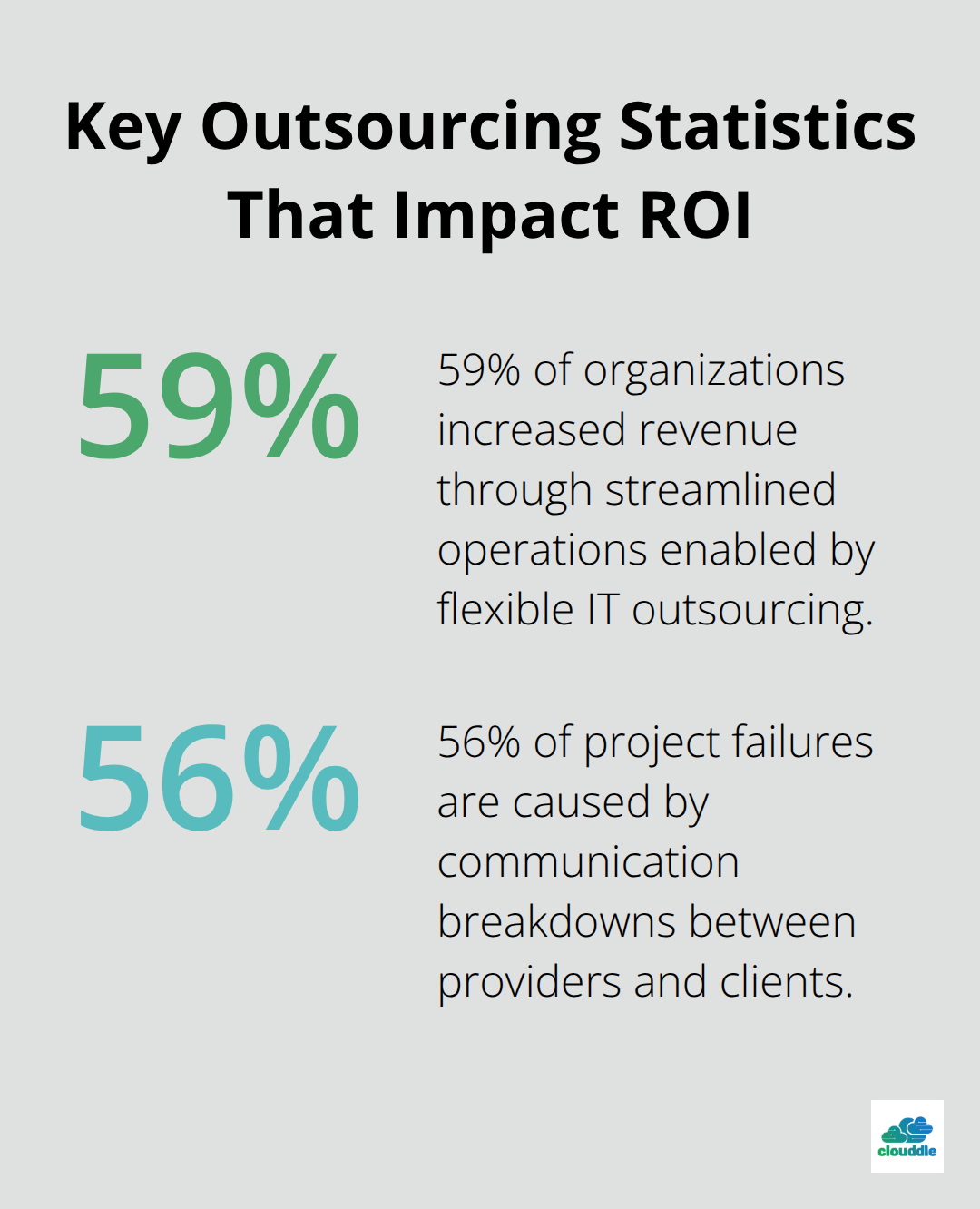
Your provider must scale resources without service disruptions or massive cost increases. Evaluate their ability to add users, locations, and applications within 48 hours of your request. Review their capacity plans and ask how they’ve handled sudden growth spurts for existing clients. Deloitte found that 59% of organizations increased revenue through streamlined operations that flexible IT outsourcing enabled. Verify they offer both vertical scaling for increased performance and horizontal scaling for additional locations or departments. Reject providers who require long-term commitments for capacity increases or charge excessive fees for rapid scaling.
Communication Protocols and Escalation Paths
Clear communication channels prevent minor issues from becoming major disasters. Establish dedicated points of contact for different types of requests (emergency, routine maintenance, new projects). Verify they provide regular status updates during outages and maintenance windows. Test their communication systems before you commit and confirm they can reach key stakeholders through multiple channels during emergencies.
While technical capabilities matter most, red flags in provider behavior can signal deeper problems that will cost you more than money. Strategic outsourcing lets you access specialized expertise without the financial burden of a full-time salary, benefits, and training. Consider how outsourced IT for small businesses enhances security and cuts expenses when evaluating potential partners.
Which Provider Red Flags Cost You Money
Transparent Pricing Structures Matter Most
Pricing transparency separates professional providers from predatory ones. Refuse any proposal that lists vague line items like setup fees, configuration charges, or administrative costs without specific dollar amounts and detailed descriptions. Legitimate providers break down every expense (hardware, software licenses, labor hours, and maintenance costs). Watch for providers who quote suspiciously low monthly rates but hide migration fees, emergency service charges, or equipment rental costs in fine print.
Organizations with transparent IT cost structures can reduce operating costs and drive greater agility by flattening their structures and increasing spans of control. Demand written estimates for common scenarios like user additions, location expansions, or system failure recovery. Test their honesty when you ask for references from clients who experienced scope changes or emergency situations.
Communication Failures Signal Service Problems
Poor communication during sales conversations predicts worse service delivery problems later. Reject providers who take more than 4 hours to respond to initial inquiries or fail to provide direct contact information for technical staff. Test their communication systems when you call during off-hours and weekends to verify their claimed 24/7 availability actually works.
Request detailed documentation of their escalation procedures and confirm they assign dedicated account managers rather than rotate support through generic help desk systems. Recent studies reveal that 56% of project failures are caused by communication breakdowns between providers and clients. Avoid providers who speak only in technical jargon without business impact explanations or who refuse to provide regular status updates.
Security Credential Gaps Expose Your Business
Missing security certifications indicate inadequate protection for your data and systems. Verify current SOC 2 Type II reports, ISO 27001 certifications, and industry-specific compliance credentials like HIPAA or PCI DSS. Reject providers who cannot produce recent penetration test results or who lack cyber insurance coverage of at least $5 million.
Check their staff certifications (CISSP, CISM, or CompTIA Security+ credentials for security operations personnel). Request references from three clients in similar industries and directly contact these references to verify security incident response performance and compliance audit success rates.
Final Thoughts
Systematic evaluation of technical expertise, transparent pricing, and proven security credentials determines success when you select outsourced IT solutions. Companies that skip thorough vetting face average losses of $1.2 million annually from poor provider decisions. Strategic IT partnerships drive measurable business growth when providers offer scalable infrastructure, response time guarantees, and industry-specific compliance knowledge.
The most successful implementations combine comprehensive audits with clear service level agreements that include financial penalties for non-compliance. Start your selection process when you document current systems, measure performance baselines, and establish realistic budgets for transformation costs. Verify provider certifications, test communication protocols, and demand references from similar organizations before you make final decisions.
We at Clouddle understand the complexity of modern IT infrastructure decisions (and the risks of poor choices). Our team combines networking, security, and support services to help businesses focus on growth rather than technology management. The right partnership transforms operations while it reduces costs and security risks for long-term success.




0 Comments