

Network cable installation cost often surprises businesses because they underestimate the scope of the project. Material expenses, labor, and hidden complications add up fast, and a single miscalculation can blow your budget.
At Clouddle, we’ve seen companies waste thousands by skipping proper cost estimation. This guide walks you through the real factors that drive pricing and shows you how to budget accurately from the start.
What Drives Network Cable Installation Costs
Cable Type and Material Quality
Cable type matters far more than most businesses realize, and choosing wrong costs you twice. Generic Cat6 cable runs about $0.25–$0.30 per foot with jacks at $2–$4, but these materials carry real reliability risks over time. Certifiable brands like Hubbell, Panduit, CommScope, and Belden cost more upfront-but they come with 25-year manufacturer-backed warranties on certified installations. According to Homewyse data, a basic wiring run with testing and CAT6 cabling costs 1–9 per run as a starting point, but this assumes straightforward conditions.
Distance and Route Complexity
The distance between your network panel and endpoints directly impacts material expenses. A 50-foot run differs drastically from a 200-foot run across multiple floors, and every additional foot adds material cost plus labor time. Route complexity multiplies expenses further. Cables running through thick walls, across multiple floors, or around existing infrastructure take longer to install and may require conduit work or specialized routing solutions. A retrofit installation in an older building with limited access costs significantly more than new construction where pathways are already planned.
Labor Rates and Crew Configuration
Technician rates run at $85 per hour for one person on-site and $170 per hour for two technicians, according to typical GTA-based pricing. Travel time also factors in-within the Greater Toronto Area, expect a base of 1.25 hours, and outside the GTA, 2.5 hours. Cable termination services start around $283.75 and typically run 3–4 hours if rack work is involved.
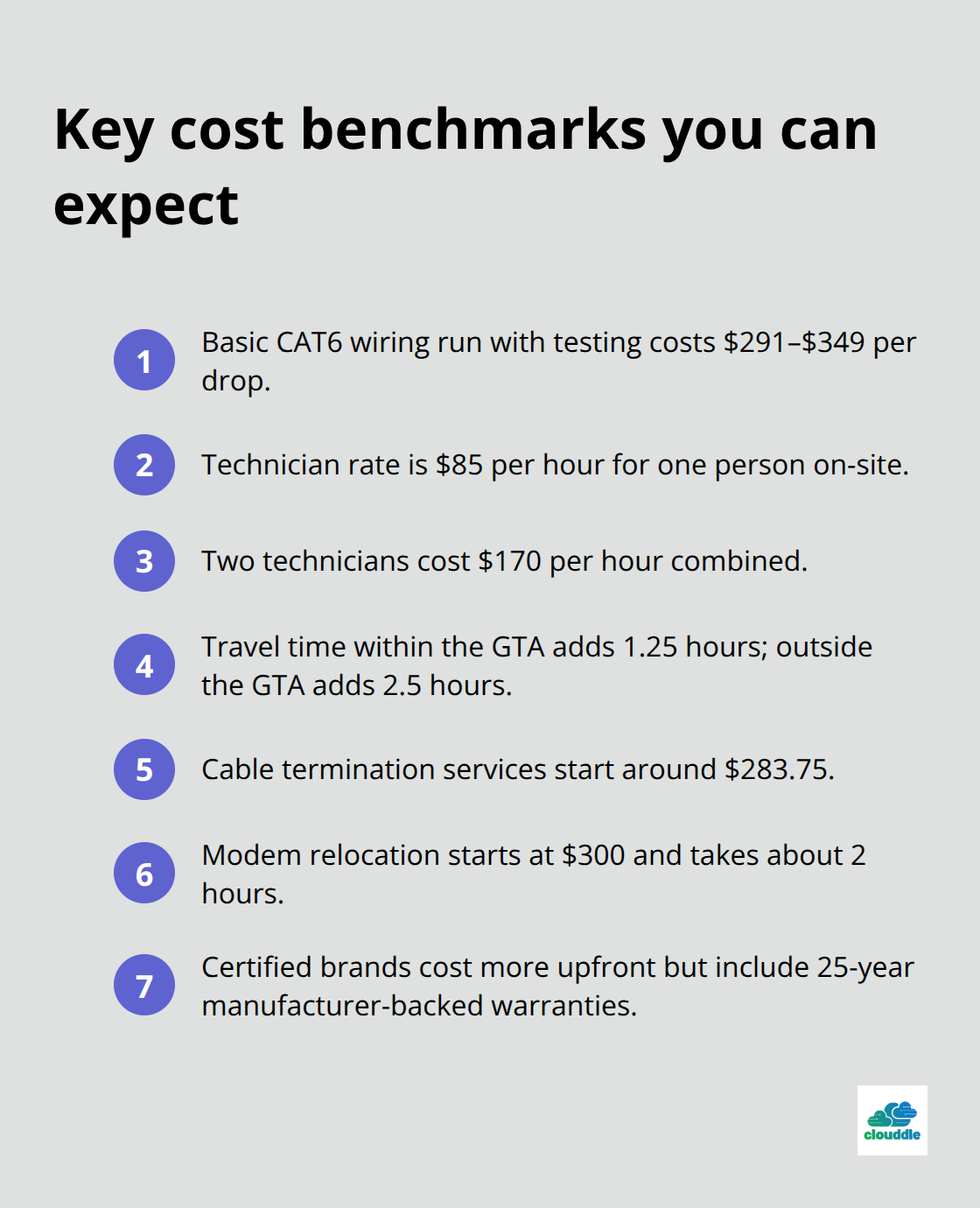
Your project timeline influences labor costs because rushed schedules often require larger crews or premium rates. A modem relocation, for example, starts at $300 and takes about 2 hours with 1–2 technicians depending on existing infrastructure.
Certification and Testing Requirements
Scheduling flexibility reduces pressure on labor costs. Certifiable installations require technicians with proper credentials and testing equipment to validate performance and meet TIA standards. Cutting corners on labor by hiring uncertified installers creates hidden costs later through poor performance, frequent maintenance calls, and inability to claim warranty protection. The scope of your installation-whether it includes rack design, cable cleanup, or Starlink integration starting at $650-compounds labor expenses. Planning ahead and getting formal quotes after a site assessment prevents surprises that inflate timelines and labor bills, which brings us to how you can actually calculate these costs for your specific situation.
How to Build Your Cost Estimate Step by Step
Material Costs Form Your Foundation
Start with material costs because they form your foundation. Generic Cat6 cable costs $0.25–$0.30 per foot with jacks at $2–$4 each, while certified brands like Hubbell run $0.30–$0.60 per foot with jacks between $8–$18. For a 60,000-foot installation across 200 workstations, the difference between generic and certified materials reaches thousands of dollars. Multiply your total cable length by the per-foot rate, then add connector costs for every termination point.
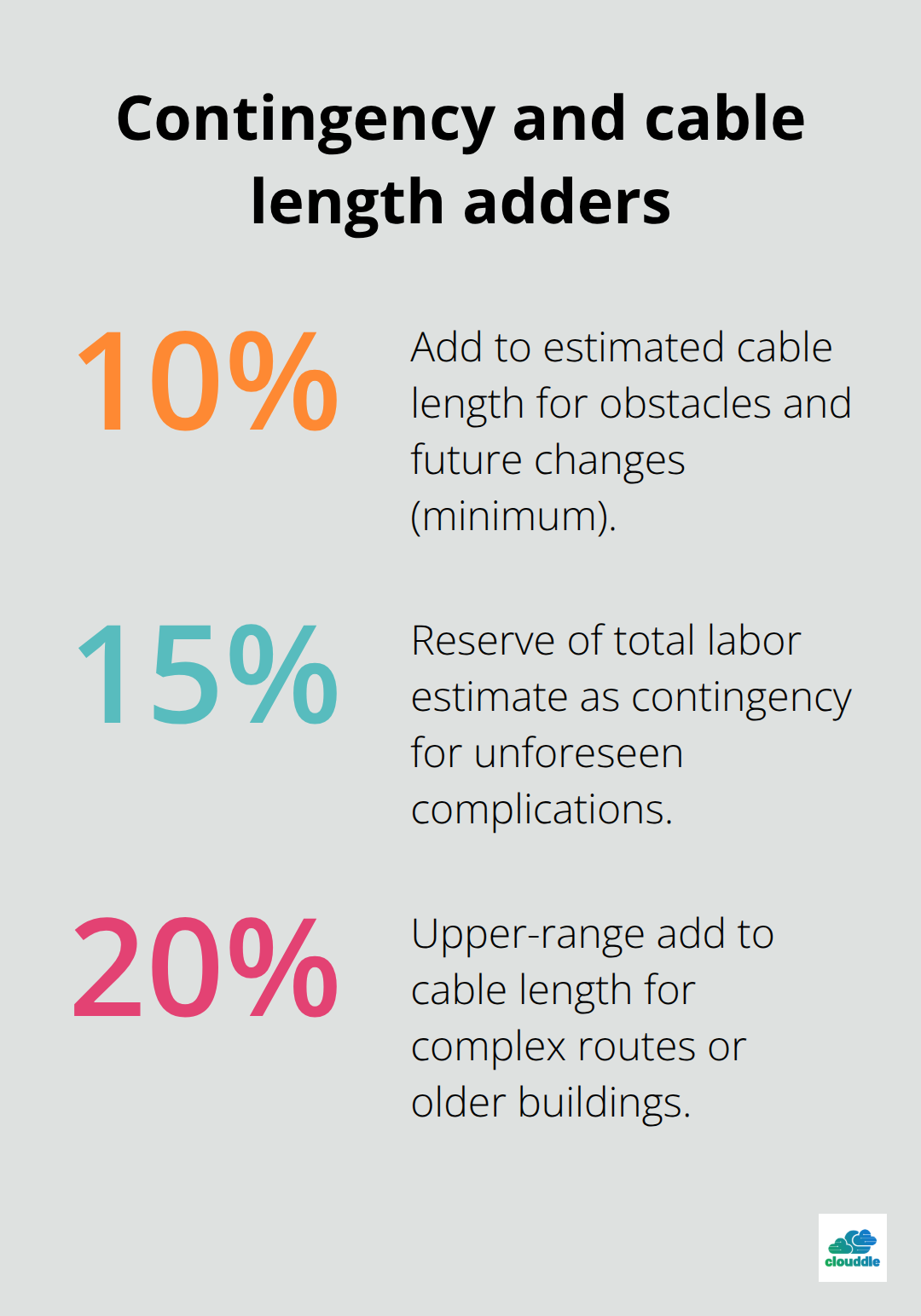
If your building spans multiple floors or requires complex routing through walls and ceilings, add 10–20% to your cable length estimate for obstacles and future changes. This prevents the common mistake of ordering too little material mid-project, which halts work and inflates labor costs. Homewyse data shows that a basic wiring run with testing costs $291–$349 per run as a baseline, but your actual material spend depends entirely on cable type and distance.
Labor Expenses Require Precision on Crew Size and Travel
One technician at $85 per hour handles straightforward installations, but two technicians at $170 per hour move faster on complex projects with multiple floors or tight spaces. Within the GTA, add 1.25 hours for travel; outside the GTA, budget 2.5 hours. Cable termination services start at $283.75 and stretch to 3–4 hours if rack work is involved. A modem relocation runs about 2 hours at $300 minimum.
Calculate your total labor by estimating installation hours, multiplying by hourly rates, then adding travel time costs. A larger crew finishes faster but costs more per hour, so rushing a timeline inflates expenses significantly. The choice between one technician and two depends on your project scope and deadline pressure.
Contingency Reserves Protect Against Site Surprises
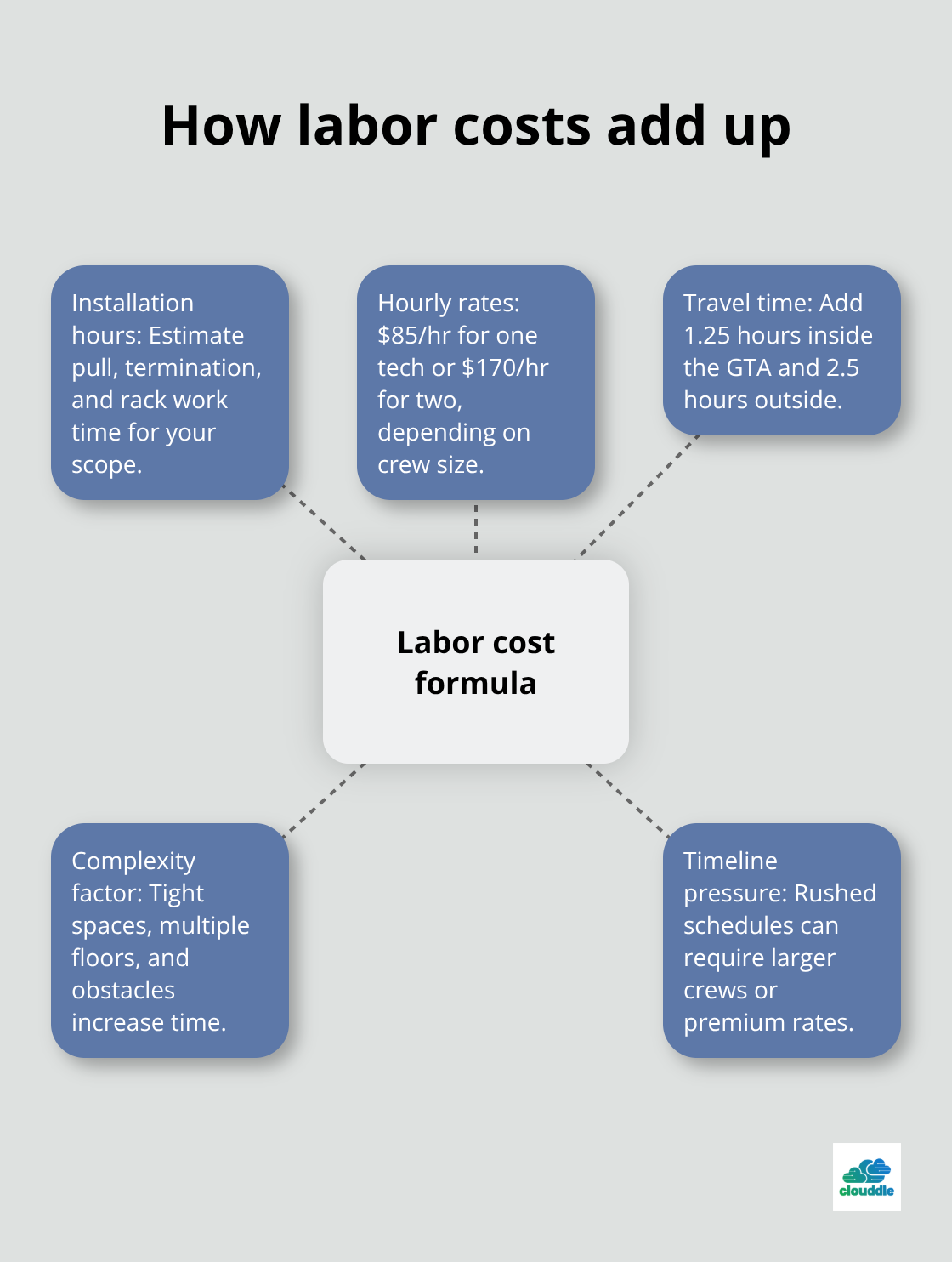
Contingency reserves matter because site conditions rarely match initial assessments. Hidden obstacles like thick walls, outdated infrastructure, or unexpected cable routing issues add hours instantly. Reserve 15–20% of your total labor estimate for unforeseen complications, which proves cheaper than stopping mid-project to request additional funds.
Site assessments before formal quotes catch these issues and prevent budget shock when work begins. This groundwork also reveals whether your installation requires specialized equipment, additional crew members, or extended timelines that impact your final costs. Understanding these variables upfront positions you to make informed decisions about where to invest in quality materials versus where to optimize labor efficiency.
What Mistakes Drain Your Budget
Underestimating Cable Length and Route Complexity
Most businesses measure direct distances instead of actual installation routes, which leads to severe budget miscalculations. Your network panel to a third-floor office isn’t a straight line-cables route through walls, around HVAC ducts, down conduit, and across multiple floors. A 200-foot direct distance becomes 400 feet of actual cable once you account for realistic pathways. Adding 10–20% contingency to cable length estimates prevents mid-project shortages that halt work and force expensive rush orders.
The real cost driver emerges when you realize that certifiable Cat6 cable costs exponentially more over longer routes than generic alternatives. A 60,000-foot installation across 200 workstations reveals the damage-generic materials might save $15,000 upfront, but certification failures and warranty denials cost far more in downtime and rework.
Route complexity multiplies labor time significantly. Retrofitting cables through older buildings with thick walls, limited access points, and existing infrastructure takes substantially longer than new construction. Technicians working at $85 per hour for one person or $170 per hour for two quickly consume budget when routing proves difficult. Site assessments before formal quotes catch these issues and prevent budget shock after work starts.
Skipping Testing and Certification Fees
Testing and certification represent non-negotiable expenses that too many companies skip to save money. Cable termination services start at $283.75 and extend to 3–4 hours if rack work is required, but skipping professional testing guarantees future problems. Fluke testing validates performance and confirms TIA standard compliance, which protects your warranty and prevents costly failures.
Certified Hubbell installations with 25-year manufacturer backing protect you against future failures, making the upfront investment reasonable insurance against expensive downtime. Hiring uncertified installers to reduce labor costs creates hidden expenses through poor performance, frequent maintenance calls, and lost warranty protection that ultimately costs thousands more than proper installation.
Overlooking Infrastructure Modifications
Infrastructure modifications often surprise project managers because they fail to assess existing conditions before budgeting. A modem relocation costs $300 minimum and runs about 2 hours, but this assumes existing entry points and basement finishes support the work-modifications to support structures, electrical routing, or environmental controls add hours instantly.
Site assessments before formal quotes catch these hidden costs and prevent budget shock. The difference between a 1–9 baseline per wiring run and a properly certified installation reflects real long-term value, not premium pricing. Uncertified work creates hidden expenses through poor performance and frequent maintenance calls that ultimately cost far more than proper installation from the start.
Final Thoughts
Accurate network cable installation cost estimation requires understanding material choices, labor variables, and realistic contingencies before work starts. The difference between a $291–$349 baseline per wiring run and a fully certified installation reflects genuine long-term value, not premium pricing. Generic materials save money upfront but expose you to reliability failures, warranty denials, and expensive rework that ultimately cost far more than proper installation from the start.
Getting multiple quotes from certified installers reveals how site conditions, crew size, and material choices affect your final price. One technician at $85 per hour handles straightforward work, while two technicians at $170 per hour accelerate complex projects across multiple floors or tight spaces. Travel time within the GTA adds 1.25 hours minimum, and outside the GTA, 2.5 hours. Reserve 15–20% contingency for unforeseen complications because site conditions rarely match initial assumptions.
Schedule a site assessment with a certified installer who can identify routing challenges, infrastructure modifications, and hidden obstacles that generic estimates miss. This assessment catches the real drivers of network cable installation cost and prevents budget shock when work starts. Contact Clouddle to discuss your project scope and receive a detailed quote that accounts for your specific site conditions and long-term reliability needs.