
Your hotel’s network is only as strong as its cabling infrastructure. Poor connectivity frustrates guests, disrupts operations, and damages your reputation.
At Clouddle, we’ve seen firsthand how data cabling for hotels directly impacts both guest satisfaction and staff efficiency. The right infrastructure prevents costly downtime and supports your property’s growth for years to come.
Planning Your Hotel Data Cabling Infrastructure
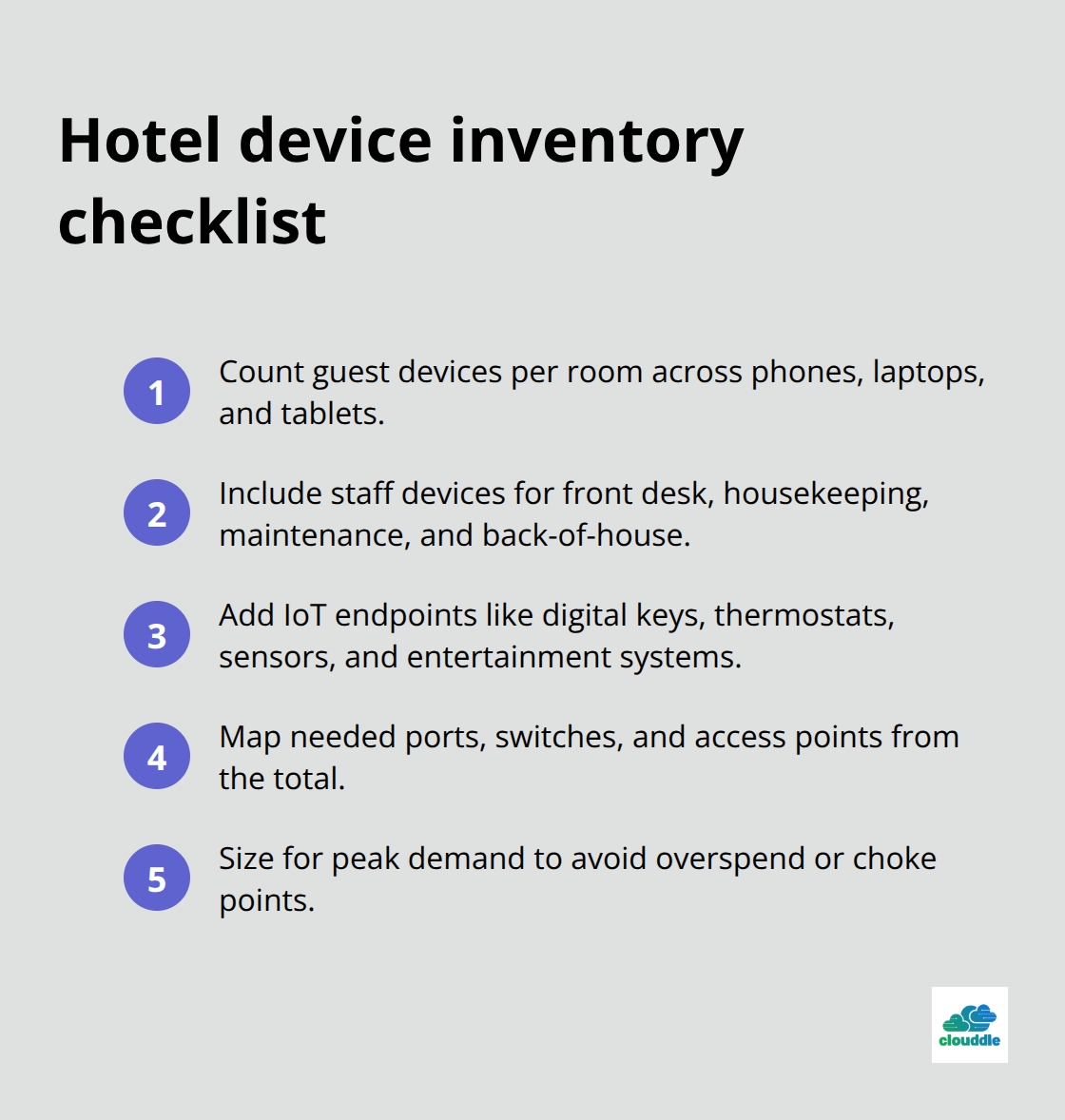
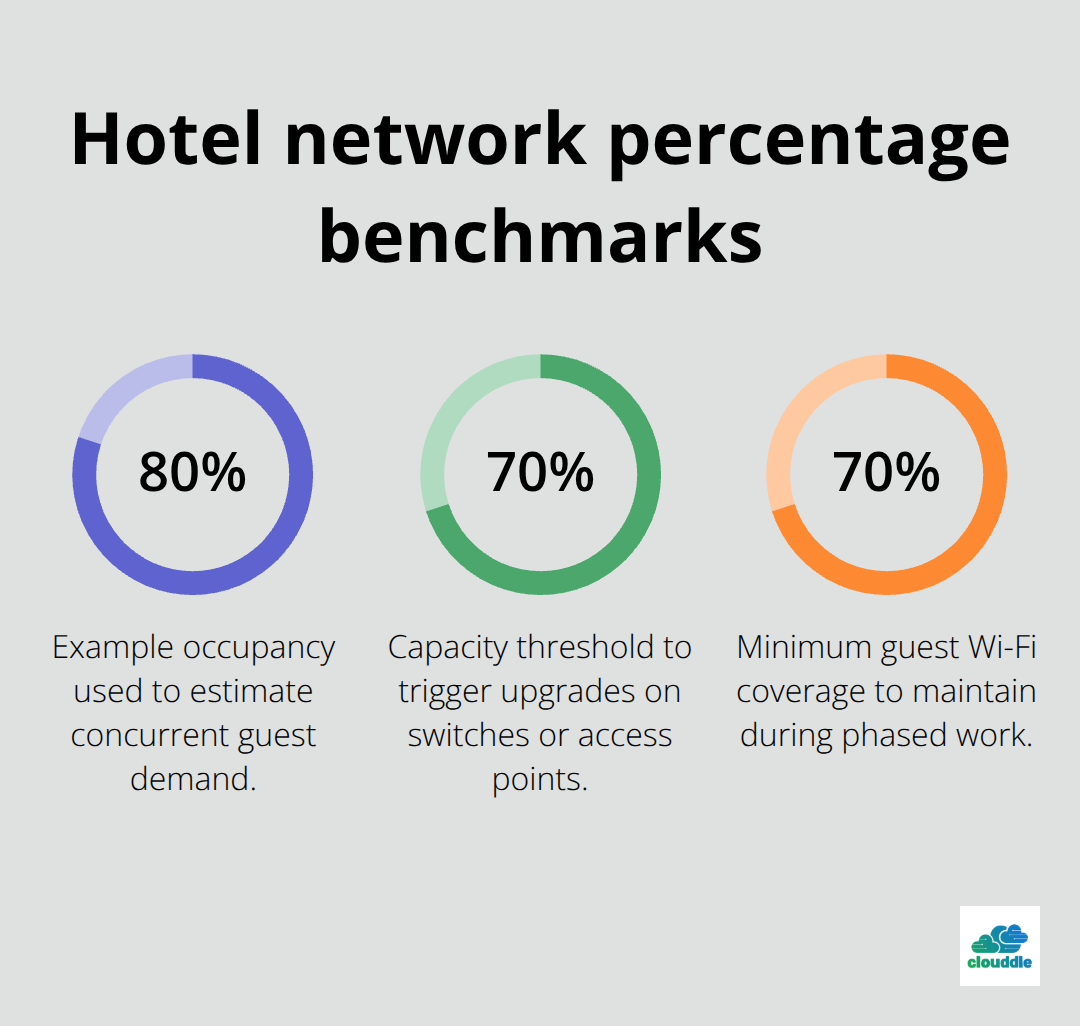
Start by counting every device that will connect to your network. Guest devices alone are deceptive-a 200-room hotel with 80% occupancy means roughly 240 guests, but many bring multiple phones, laptops, and tablets. Add staff devices across front desk, housekeeping, maintenance, and back-of-house operations. Then factor in IoT endpoints: digital key systems, occupancy sensors, smart thermostats, in-room entertainment systems, and energy controllers. A modern hotel easily has 3 to 5 devices per guest room plus hundreds more in public areas. This inventory determines how many network ports, switches, and access points you actually need. Without this count, you’ll either overspend on unnecessary capacity or choke your network when demand peaks.
Understand Peak Usage Patterns
Peak usage times reveal your true bandwidth requirements. Most hotels see evening surges when guests stream video, join video calls, or browse. Conference events and business meetings compound this demand. Cloud-based property management systems now drive network architecture decisions, meaning your cabling must support consistent, low-latency connections to external cloud platforms. Try for at least 25 Mbps per guest room during peak hours if you want reliable streaming and video conferencing. Public areas like lobbies and conference rooms demand even higher capacity per square meter because multiple guests concentrate there simultaneously. Test your assumptions by monitoring a competitor hotel’s network performance during their busy hours, or survey your own guests about connectivity complaints during peak times.
Choose Cable and Standards That Won’t Limit You
Cat6 and Cat6a cables are non-negotiable for new hotel installations. Cat5e maxes out at 1 Gbps and 100 MHz bandwidth; Cat6 handles 10 Gbps at 250 MHz; Cat6a pushes further with better shielding and higher frequency capacity. The difference matters because hotels increasingly run multiple high-bandwidth systems simultaneously-guest Wi-Fi, cloud PMS, CCTV, digital signage, and smart room controls all share the same backbone. Cat6a costs slightly more upfront but eliminates the risk of a cabling rework in five years when you’ve outgrown Cat6.
Shielded Cat6a is essential in areas with electrical interference, such as near HVAC systems, electrical panels, or high-power lighting. Your structured cabling must follow TIA/EIA and ISO/IEC standards; these ensure your system works reliably with future hardware and supports seamless upgrades. Power over Ethernet becomes critical as IoT density grows. Digital keys, occupancy sensors, and access control devices increasingly rely on PoE-powered switches rather than separate power runs. This reduces installation complexity and future maintenance headaches while enabling centralized device management.
Map Your Property for Realistic Coverage
Vertical distribution through elevator shafts and wall conduits determines whether you can actually reach every floor efficiently. Multi-story hotels require careful planning of core network locations-typically near the server room or main distribution frame on a central floor-to minimize cable runs and latency. Outdoor coverage is often forgotten until guests complain about dead zones in parking lots and pool areas. A hotel that ignores exterior connectivity loses bookings from business travelers and families who expect seamless coverage everywhere.
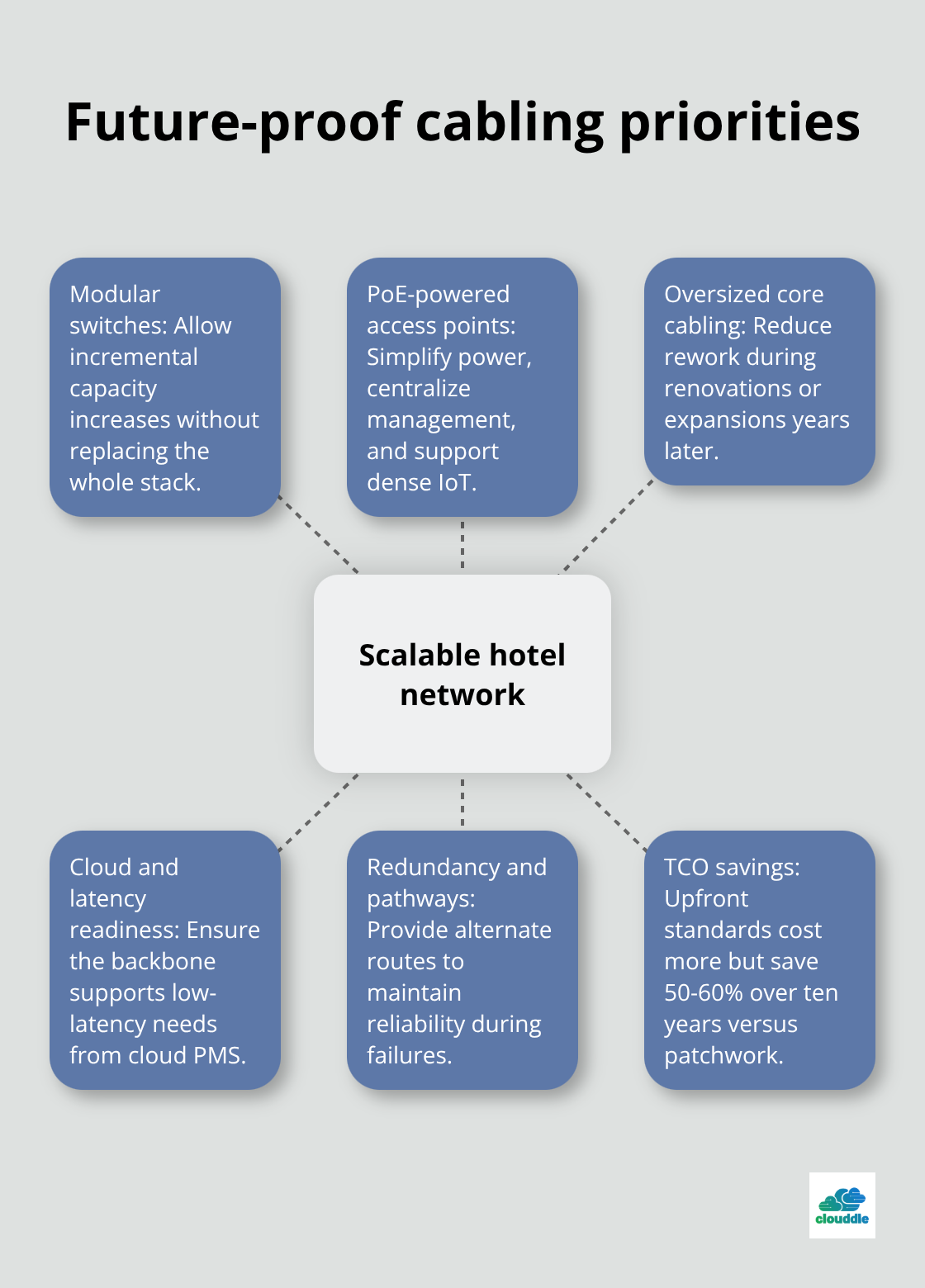
Document your current infrastructure first: measure cable runs, identify existing conduits and wall outlets, and photograph problematic areas like basement mechanical rooms or older buildings with thick concrete. This assessment prevents expensive mistakes during installation and reveals whether you can reuse existing pathways or must route new cables. Future growth demands flexible design. Select modular switches and scalable access point architecture so you can add capacity without replacing the entire system. A hotel planning expansion in three years should oversize its core cabling now rather than face disruption later.
With your device inventory, bandwidth targets, and property map in place, you’re ready to move forward with installation. The right cable types and installation methods will determine whether your infrastructure actually delivers the performance your guests and staff expect.
Installation Best Practices for Hotel Environments
Installation timing and method separate hotels that maintain guest satisfaction from those that create operational chaos. Schedule cabling work during low-occupancy periods-late autumn and winter typically see 30-40% lower occupancy than summer peaks. If you must install during high season, work in phases by floor or wing, completing one section fully before moving to the next. This containment strategy limits guest complaints to a single area rather than disrupting the entire property. Coordinate with your front desk and housekeeping teams at least two weeks ahead. They need to know which corridors will have technicians, when elevator access is restricted, and which rooms may experience temporary service interruptions. Hotels that treat installation as a surprise to staff create resentment and operational errors that ripple through your team for months.
Route Cables Strategically Through Your Property
Cable routing through walls and conduits matters far more than most hotel managers realize. Pulling new cables through existing conduits saves thousands in wall patching and restoration costs, but conduits often contain decades of abandoned wiring. Have your installer video-scope conduits before committing to routes. Horizontal runs along each floor should use cable trays or wall-mounted channels rather than loose runs that invite damage from maintenance work, furniture moves, or pest activity. Vertical distribution through elevator shafts requires fire-rated conduit in most jurisdictions-check your local fire code before planning. In older hotels with concrete construction, routing cables becomes exponentially harder and more expensive. Budget 40-60% more installation time than a modern building with existing infrastructure.
Label and Document Every Connection
Label every cable with durable tags at both ends and at intermediate points every 30 meters. Unlabeled cables create nightmare scenarios during troubleshooting or upgrades when technicians cannot trace connections without testing every port individually. Your cabling installer should provide a detailed diagram showing every run, termination point, and equipment location. Store this documentation digitally and in printed form; it becomes invaluable during maintenance calls or when staff turnover occurs. This investment in organization prevents costly emergency service calls and accelerates future upgrades.
Test Every Cable Run With Professional Equipment
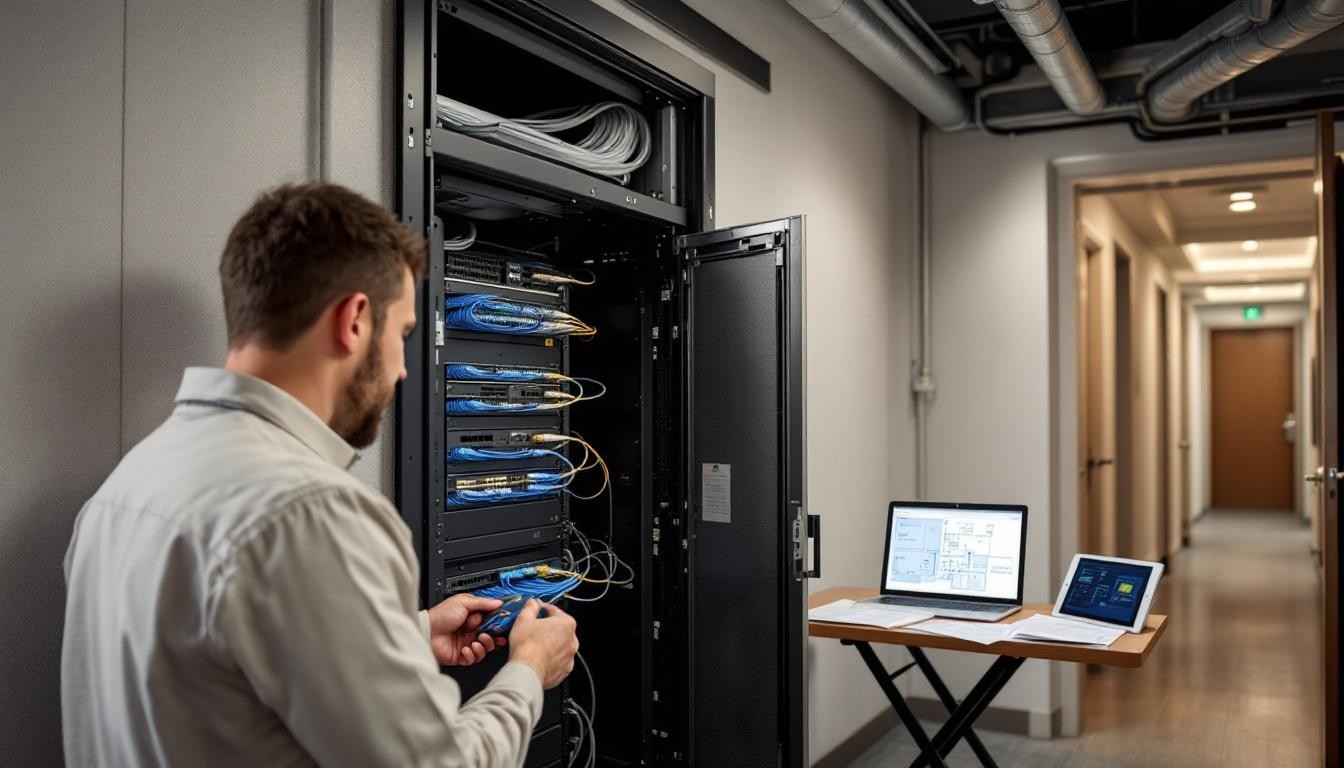
After installation, demand that your installer test every cable run with professional equipment testing for data cables. Testing should measure actual throughput against Cat6 or Cat6a specifications and document results in a report you keep on file. This creates accountability and gives you baseline data for future troubleshooting. Hotels with poor testing protocols experience mysterious connectivity drops that staff cannot diagnose, forcing expensive emergency service calls. A 200-room hotel property should expect testing to take 3-5 days for a complete system, depending on complexity. Rush this step and you inherit years of performance problems.
Protect Guest Experience During Installation Windows
Guests notice network outages immediately, especially business travelers working remotely or families streaming entertainment. Schedule major work during maintenance windows-typically 2-6 AM-when occupancy is lowest and guest activity minimal. If daytime work is unavoidable, establish a clear communication protocol: notify guests 48 hours before via email and lobby signage, provide mobile hotspot devices as temporary backup, and offer room service discounts as compensation for inconvenience. Some hotels implement a phased approach where only non-guest-facing systems go offline first (back-of-house PMS servers, staff networks), then transition guest Wi-Fi systems in small sections while maintaining at least 70% coverage. This requires careful planning but prevents the catastrophic scenario where an entire hotel loses connectivity simultaneously.
After installation completes, run a full system test under realistic load-have staff and willing guests actively use the network while technicians monitor performance. This real-world validation catches configuration errors that lab testing misses and confirms your investment actually delivers the bandwidth you paid for. Once your cabling infrastructure performs reliably, the focus shifts to keeping it that way through systematic inspection, testing, and strategic upgrades.
Maintaining and Upgrading Your Cabling System
Inspect and Test Your Infrastructure Regularly
Your cabling infrastructure degrades faster than most hotel managers expect. Cat6 and Cat6a cables don’t fail suddenly-they degrade gradually through physical damage, moisture exposure, and electromagnetic interference. A hotel that installs quality cabling but ignores maintenance will experience intermittent connectivity issues within 18 months, guest complaints within 24 months, and costly emergency repairs by year three.
Schedule quarterly physical inspections of visible cable runs, connectors, and termination points. Look for signs of damage: crushed cables in high-traffic areas, corroded connectors in humid environments, or cables routed too close to HVAC systems and electrical panels. Document findings with photos and timestamps. Housekeeping staff or maintenance contractors often accidentally damage cables during routine work-broken wall outlets, pinched conduits, or cables pulled loose during furniture moves. Quarterly inspections catch these problems before they cascade into network failures.
Conduct network performance testing twice yearly using professional equipment. Cable testers measure actual throughput and identify performance degradation that visual inspection cannot detect. If a Cat6a run tested at 10 Gbps during installation but now measures 8 Gbps, electromagnetic interference has likely increased or connectors are deteriorating. Test results establish baseline data that proves performance issues to hardware vendors during warranty claims and informs your upgrade decisions.
Identify Bottlenecks Before They Disrupt Operations
Bandwidth demand in hotels grows 25-30% annually as guests stream higher-resolution video and use more simultaneous devices. A network designed for today’s usage will feel sluggish in two years. Monitor your switch and access point capacity monthly-most devices report utilization percentages in their management interfaces. When any single switch or access point consistently operates above 70% capacity during peak hours, plan an upgrade.
This proactive approach prevents the scenario where your network collapses during a major event or conference weekend. Your guests expect seamless connectivity during high-occupancy periods, not service degradation. Early detection of capacity constraints allows you to upgrade equipment on your schedule rather than in crisis mode.
Plan for Scalability and Future Technology Adoption
Scalability from the beginning prevents catastrophic failures. If your initial installation used fixed, single-purpose equipment, upgrades now require ripping out old hardware and installing new systems-expensive and disruptive. Modular switches and PoE-powered access points allow incremental capacity additions without wholesale replacement.
A hotel planning a renovation or expansion in five years should oversize its core cabling infrastructure now rather than face a costly rework later. When technology shifts (perhaps your cloud PMS provider demands lower latency or you add robotic cleaning devices requiring dense IoT coverage), your cabling backbone must support these changes without major reconstruction. Investing in future-proof installation standards and modular equipment architecture costs 15-20% more upfront but saves 50-60% in total cost of ownership over ten years compared to repeated patchwork upgrades.
Align Your Network Roadmap With Emerging Technologies
Schedule annual reviews of your network roadmap with your cabling vendor and IT provider. Discuss emerging technologies your property might adopt: mobile key systems, biometric check-in, in-room voice assistants, or predictive analytics platforms. These systems impose specific requirements on your cabling-some demand low-latency connections, others require dense sensor networks, others need redundant pathways for reliability. Planning ahead prevents the frustration of discovering your cabling cannot support the technology you want to deploy.
Final Thoughts
Your hotel’s connectivity directly determines guest satisfaction, operational efficiency, and your competitive position. Data cabling for hotels isn’t a one-time installation project-it’s the foundation that supports every system your property depends on, from cloud-based property management to smart room controls to guest Wi-Fi. Hotels that treat cabling as an afterthought face recurring problems: mysterious connectivity drops, frustrated guests, staff inefficiency, and expensive emergency repairs.
The path forward requires three commitments. First, assess your current infrastructure honestly (if your cabling is more than five years old, performance-test it now to identify degradation before it impacts operations). Second, plan your upgrades with scalability in mind, since modular equipment and future-proof standards cost slightly more upfront but prevent costly rework when technology evolves. Third, establish a maintenance routine: quarterly physical inspections, twice-yearly performance testing, and annual reviews of your network roadmap.
We at Clouddle understand that reliable connectivity isn’t optional in hospitality-it’s essential. Our managed IT, networking, and data cabling solutions are designed specifically for hotels that demand performance without disruption. Contact us today to start your connectivity transformation and build the reliable infrastructure your hotel deserves with professional infrastructure management and 24/7 support.