
Hotels lose guests and revenue when Wi-Fi fails. Poor data cabling installation in hotels creates bottlenecks that frustrate guests and drain operational efficiency.
At Clouddle, we’ve seen firsthand how the right infrastructure transforms guest satisfaction and profitability. This guide covers what hotels need to know about reliable connectivity.
Why Strong Data Cabling Transforms Hotel Operations
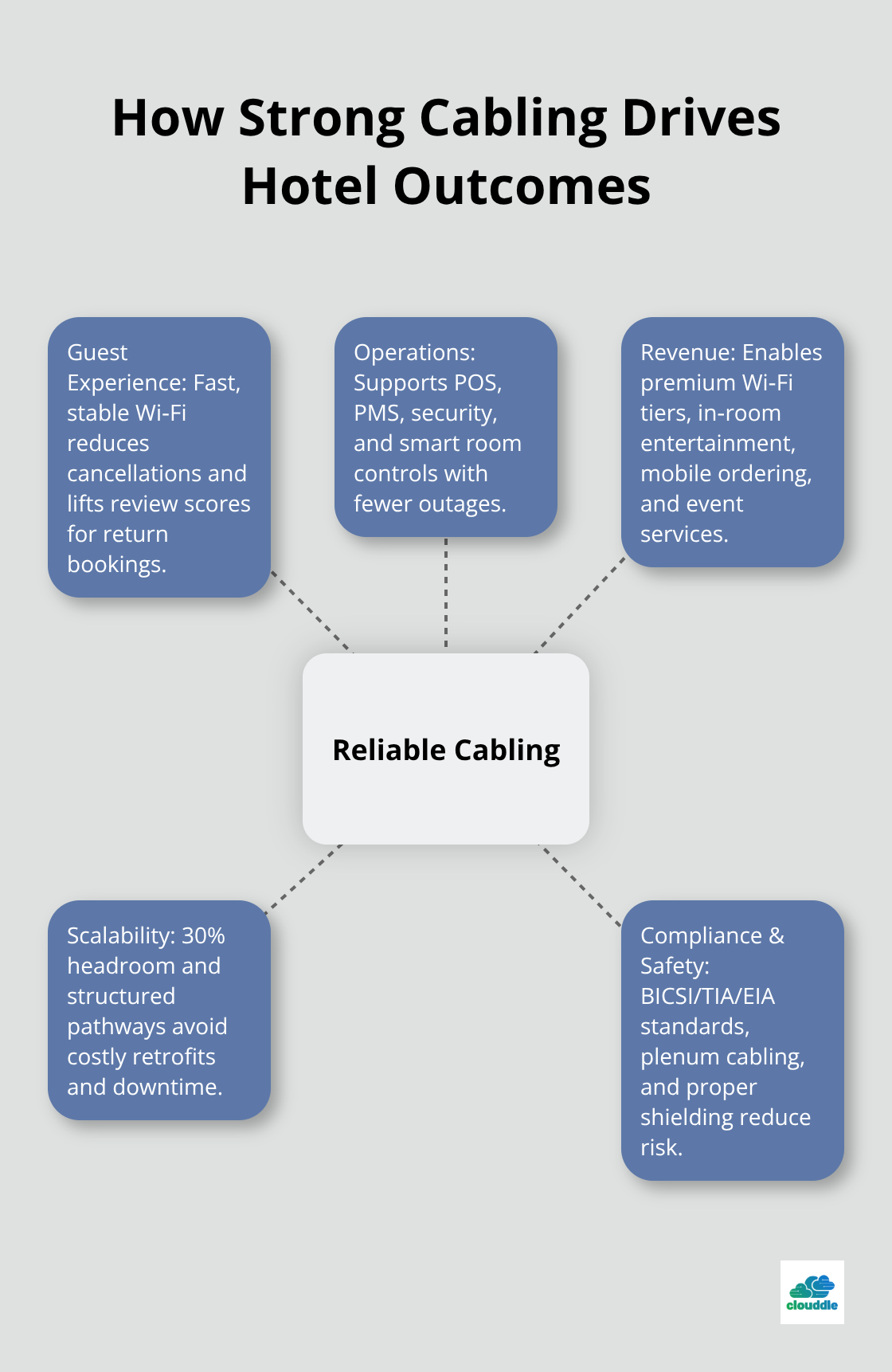
Guest Wi-Fi quality influences booking decisions. When your cabling infrastructure fails, guests experience dropped connections, slow speeds, and buffering during video calls or streaming-complaints that damage online reviews and repeat bookings. Poor connectivity costs money in real terms: hotels with substandard networks see 15–20% higher cancellation rates during peak seasons, according to hospitality technology research. Modern guests expect seamless connectivity across guest rooms, lobbies, conference spaces, and outdoor areas. This expectation isn’t optional anymore; it’s baseline.
Network Reliability Powers Daily Operations
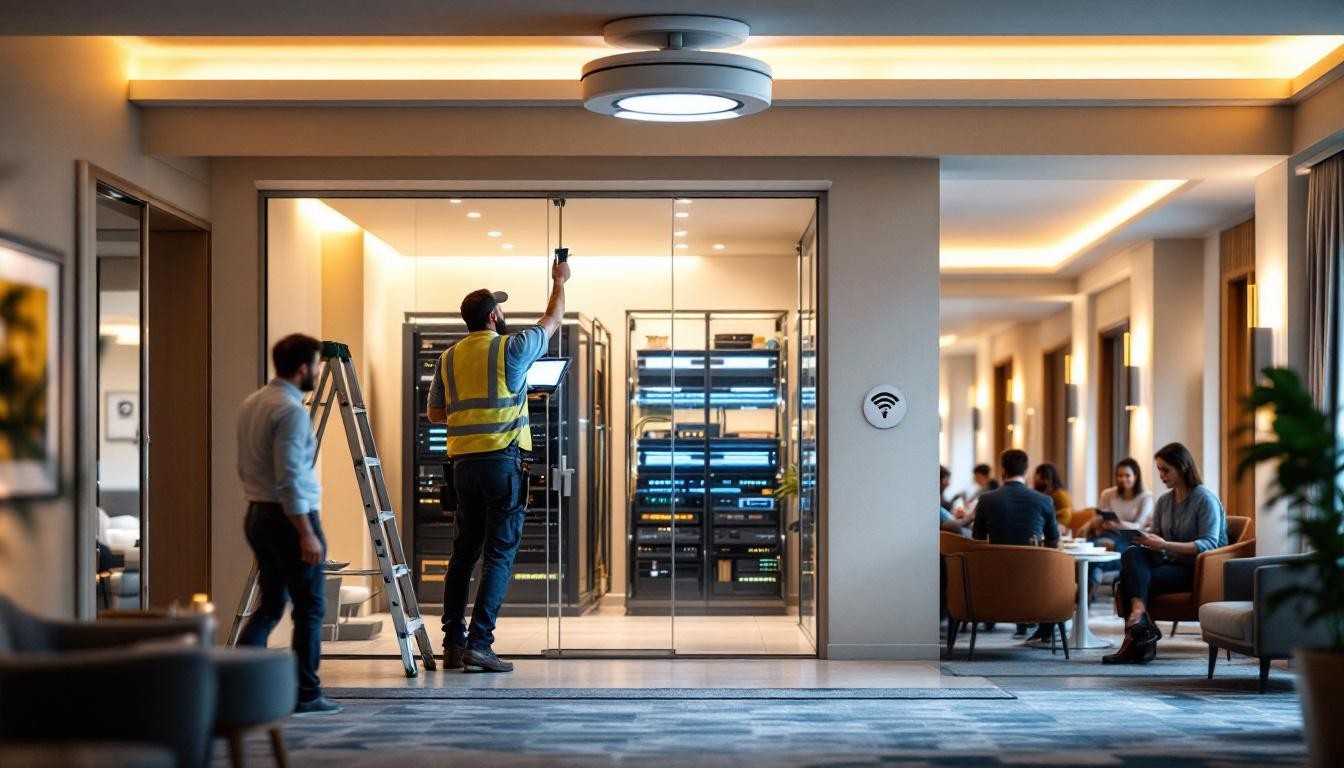
Your hotel’s back-of-house operations depend entirely on cabling infrastructure. Point-of-sale systems, property management software, security cameras, emergency communications, smart room controls, and staff communications all run over the same network backbone. When cabling fails, front desk staff cannot check guests in, housekeeping cannot receive room assignments, and payment processing stops. Guest-facing Wi-Fi now accounts for 40–60% of total network traffic in most hotels, meaning you need cabling capacity that handles both guest demand and internal operations simultaneously. Hotels that invest in proper structured cabling with Cat6A or fiber backbones experience 99.5% uptime targets, while properties with aging Cat5e infrastructure frequently suffer outages. Each hour of network downtime costs hotels $5,000–$15,000 in lost revenue, staff inefficiency, and guest service failures. Reliable cabling eliminates these disruptions and keeps operations running smoothly during peak occupancy and events.
Connected Infrastructure Generates Revenue
Hotels with superior network infrastructure unlock multiple revenue streams. Guest Wi-Fi quality influences ancillary spending: guests with fast, reliable connectivity spend more on in-room entertainment, mobile ordering, and paid streaming services. Properties offering premium Wi-Fi tiers can charge $5–$15 per night for business travelers who need guaranteed bandwidth. Smart room features (automated lighting, thermostats, window shades, and entertainment systems) require robust cabling to function reliably. These amenities increase guest satisfaction scores and justify higher room rates. Conference facilities with professional-grade cabling attract corporate events and meetings, a high-margin revenue segment. Hotels that implement proper data cabling infrastructure also reduce long-term capital expenses: structured cabling with 30% excess capacity accommodates future technology upgrades without costly rewiring. This scalability protects your investment as guest expectations evolve and new technologies emerge.
Why Installation Quality Matters Most
The difference between adequate and excellent cabling infrastructure comes down to installation expertise and planning. Certified installers follow industry standards (BICSI, TIA/EIA) that ensure compliance with fire codes, electrical safety, and performance specifications. Hotels that cut corners on installation costs face expensive problems: improperly terminated cables cause signal degradation, electromagnetic interference disrupts devices in kitchens and mechanical spaces, and inadequate conduit planning forces costly rewiring when you add access points or security systems. Professional installation also means proper cable management-organized patch panels, color-coded labeling, and shielded cables in interference-prone areas (kitchens, laundry) preserve signal integrity and simplify future troubleshooting. When you plan your cabling infrastructure correctly from the start, you avoid the hidden costs that plague hotels with reactive, piecemeal upgrades. The next section covers the specific best practices that separate reliable hotel networks from those that fail guests and operations.
How to Plan and Execute Hotel Cabling Installation Right
Map Your Space and Define Connectivity Needs
Start your cabling project by mapping every space that needs connectivity before a single cable arrives on site. Document guest rooms, corridors, parking areas, lounges, kitchens, conference spaces, and outdoor zones with exact measurements and distance calculations. Identify potential signal challenges from building materials like concrete, brick, or metal that will affect performance. Define connectivity needs across guest-facing services, back-of-house operations, security systems, emergency communications, and technologies you plan to add within the next five years.
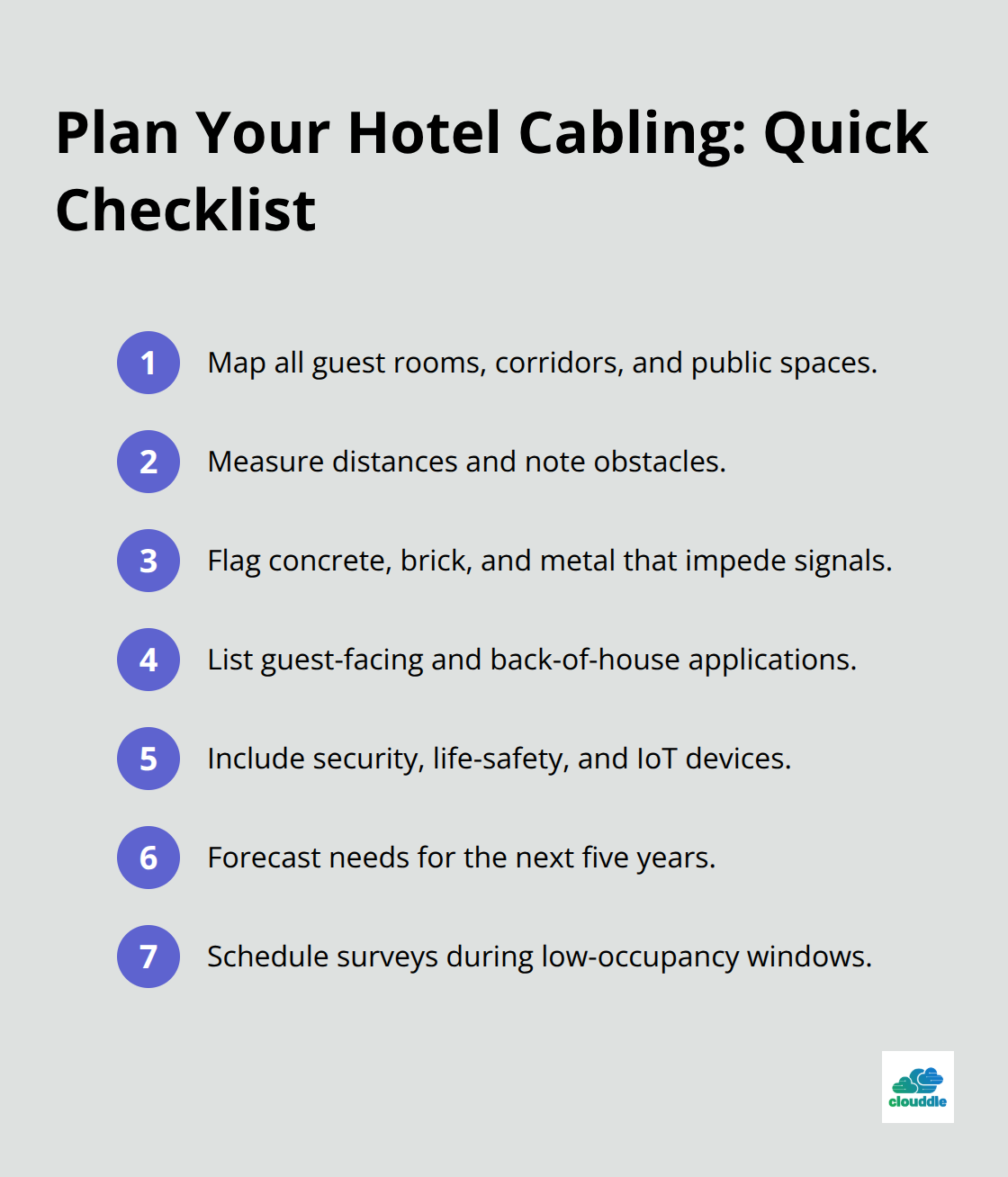
Many hotels skip this step and end up running cables inefficiently, creating bottlenecks in high-density areas like lobbies and conference rooms where device density causes slow speeds and dropped signals. A detailed pre-install survey also uncovers conflicts with electrical panels, HVAC spaces, and existing infrastructure that could delay work or force expensive rerouting. When sketching your floor plans and marking cable routes, schedule this survey during low-occupancy windows when staff can access all areas without disrupting guests.
Select the Right Cabling Standard for Your Property
Cat6A cabling delivers 10 Gbps performance and handles future bandwidth growth better than older Cat6 or Cat5e standards, making it the smart choice for most hotels. Properties with multiple buildings or extremely long cable runs should consider fiber instead, despite higher upfront costs. Fiber eliminates electromagnetic interference entirely, a major advantage in kitchens and laundry areas where equipment generates noise that degrades copper signals.
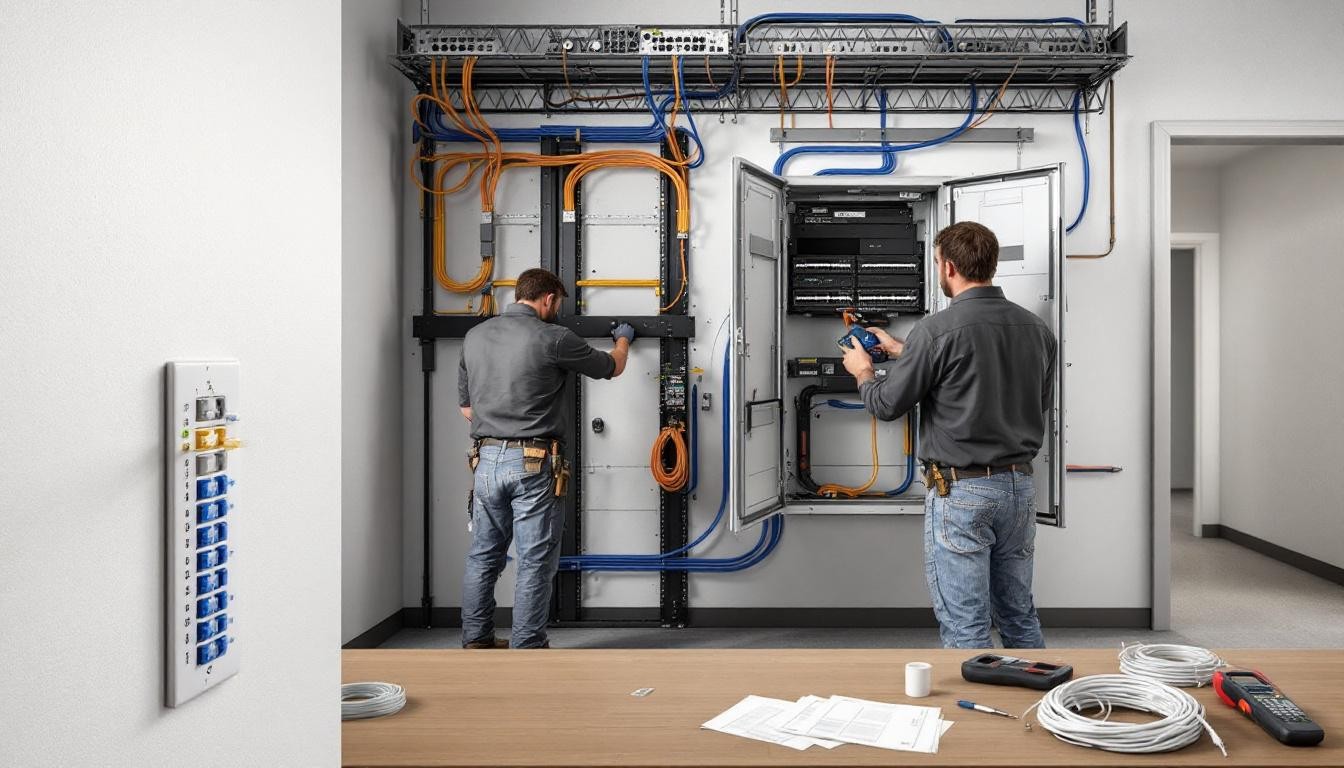
Always specify plenum-rated cables in walls and above drop ceilings to meet fire codes and limit smoke generation during emergencies. Build your cabling backbone with central equipment rooms, organized 24-port patch panels, color-coded labeling, and consistent documentation that your team can actually read and follow six months from now.
Hire Certified Installers and Plan for Growth
Work exclusively with RCDD-certified installers who understand hospitality-specific challenges and follow BICSI and TIA/EIA standards that ensure compliance with fire codes, electrical safety, and performance specifications. Certified contractors avoid the costly mistakes that plague DIY or budget installations: improperly terminated cables cause signal degradation, inadequate conduit planning forces rewiring when you add access points or cameras, and poor cable management creates a tangled mess that makes troubleshooting impossible.
Plan for at least 30% excess capacity in cable runs and conduit to accommodate future devices and layout changes without major reconstruction. Install cables using conduit and cable trays rather than running loose cables through walls, which speeds installation and reduces fire hazards.
Execute Installation with Minimal Guest Disruption
Schedule installation during off-peak seasons when occupancy drops 30–40% or after-hours between 10 PM and midnight with phased zones to minimize guest disruption. After installation completes, test every cable run with Fluke testing equipment and keep results on file to prove compliance and assist future troubleshooting. Implement robust cable management with shielded RJ45 patch cords in EMI-prone areas to preserve signal integrity.
Installation quality determines whether your network runs reliably for ten years or requires costly emergency repairs within two. The decisions you make during this phase directly shape how your hotel handles the operational demands that follow-from managing guest device density to supporting the security and automation systems that keep your property running smoothly.
What Kills Hotel Networks: The Three Mistakes That Cost Real Money
Most hotels fail their networks not during installation, but months or years later when reality collides with inadequate planning. The problem starts with underestimating how much bandwidth guests actually consume.
Guest Bandwidth Demand Overwhelms Unprepared Infrastructure
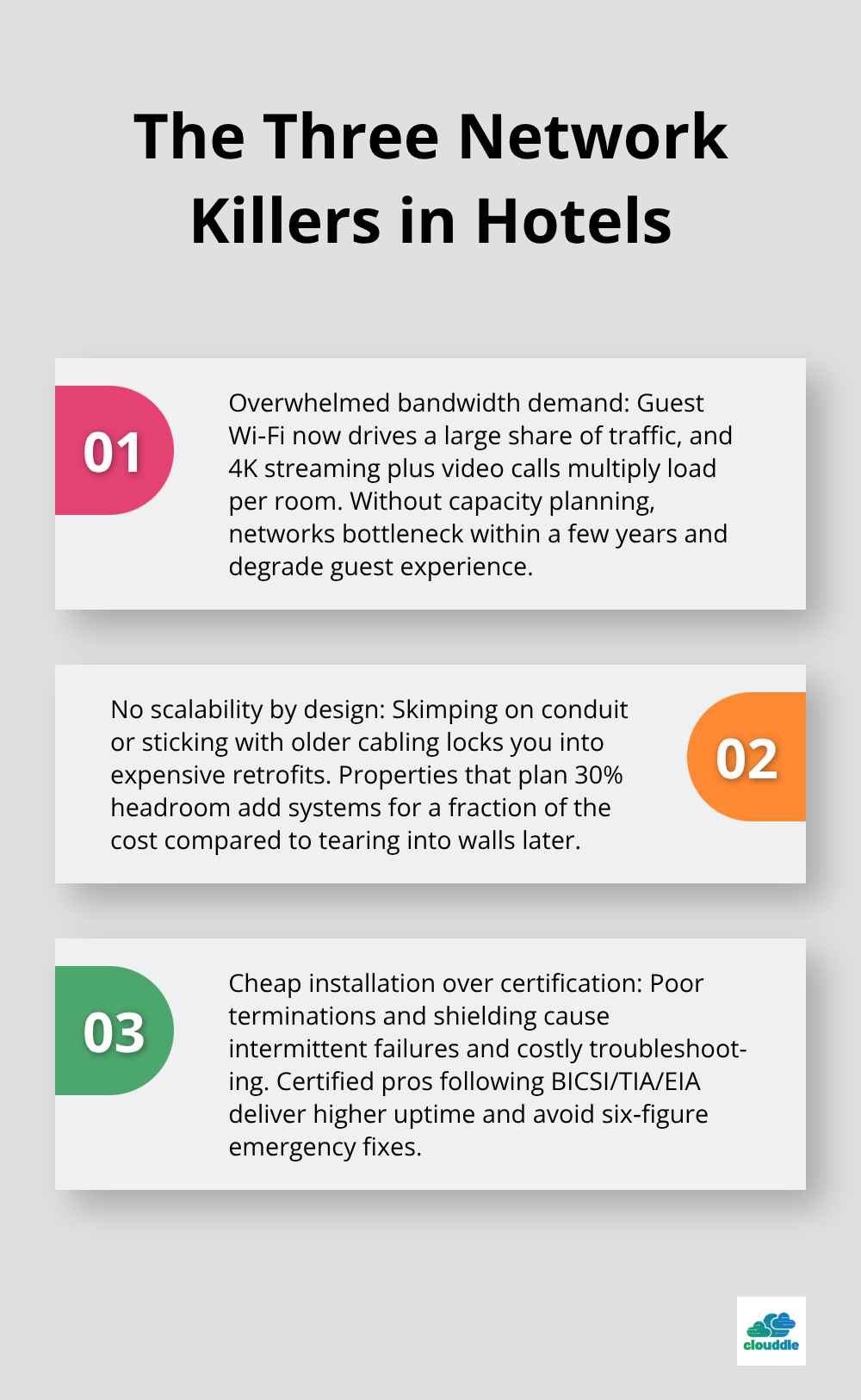
Guest Wi-Fi now accounts for 40–60% of total network traffic in hotels, yet many properties still design their cabling for 2015 usage patterns. A single guest streaming 4K video consumes 25 Mbps; add video calls, social media, and multiple devices per room, and a 100-room hotel can easily need 500+ Mbps of guest capacity during peak evening hours. Hotels that fail to account for this reality end up with cabling infrastructure that bottlenecks within three years, forcing expensive emergency upgrades.
Refusing Scalability Locks Hotels Into Costly Retrofits
The second killer is refusing to build scalability into the initial design. When you install Cat5e cabling or skimp on conduit space, you lock yourself into expensive retrofits the moment you want to add security cameras, smart room controls, or additional access points. Hotels that planned for 30% excess capacity in cable runs and conduit can add new systems for under $5,000; those that didn’t face rewiring costs of $50,000–$200,000 depending on property size. Hotels with aging infrastructure consistently report that adding a single conference room or upgrading from 50 to 100 access points requires tearing into walls and ceilings because nobody left room to pull new cables.
Cheap Installation Destroys Network Reliability and Your Budget
The third mistake cuts deepest: choosing cheap installation over certified professionals. Improperly terminated cables degrade signal strength by 10–30%, electromagnetic interference from poor shielding causes intermittent failures that are maddening to troubleshoot, and inadequate cable management creates tangled disasters that make future maintenance nearly impossible. A property manager might save $10,000 with non-certified installers, then spend $100,000 on emergency repairs, staff overtime diagnosing phantom network issues, and guest compensation for failed experiences.
Hotels that invested in RCDD-certified installers following BICSI and TIA/EIA standards experience 99.5% uptime; those that cut corners on installation quality average 94–96% uptime with frequent outages during peak seasons. One network outage during a full-occupancy weekend costs $5,000–$15,000 in lost revenue and staff inefficiency. After just one or two outages, professional installation pays for itself. Hotels that treat cabling as a cost center rather than a revenue-protecting investment discover too late that their network becomes a liability that damages guest satisfaction, operational efficiency, and your bottom line.
Final Thoughts
Your hotel’s network infrastructure determines whether guests return or leave negative reviews. Data cabling installation in hotels isn’t a one-time expense you can ignore after the project finishes-it’s the foundation that either supports your revenue or sabotages it. Hotels that invested in proper Cat6A cabling, certified installation, and scalable design now operate with 99.5% uptime while competitors struggle with outages that cost thousands per incident.
Professional installation prevents the expensive problems that emerge months or years later. When you hire RCDD-certified installers who follow BICSI and TIA/EIA standards, you avoid signal degradation, electromagnetic interference, and the tangled cable disasters that make troubleshooting impossible. One network failure during full occupancy costs $5,000–$15,000 in lost revenue and staff inefficiency, so professional installation pays for itself after a single avoided outage.
Quality infrastructure positions your hotel for long-term success as guest expectations evolve. Guest Wi-Fi now drives 40–60% of total network traffic, and that demand will only increase. Contact Clouddle to discuss how our managed IT and data cabling solutions combine networking, security, and support so your hotel operates smoothly without the capital burden of building infrastructure alone.