
Fiber optic cable installation equipment determines whether your network performs reliably or fails under pressure. Getting this right from the start saves thousands in repairs and downtime later.
At Clouddle, we’ve seen too many installations go wrong because teams cut corners on equipment quality or skip proper validation steps. This guide walks you through the tools you actually need, how to use them correctly, and why choosing the right installation partner matters more than most people realize.
What Tools Do You Actually Need for Fiber Installation
Fusion splicers represent the most expensive equipment investment you’ll make, and they’re worth every penny if you choose correctly. A quality fusion splicer costs between $25,000 and $40,000, but it delivers permanent splices with loss rates below 0.1 dB, compared to mechanical connectors that typically show 0.3 to 0.5 dB loss. Sumitomo and AFL manufacture the industry standard models that most professional installers rely on because they produce consistent, low-loss results across thousands of splices. Mechanical connectors like quick termination options offer speed during initial deployment, but they introduce higher attenuation and require ongoing maintenance.
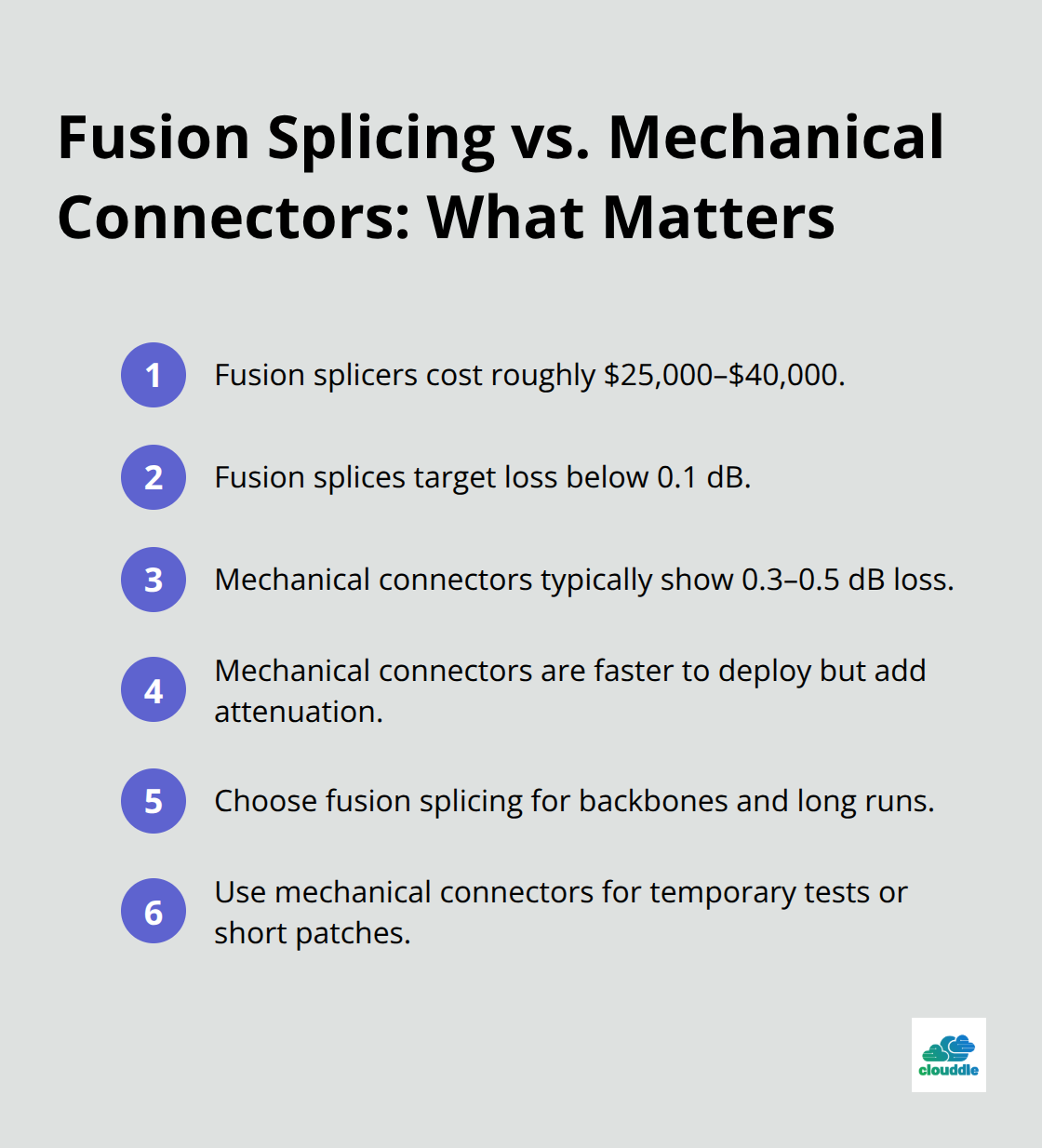
We recommend fusion splicing for backbone connections and long-distance runs where performance matters; mechanical connectors work fine for temporary test setups or short patch connections where you can tolerate slightly higher loss.
Cutting and Stripping Tools Shape Installation Speed
Cable cutters and fiber strippers seem like afterthoughts until you’re three hours into a job using dull blades. Hand tools from manufacturers like Jonard and Ripley make the difference between clean, damage-free fiber ends and crushed jackets that compromise splice quality. A proper fiber stripper costs around $200 to $400 but removes buffer coating without scoring the cladding-damage that reduces splice strength and increases loss. You should spend 30 seconds per fiber with quality tools instead of rushing with cheap alternatives that leave microscopic scratches requiring rework. Temperature and humidity affect stripping consistency, so you need to store your tools in climate-controlled conditions and replace stripper wheels every 1,000 to 2,000 terminations to maintain precision.
Testing Equipment Validates What You Built
Optical power meters and light sources form the foundation of field testing, and skipping this step guarantees callbacks. An OTDR (optical time-domain reflectometer) identifies splice locations and helps you become the expert in charge of your fiber optic network. Multilink and similar professional providers have used OTDR testing for decades because it catches problems before handoff to the customer. A basic optical power meter runs $400 to $800 and measures loss at each connection point; combined with a light source, you verify that every splice and connector meets specification. You should test your installation immediately after completion, before closing walls or finishing conduit work, because accessing failed splices becomes exponentially more expensive once construction is complete.
Why Equipment Quality Determines Your Installation Outcome
Professional installers understand that cheap equipment creates expensive problems. The tools you select directly impact splice loss, installation speed, and long-term network reliability. Your choice of fusion splicer, strippers, and test equipment shapes whether your fiber network performs at specification or requires costly rework. The next section covers how you route and manage cables to protect your investment and maintain performance throughout the installation process.
How to Route Cable and Test Splices Without Damaging Performance
Protect Your Fiber During the Installation Process
Cable routing determines whether your fiber network survives installation or deteriorates over time. The National Electrical Code requires rigid PVC or metallic conduit for fiber runs, but most installers underestimate how aggressively they can damage fiber during the pulling process. Your cable needs support every 200 feet on vertical runs, and you must keep bend radius at least 20 times the cable diameter during installation to prevent microbending that degrades signal quality. Horizontal runs should use raceways or conduits with no more than two 90-degree bends per 100-foot section; sharp interior edges inside conduit will score your jacket and cladding, so flexible conduit becomes worth the extra cost on complex routes.
Manage Pulling Tension and Cable Weight
When you pull cable through tight spaces, your tensile load matters more than most installers realize. Exceed the manufacturer’s maximum pulling tension and you permanently stretch the fiber, increasing attenuation and splice loss even if the cable appears intact. Many installers pull from below when running vertically, which stacks the cable’s full weight onto the connection point at the top; instead, pull from above and let gravity assist your work.
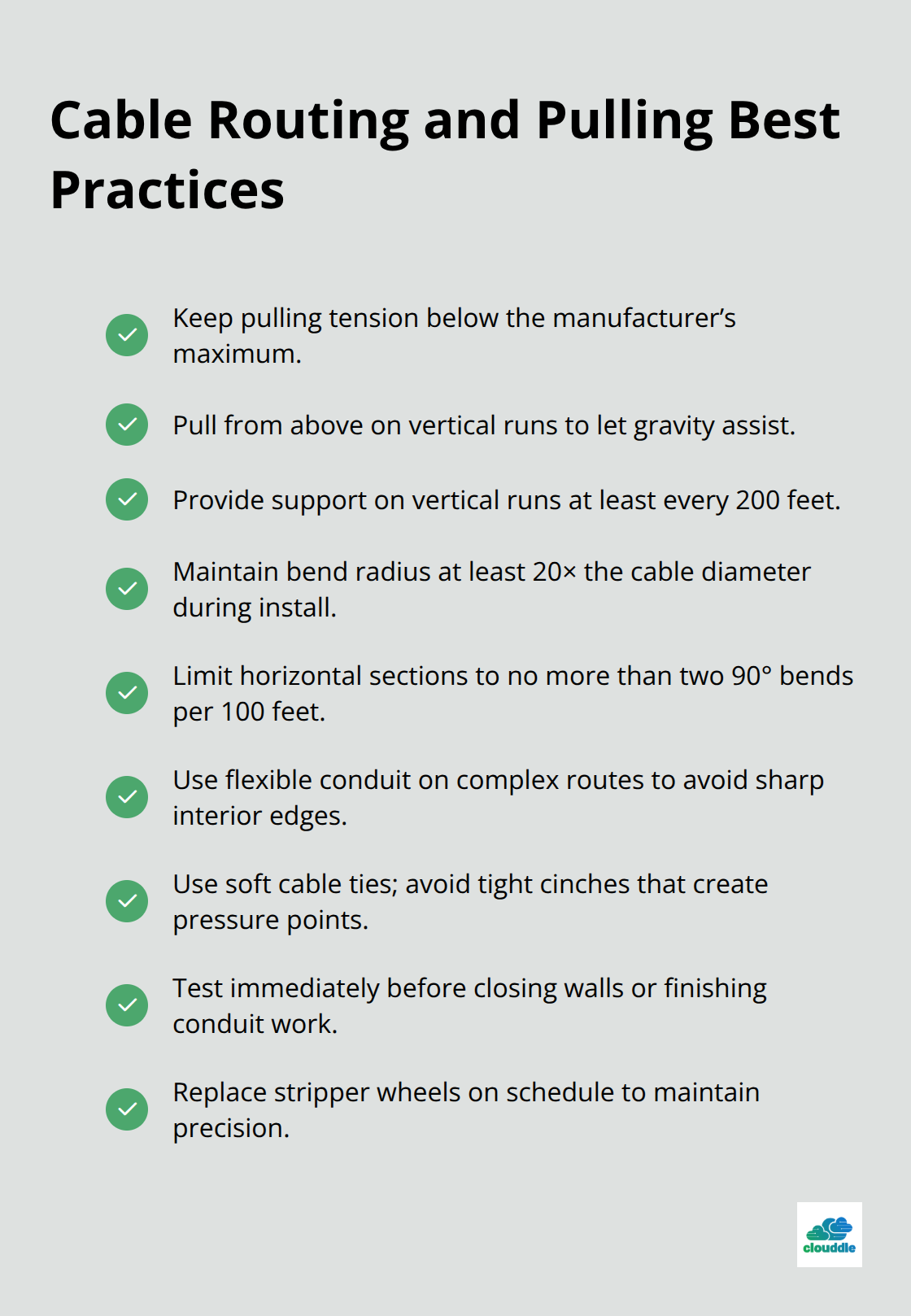
Soft cable ties prevent crushing, while tight cinches create pressure points that cause loss spikes months after installation finishes.
Plan Conduit Routes for Long-Term Performance
The conduit itself requires planning: runs longer than 100 feet need intermediate access points, and you should avoid unidirectional pulls that concentrate stress on one section. After you route the cable, test connectivity immediately before closing walls or finishing construction, because accessing failed splices inside sealed conduit costs thousands more than addressing problems during the active installation phase.
Validate Every Connection With Optical Testing
An optical power meter takes 90 seconds per test, yet most installers skip this step entirely. Your light source and meter combination should show less than 0.3 dB loss per mechanical connector and below 0.1 dB per fusion splice; anything higher indicates a stripping or cleaning problem that rework will fix. OTDR testing identifies splice locations and pinpoints problems along the entire run, revealing microbends or installation damage that basic power meter testing misses. Professional providers have relied on OTDR validation for decades because it catches performance issues before handoff.
Document Results and Address Problems Immediately
Test your backbone connections at multiple wavelengths (1310 nm and 1550 nm are standard) since loss varies by wavelength and some problems only appear at specific frequencies. Document every test result with timestamps and location data; this creates a baseline for future troubleshooting and proves your installation met specification. If any connection exceeds loss limits, rework it immediately rather than hoping performance improves over time. Fiber optic networks degrade predictably when installed correctly but fail catastrophically when shortcuts compromise the physical layer, making validation testing the difference between a reliable network and expensive downtime. Your choice to invest in proper testing now determines whether you select the right installation partner for your project.
Choosing the Right Installation Partner
Certifications Verify Hands-On Competency
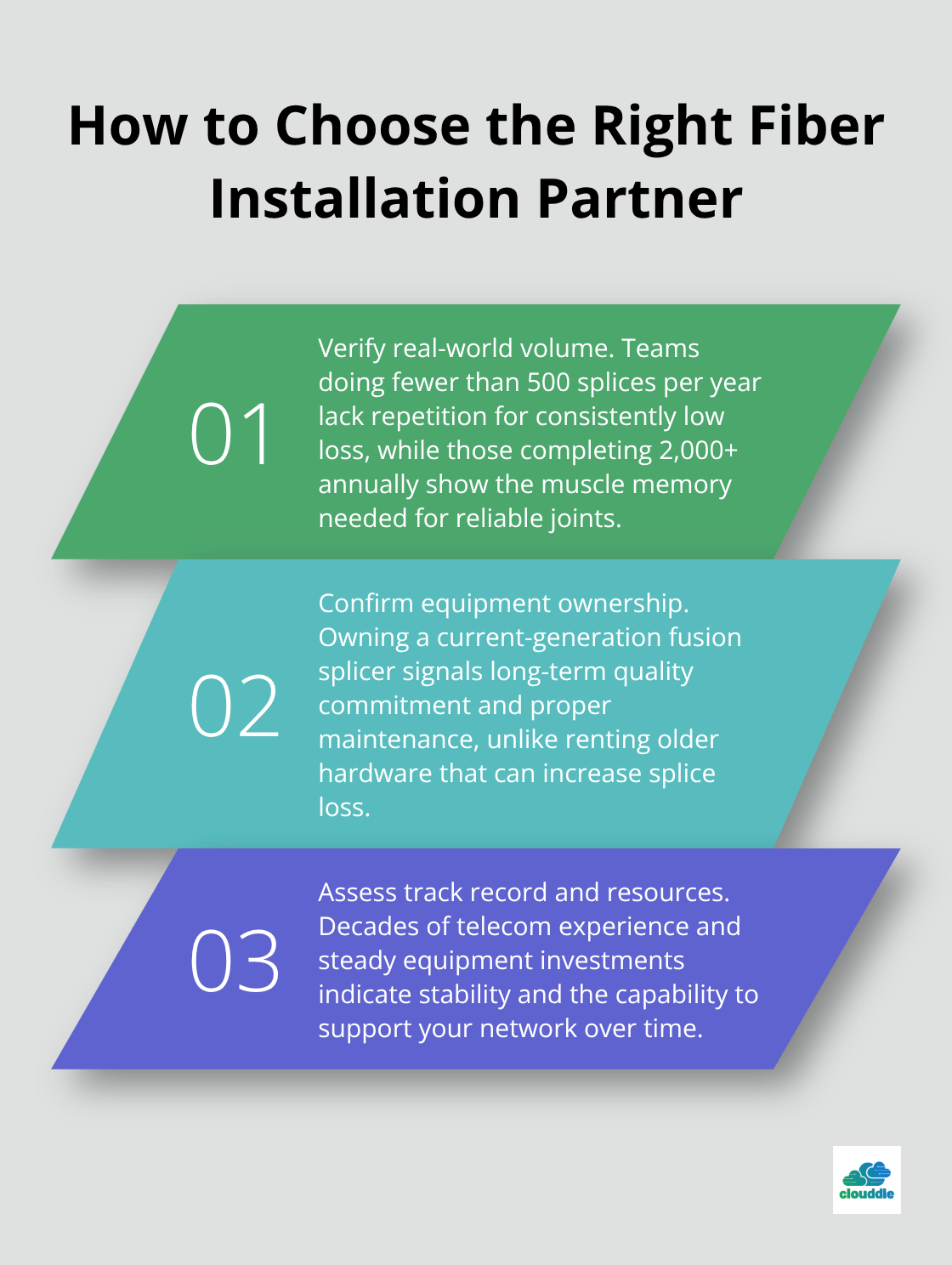
Professional fiber installers separate themselves through certifications that verify hands-on competency, not just classroom completion. The Fiber Optic Association offers the Certified Fiber Optics Technician credential, which requires documented field experience and a passing score on their examination. Most reputable installers hold certifications or equivalent credentials from manufacturers like Sumitomo and AFL, proving they’ve mastered fusion splicing, testing protocols, and safety procedures. When you contact an installer, ask specifically which certifications their team holds and how many splice terminations each technician completes annually. Installers performing fewer than 500 splices per year lack the repetition needed for consistent low-loss results, while those completing 2,000 or more splices annually demonstrate the muscle memory that produces reliable joints. A professional provider founded in 1983 in Ohio built their reputation through decades of telecom experience and consistent equipment investments. Your installer should own their fusion splicer rather than rent one, because ownership indicates long-term commitment to quality and the financial resources to maintain equipment properly.
Equipment Ownership Signals Quality Commitment
Equipment maintenance costs money, and installers cutting corners on splicer calibration or electrode replacement will cut corners on your installation. Ask for references from projects completed in the last 12 months, specifically requesting contact information for customers who can verify test results and long-term performance. A reluctance to provide recent references signals that the installer either lacks satisfied customers or doesn’t stand behind their work. The fusion splicer your installer brings to the job should be current-generation hardware from Sumitomo, AFL, or similar manufacturers, not older models that require longer heating cycles and produce higher splice loss.
Testing Capability Determines Problem Detection
Ask what optical power meter they use for testing and whether they perform OTDR validation on backbone runs. Installers using only basic power meters without OTDR capability cannot identify microbends or locate splice problems along long runs, leaving you vulnerable to performance issues that surface months after installation. They should carry multiple spare electrodes, stripper wheels, and cleaning supplies, because running out of consumables mid-job forces either shortcuts or costly delays. Their cable management accessories should include soft ties, bend-radius-friendly raceways, and conduit selection tools rather than generic hardware store supplies.
Post-Installation Support Prevents Future Problems
Post-installation support matters more than most customers realize because fiber networks occasionally develop problems weeks or months after completion as environmental factors stress the physical layer. Your installer should provide a detailed test report documenting loss measurements at each connection point, baseline OTDR traces for future comparison, and a warranty period covering rework of any connections exceeding specification. Installers offering 30-day warranties demonstrate confidence in their work, while those offering only 7 days suggest they expect problems they won’t address. Establish a maintenance relationship where your installer performs annual OTDR validation and can quickly respond to performance degradation, because catching problems early prevents the catastrophic failures that cost thousands in emergency repairs and extended downtime.
Final Thoughts
Your fiber optic cable installation equipment choices determine whether your network performs reliably for decades or requires expensive rework within months. The fusion splicer, strippers, and test equipment you select directly impact splice loss, installation speed, and long-term performance. Investing in quality tools from manufacturers like Sumitomo, AFL, and Jonard costs more upfront but eliminates the callbacks and performance degradation that cheap alternatives create.
Professional installation delivers benefits that extend far beyond the initial deployment. A certified installer with thousands of completed splices brings consistency that prevents the microbends, crushing damage, and improper terminations that plague DIY attempts. Their OTDR validation catches problems before walls close, their equipment ownership signals commitment to quality, and their post-installation support prevents the catastrophic failures that cost thousands in emergency repairs.
The long-term reliability of your fiber network depends on decisions you make during installation. Proper cable routing with appropriate conduit, correct pulling tension, and immediate validation testing protect your investment and ensure performance stability. We at Clouddle provide managed IT and networking solutions with certified teams that deliver professional fiber optic cable installation equipment expertise and 24/7 support to keep your operations running smoothly.


0 Comments