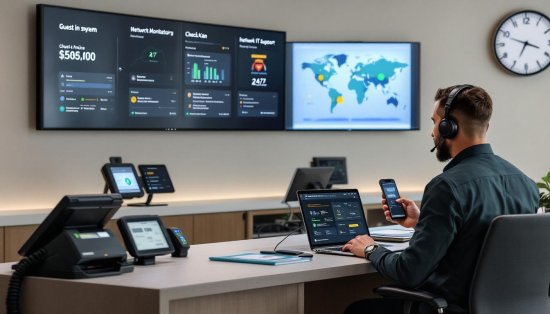


Hospitality IT contracts shape how your property operates day-to-day. The wrong agreement locks you into inflexible terms, while the right one gives you breathing room to scale and adapt.
At Clouddle, we’ve seen operators waste thousands on contracts that don’t fit their needs. This guide walks you through the contract types available, what to watch for, and how to ask the right questions before signing.
Contract Flexibility Matters More Than Length
Why Fixed Terms Fail in Hospitality
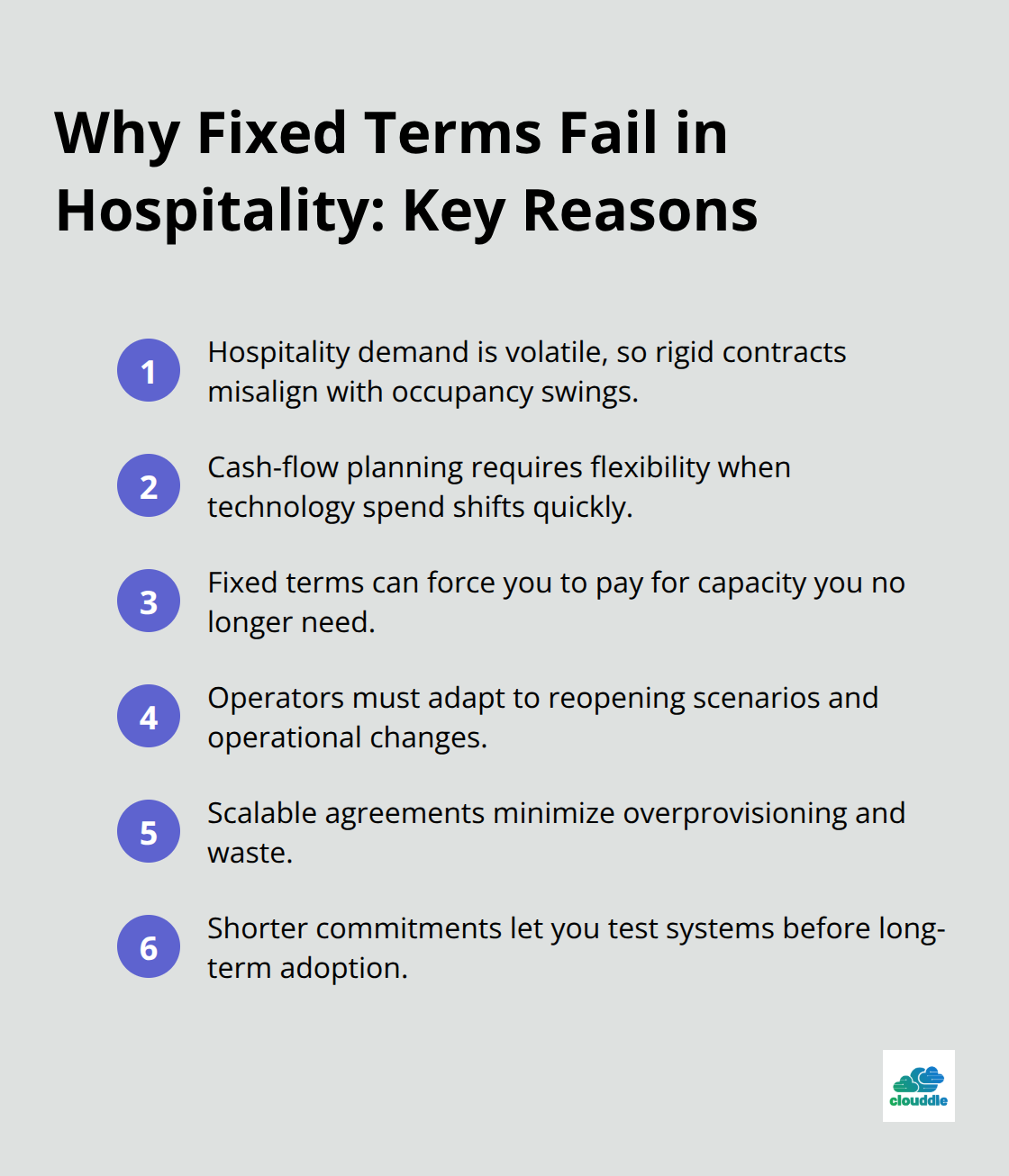
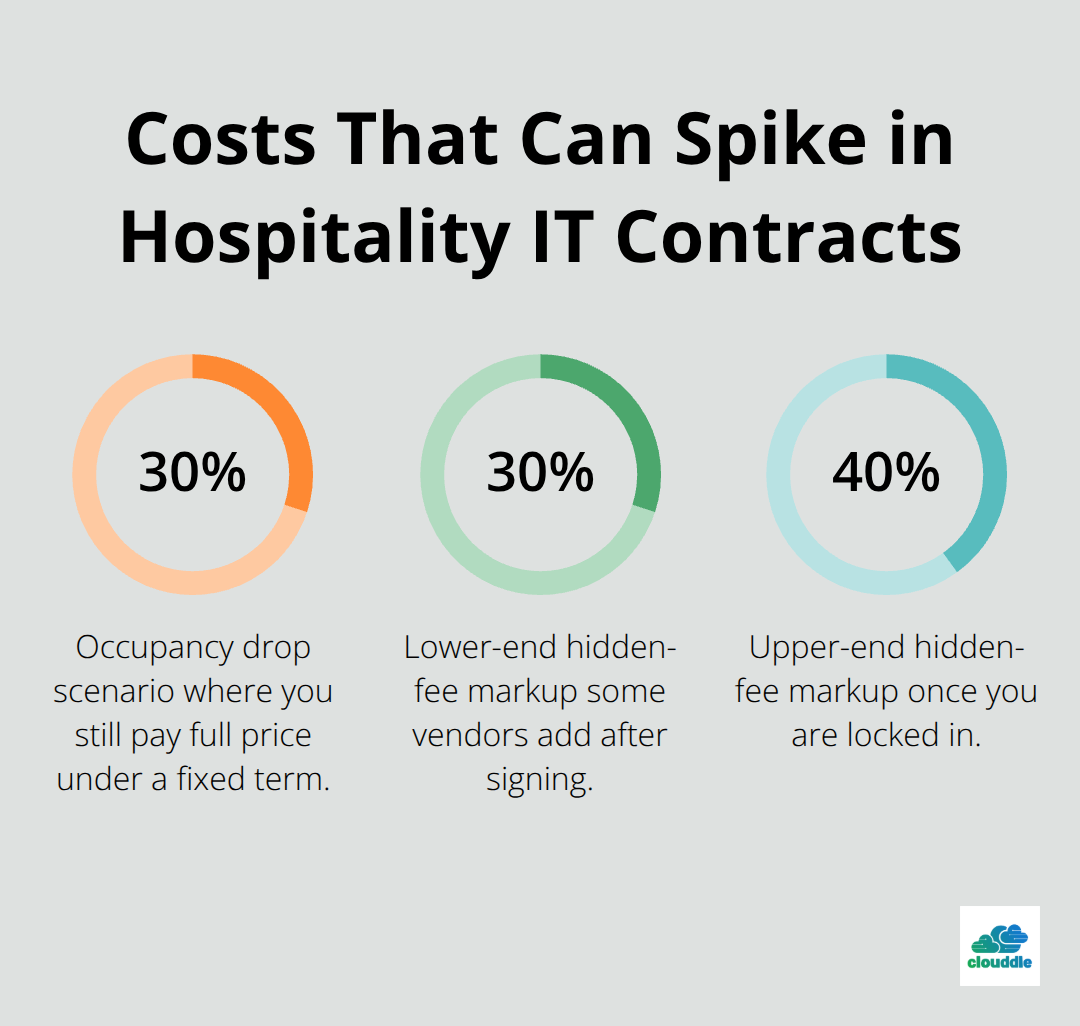
Fixed-term contracts trap operators into rigid commitments when the hospitality sector demands adaptability. COVID-19 accelerated this reality-industry experts highlighted that operators need IT contracts flexible enough to handle reopening scenarios and operational changes. A baseline 13-week cash-flow forecast becomes critical when your technology spend shifts dramatically based on occupancy rates, staffing needs, or unexpected market shifts. When you lock into a three-year agreement and occupancy drops 30 percent, you still pay full price for infrastructure you no longer need.
Month-to-Month Agreements: The Premium for Freedom
Month-to-month agreements cost more per month but give you the freedom to pivot without penalty when demand fluctuates or a better solution emerges. The trade-off matters most during recovery phases or when you test new systems before committing long-term. You avoid overprovisioning capacity and pay only for what you actually use. This flexibility proves especially valuable when your staffing model changes or you reorganize head office structures across multiple properties.
Multi-Year Contracts with Built-In Flexibility
Multi-year contracts do make sense, but only if they include built-in flexibility clauses. You should define minimum central IT support requirements upfront and negotiate tiered pricing that rewards loyalty without locking you into overprovisioned capacity. Hospitality leaders like Eva Bachmann of Ennismore stress staying agile and reacting quickly to operational changes, which means your contract must allow you to scale up or down without excessive fees. Modern hotel operations benefit from flexible staffing approaches that can adapt to changing business conditions, so your IT infrastructure needs to support dynamic scheduling across properties.
Multi-Property Management and Scalability
If you cluster hotels or reorganize head office structures, your contract should facilitate multi-property management and standardized platforms without forcing you into a five-year commitment that doesn’t account for growth. Your agreement should define clear escalation paths and service level agreements across multiple locations, so when you need support during peak seasons or unexpected operational shifts, response times appear guaranteed in writing, not promised verbally. Vendors who hesitate to discuss what happens if your occupancy drops 30 percent or if you need to redeploy staff across new roles reveal whether they’re built for real hospitality operations or just selling standard enterprise agreements.
What Makes a Contract Actually Work for Your Property
Service Level Agreements That Actually Protect You
Service level agreements mean nothing if they exist only on paper. The hospitality sector operates around occupancy peaks, staffing surges, and unexpected operational shifts, so your IT contract must specify what happens when demand spikes. Ask your vendor what uptime guarantee they actually deliver-not what they claim. According to SiteMinder research, more than half of hotels operate in the cloud, which enables real-time syncing across systems and remote access from any device. However, cloud operations only work if your provider commits to specific uptime percentages backed by financial penalties when they fail.
Demand language that defines 99.9% uptime as a minimum baseline, not a goal. Equally important: clarify what uptime actually covers. Does it include your property management system, channel manager, booking engine, and revenue management system simultaneously, or only individual components? A vendor who says they guarantee uptime but excludes your revenue management tool during peak season has essentially guaranteed nothing.
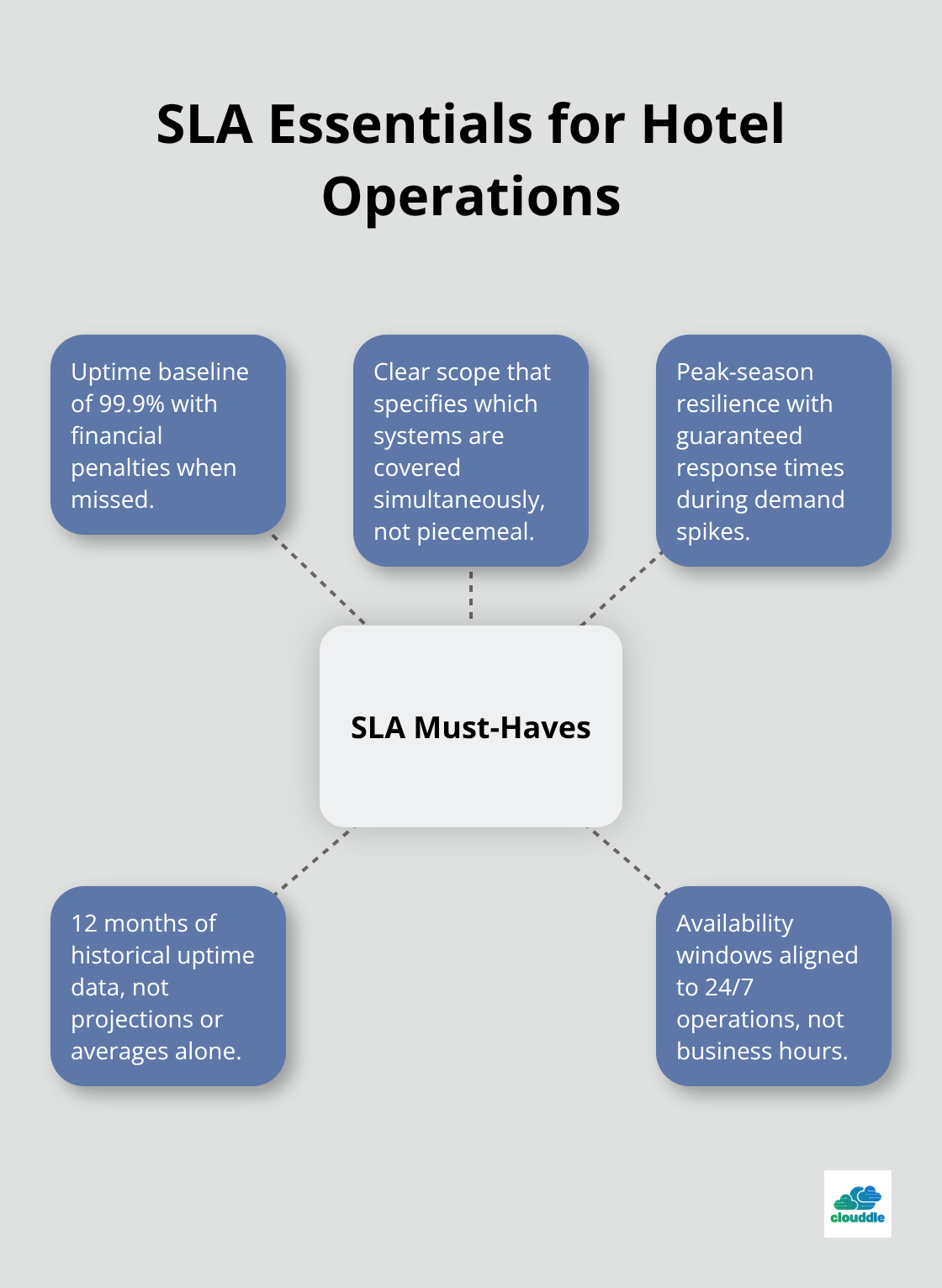
Request a breakdown of their historical uptime data for the past 12 months, not projections. If they hesitate, that’s your answer. Learn more about service level agreements to understand what protections you should demand.
Response Times That Match Your Operating Reality
Support response times separate contracts that function from those that fail during crises. When occupancy drops unexpectedly or staffing requirements shift, you need IT support within minutes, not hours. Hospitality operators face volatile recovery periods with potential regional lockdowns and operational changes, so your contract should guarantee response times in writing-typically 15 to 30 minutes for critical issues.
Define what constitutes critical: a down PMS during check-in time qualifies; a slow report does not. Your contract should also specify availability windows that match your actual operating schedule, not standard business hours. If your property runs 24/7, your support must too.
Beyond response time, clarify escalation procedures. Who handles what, and at what point does a senior technician take over? Multi-property operators particularly need defined escalation paths across all locations. Your vendor should provide a dedicated point of contact who understands your specific setup, not a rotating queue of agents who ask baseline questions every time you call.
Scalability Without Penalty or Overprovisioning
Scalability determines whether your contract grows with your business or becomes a constraint. Modern hospitality demands flexible capacity that adjusts to occupancy rates and staffing models without overprovisioning. Your agreement should allow you to add properties, increase bandwidth, or deploy new systems without renegotiating the entire contract.
Tiered pricing structures work here-pay for baseline capacity, then scale up or down monthly based on actual usage. If your vendor charges penalties for scaling down, they’ve built their model around your failure, not your success. Request transparent pricing tiers and ask specifically how costs change if you add a second property or reduce IT infrastructure during slower seasons.
The vendor’s willingness to discuss these scenarios reveals whether they understand hospitality operations or simply apply enterprise templates to your situation. A provider who resists flexibility conversations signals that their contract prioritizes their revenue stability over your operational needs.
Common Pitfalls in Hospitality IT Contracting
Hidden Fees That Appear After You Sign
Hospitality operators often face unexpected charges months after signing. These aren’t accidents-vendors exploit vague language to bury costs in implementation fees, support tiers, bandwidth overages, and scaling charges that appear reasonable until your property grows or demand spikes. During the 2020 reopening phase, operators who hadn’t scrutinized their IT contracts faced sudden bills for emergency support, temporary capacity increases, and system reconfigurations they thought were included.
Your contract must itemize every cost in writing: setup fees, monthly recurring charges, per-user licensing, bandwidth costs, support escalation fees, and penalties for early termination. Request a detailed quote that breaks down exactly what you pay monthly and what triggers additional charges. Many vendors quote a base price then add 30–40 percent through hidden fees once you’re locked in.
Specifically ask about bandwidth overage costs. If your PMS, channel manager, and revenue management system consume more data during peak season, what happens to your bill? Ask whether adding a second property requires renegotiating your entire agreement or simply adjusting your tier. Vendors who resist providing written cost breakdowns signal that their model depends on surprise charges later.
Vendor lock-in Makes Switching Prohibitively Expensive
Vendor lock-in creates a different problem: you become dependent on a provider whose contract makes switching prohibitively expensive. This happens through proprietary integrations, custom configurations tied to their system, and termination penalties structured to make leaving more costly than staying. When your PMS, booking engine, and channel manager all depend on a single vendor’s infrastructure, moving requires rebuilding those integrations from scratch-a process that costs thousands and takes weeks.
Your contract must explicitly address data portability. Can you export your configuration, guest data, and operational settings in standard formats if you need to switch? Demand that your vendor commit to supporting open APIs and standardized data formats rather than proprietary solutions. The hospitality tech stack should fuse channel management, direct-booking technology, PMS, revenue management systems, and business intelligence from potentially different providers. This modular approach prevents lock-in and lets you replace underperforming components without replacing everything. If a vendor insists on exclusive partnerships or discourages third-party integrations, that’s a red flag.
Peak Season Support Failures Expose Weak Contracts
Peak season support failures reveal contracts that look good on paper but fail when you need them most. Support response time guarantees mean nothing if your vendor’s support team becomes unreachable during high occupancy periods when staffing surges and system demands spike. Hospitality operators face volatile recovery periods with regional lockdowns and operational changes, so support must remain reliable when your business depends on it most.
Request your vendor’s historical support ticket data for their busiest periods-specifically, what percentage of critical tickets they resolved within their guaranteed response time during peak seasons. If they hesitate or provide only average data, that’s your answer. Your contract should include surge capacity provisions: what happens when you need to temporarily double your infrastructure for a major event or unexpected occupancy spike? Does support remain available at the same response time, or do you pay premium rates for what should be standard service? Define peak season explicitly in your contract-don’t let your vendor determine when surge pricing applies.
Final Thoughts
Your hospitality IT contracts determine whether your property operates with agility or gets trapped by inflexible commitments. Match your contract to your current operational reality, not what you hope to become-a single property with stable occupancy may thrive on a multi-year agreement with tiered pricing, while a multi-property operator managing volatile staffing needs month-to-month flexibility or contracts with built-in scaling provisions. Your head office structure, clustering strategy, and growth timeline should all shape which contract type works best.
Before signing, ask your vendor what uptime guarantees actually cover and what financial penalties apply when they miss them, request historical uptime data for the past 12 months rather than projections, clarify what happens to support response times during peak season, and confirm whether you can export data and configurations in standard formats if you need to switch providers. Vendors who answer directly and provide written documentation understand hospitality operations, while those who deflect, offer vague promises, or resist transparency are selling contracts designed to lock you in rather than support your business. Ask specifically how bandwidth overages, additional properties, and scaling changes affect your bill, and how they handle multi-property management and cross-location escalation.
We at Clouddle build hospitality IT solutions around your actual needs, combining networking, security, and entertainment without upfront investment paired with flexible contracts and 24/7 support that responds when your business demands it. Explore how Clouddle streamlines your IT strategy and gives you the control you need to operate efficiently across multiple properties.