
Hospitality Wi-Fi deployment has become as essential as clean rooms and friendly staff. Guests now expect fast, reliable connectivity everywhere-from the lobby to the pool deck-and poor network performance directly damages your reputation and bottom line.
At Clouddle, we’ve seen firsthand how properties that prioritize Wi-Fi infrastructure outperform competitors in guest satisfaction and operational efficiency. This guide walks you through building a network that doesn’t just work, but creates the seamless experience modern travelers demand.
Why Hospitality Wi-Fi Matters Now
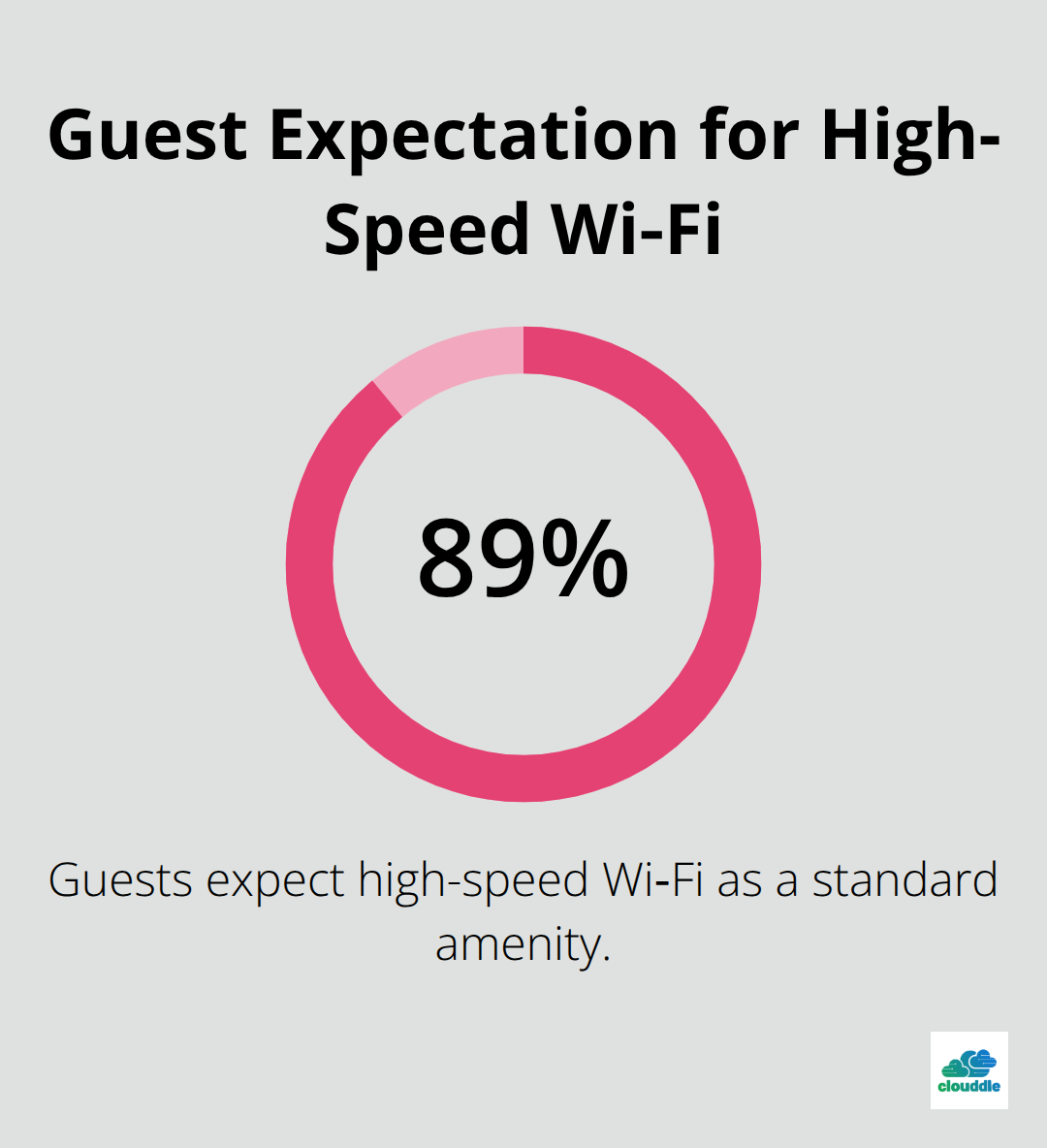
Eighty-nine percent of guests expect high-speed Wi-Fi as a standard amenity. This expectation ranks alongside hot water and clean sheets-it’s no longer a luxury. When Wi-Fi fails or performs poorly, guests post negative reviews online, damage your reputation, and book competitors next time. Hotels that ignore this reality lose revenue and market position to properties treating connectivity as a core service. The difference between a three-star and five-star review often comes down to whether a guest could stream their show without buffering or join a video call without dropping connection.
Network Performance Drives Revenue and Reputation
Poor Wi-Fi directly reduces occupancy and RevPAR. Guests who experience connectivity problems give lower ratings, and those ratings influence booking decisions for future visitors. A single negative review about Wi-Fi deters multiple potential guests from booking. Reliable connectivity, on the other hand, drives loyalty, repeat bookings, and higher review scores-which feed into booking algorithms and visibility. Hotels that invest in robust Wi-Fi infrastructure see measurable improvements in guest satisfaction metrics and revenue performance. This reflects the reality of modern hospitality, where digital experience shapes purchasing behavior and competitive positioning.
Staff Efficiency Requires Network Reliability
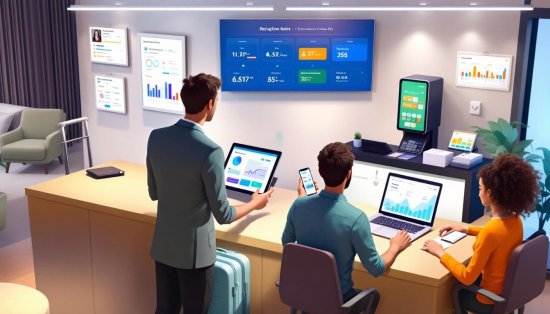
Your housekeeping, maintenance, and front-office teams cannot work efficiently without dependable connectivity. Housekeeping staff use mobile devices to track room status, maintenance teams access work orders remotely, and front-desk employees manage check-ins-all requiring seamless network access. When the network drops or slows, staff productivity plummets and guest service suffers. Weak networks force staff to waste time troubleshooting, walk to find a signal, or call for IT support instead of focusing on guest interactions. Hoteliers are investing in advanced connectivity infrastructure because they recognize that network performance directly impacts operational efficiency and staff ability to deliver service.
Streaming and Device Demands Continue to Grow
Streaming adoption, social media users, and cloud storage adoption have grown significantly, driving higher bandwidth needs in hotels. Guests arrive with multiple devices and expect to stream video, join video calls, and access cloud services simultaneously. Properties that fail to plan for these demands experience congestion, slow speeds, and frustrated guests. Modern hospitality networks must support data-heavy applications across rooms, lobbies, restaurants, conference halls, and outdoor spaces. This shift means Wi-Fi infrastructure decisions made today determine whether your property remains competitive tomorrow.
What Technical Foundation Supports Hospitality Wi-Fi at Scale
Deploy Access Points That Eliminate Dead Zones
Reliable hospitality Wi-Fi starts with infrastructure that handles real-world demands. Most hotels underestimate the number of connected devices and bandwidth consumption happening simultaneously across their property. A single guest room with two people streaming 4K video, joining video calls, and browsing social media consumes far more bandwidth than properties typically allocate per room. The solution requires thoughtful network architecture that extends beyond guest rooms into lobbies, restaurants, conference spaces, and outdoor areas where guests increasingly expect seamless connectivity.
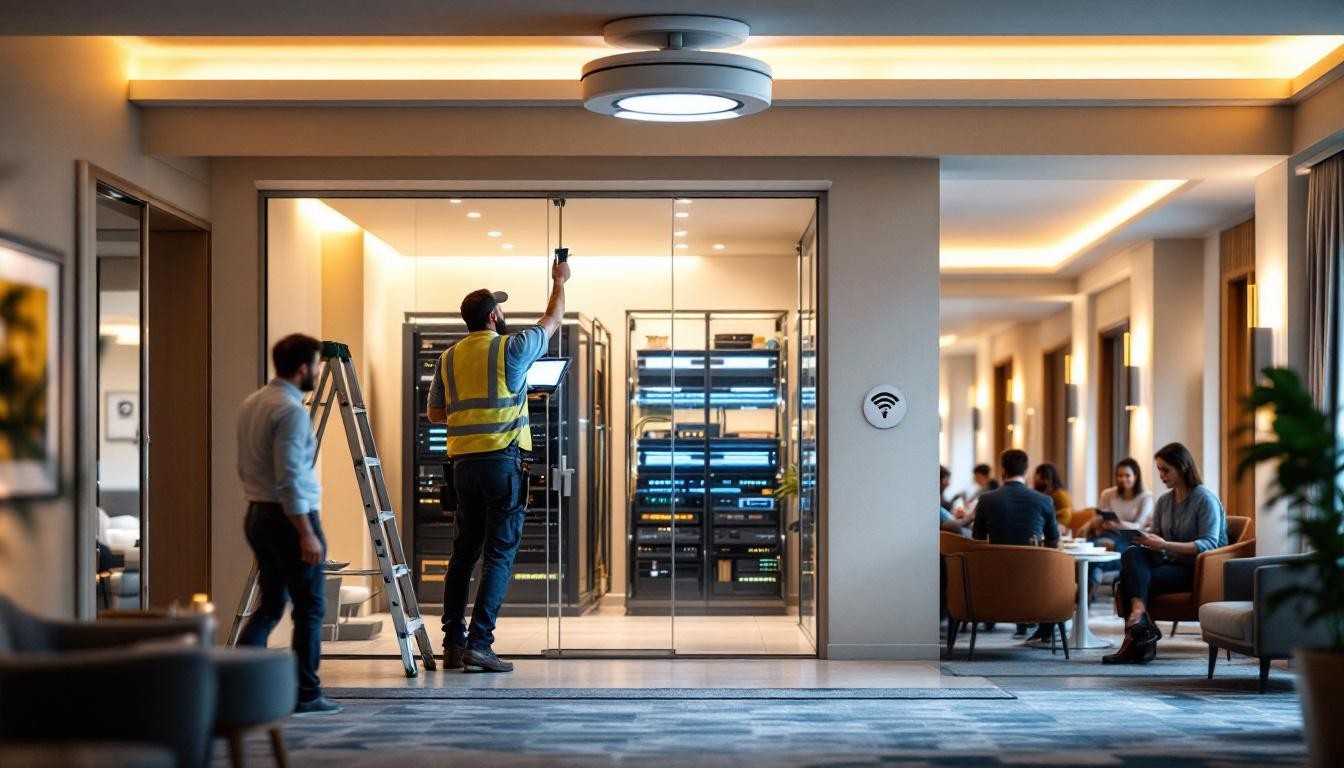
Coverage across your entire property means you must deploy access points strategically so signal strength remains consistent as guests move between spaces. Dead zones in parking garages, pool decks, or outdoor seating areas frustrate guests and damage reviews.
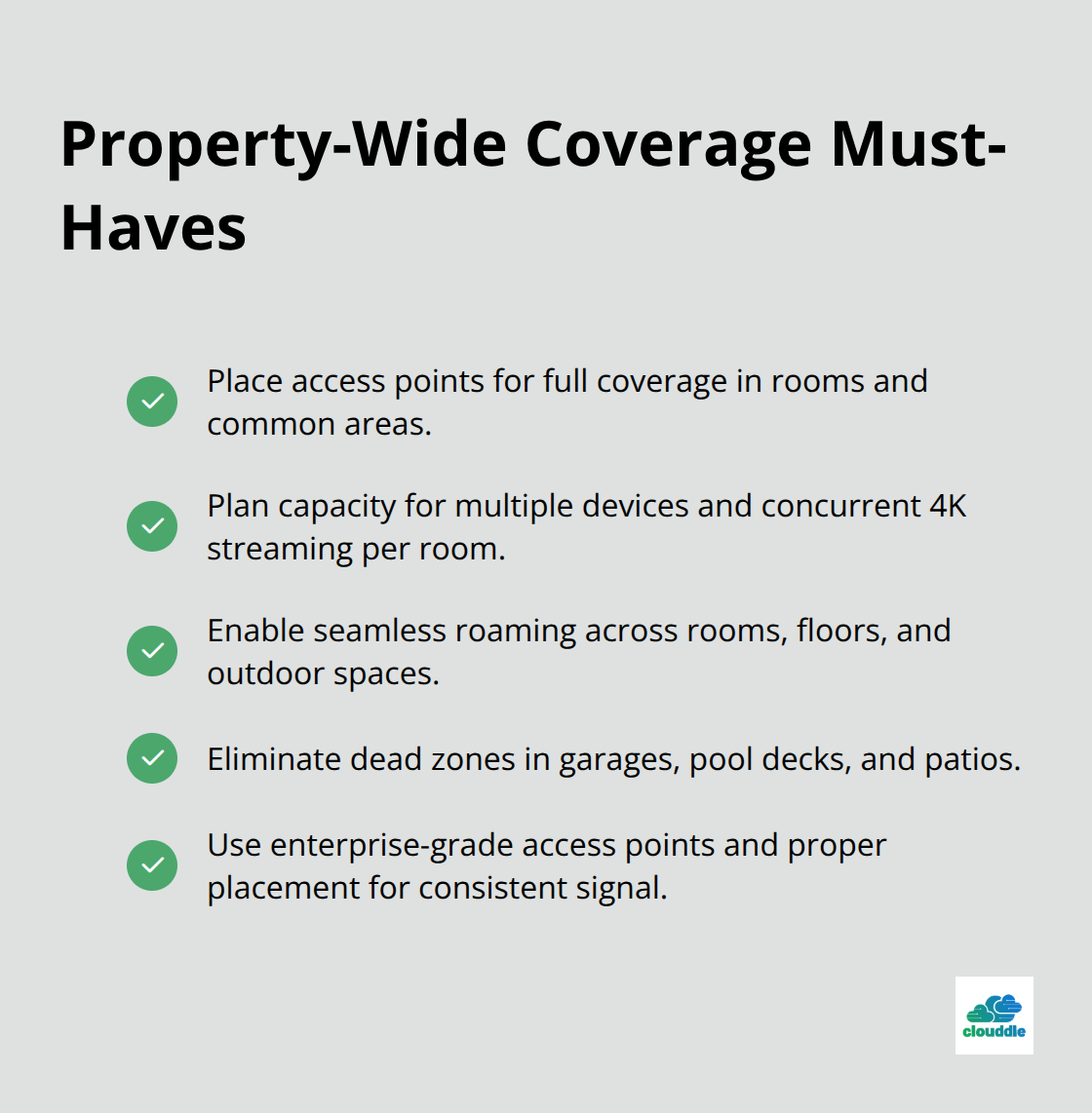
Enterprise-grade access points eliminate these gaps and enable seamless roaming between rooms and floors.
Protect Against Outages With Redundancy
Dual internet connections with automatic failover protect against outages that leave guests without connectivity and staff unable to access critical systems. This redundancy costs more upfront but prevents revenue loss and reputation damage from network downtime. Real-time traffic monitoring reveals which areas and times experience congestion, informing decisions about capacity upgrades and resource allocation.
Segment Networks and Control Bandwidth
Bandwidth management requires you to separate guest traffic from staff and operational systems using network segmentation. Guest networks should never compete with housekeeping systems, maintenance work orders, or property management platforms for bandwidth. Per-user speed controls let you allocate bandwidth based on guest tier or time of day, ensuring premium experiences for high-value guests while maintaining baseline service for all visitors.
Secure Guest Data and Operational Systems
Security protocols protect both guest data and your operational systems from unauthorized access and cyber threats. Guest networks must use strong encryption and device binding so only authenticated devices connect to your network. A captive portal with one-time password signup provides frictionless authentication without wall passwords that guests share and forget. Separate staff networks with stronger security protocols prevent guests from accessing sensitive systems managing reservations, payment processing, or employee records. Proactive monitoring detects suspicious activity before breaches occur, and continuous updates patch vulnerabilities as they emerge. Hotels handling payment card data face regulatory requirements for network security, making professional management essential rather than optional.
These technical foundations create the backbone for guest experiences that drive loyalty and revenue. The next chapter explores how you transform this infrastructure into competitive advantage through seamless connectivity and integrated systems.
How Connected Infrastructure Transforms Guest Experiences
Seamless connectivity across your property stops being a technical achievement and becomes a competitive weapon when guests notice the difference. A guest who streams without buffering, moves between rooms without reconnecting, and accesses hotel services through their phone develops loyalty that translates into repeat bookings and positive reviews. Properties treating Wi-Fi as infrastructure rather than amenity see measurable gains in guest satisfaction scores and online reputation. The moment a guest’s video call drops because they walked from the lobby to their room, you’ve lost a competitive advantage. Seamless roaming requires more than strong signal strength-it demands that your network recognizes devices as they transition between access points so authentication happens transparently. Guests should never see a login screen twice or manually reconnect. This seamless experience also extends to outdoor spaces and transit areas like shuttle vans, where guests increasingly expect connectivity. Properties that deliver this level of continuity outperform competitors who treat coverage as room-by-room deployment rather than property-wide infrastructure.
Integrate Property Management and Smart Building Systems
Your Wi-Fi network becomes exponentially more valuable when you connect it to property management systems, smart thermostats, occupancy sensors, and lighting controls. This integration drives operational efficiency that directly impacts your bottom line. Housekeeping staff access room status through their mobile devices, maintenance teams receive predictive alerts about equipment failures before they occur, and front-desk systems communicate with smart locks to streamline check-in processes. Energy management systems use occupancy data to automatically adjust heating, cooling, and lighting based on actual room usage, reducing waste without sacrificing guest comfort. Hotels implementing IoT-enabled networks report significant reductions in energy consumption and faster response times to maintenance issues. The data flowing through these connected systems reveals patterns about guest behavior, peak usage times, and high-traffic areas that inform decisions about resource allocation and service improvements. When your property management system feeds directly into your network infrastructure, staff spends less time on manual tasks and more time delivering service. This convergence of IT and operational technology eliminates silos that typically slow down decision-making and problem resolution.
Use Network Analytics to Drive Competitive Decisions
Network monitoring reveals exactly how guests interact with your property and where your infrastructure needs improvement. Real-time data shows which areas experience congestion, what times demand peak bandwidth, and which devices or services consume the most resources. Network analytics to optimize guest satisfaction demonstrate that offering free Wi-Fi helps hotels improve their ratings by up to 8 percent.
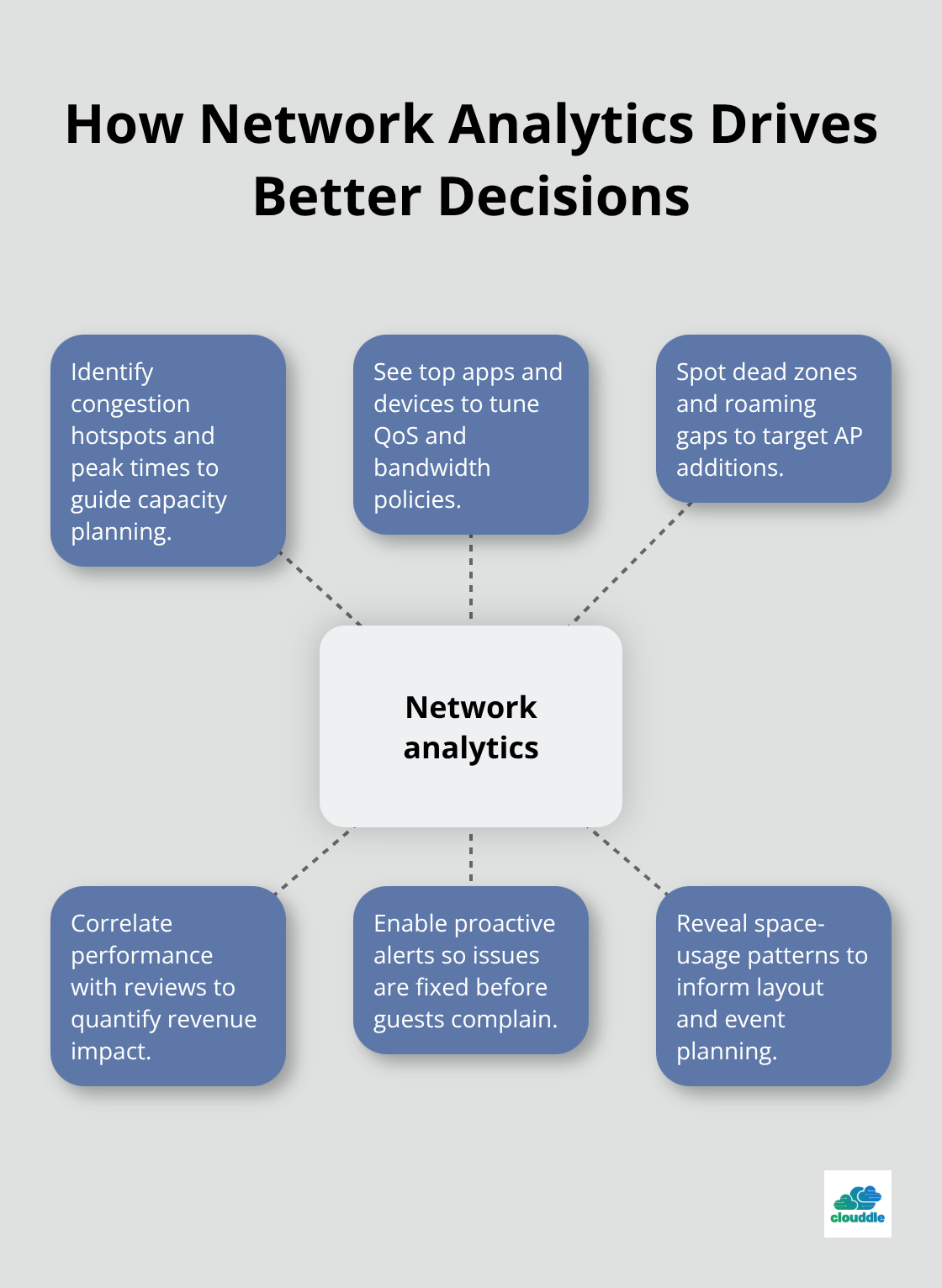
Guest feedback integrations allow you to correlate connectivity performance directly with review scores and booking patterns, quantifying the revenue impact of network quality. Properties can identify dead zones, bandwidth bottlenecks, and security risks before they damage guest experiences or create liability. This visibility also supports proactive troubleshooting-your network provider can detect and resolve issues before guests report problems to your front desk. Analytics from your network infrastructure inform decisions about everything from room layout and furniture placement to peak pricing strategies and event planning capacity. The data proves whether investments in expanded coverage or additional bandwidth actually improve guest satisfaction, eliminating guesswork from infrastructure decisions and directing capital toward changes that drive measurable returns.
Final Thoughts
Hospitality Wi-Fi deployment transforms from a technical checkbox into a business driver when you treat network infrastructure as seriously as you treat room cleanliness and staff training. Properties that invest in robust connectivity see measurable improvements in guest satisfaction, online reviews, and repeat bookings-the data proves that seamless Wi-Fi directly influences revenue and competitive positioning. Guests expect reliable connectivity everywhere on your property, and delivering that experience builds loyalty that translates into higher rates and positive word-of-mouth.
Modern hospitality networks must handle multiple devices per guest, support bandwidth-heavy applications, and integrate with property management systems that optimize operations across your entire property. Security protocols protecting guest data and operational systems are no longer optional-they’re essential for compliance and reputation protection. Network analytics reveal exactly where your infrastructure needs improvement and prove the revenue impact of connectivity quality, eliminating guesswork from capital allocation decisions.
Starting your hospitality Wi-Fi deployment requires partnering with a provider who understands hospitality operations and delivers end-to-end service. At Clouddle, we combine managed IT, networking, Wi-Fi, and security services with Network as a Service solutions that require no initial investment. Contact Clouddle today to transform your property’s connectivity and turn network infrastructure into competitive advantage.