
Picking the right intercom for your residential property isn't what it used to be. It’s no longer about just buzzing someone in—it’s a major decision that shapes your building's security, day-to-day operations, and even your residents' happiness. The best intercom systems residential buildings are using today are smart, video-based platforms that make deliveries a breeze, add a powerful layer of visual security, and give residents the freedom of mobile access.
Choosing the Right Intercom for Your Building
Think of a modern intercom as your building's command center for access. The days of crackly, audio-only boxes and the expensive, dedicated wiring they required are long gone. Today's systems are powerful hubs of technology that can make or break how smoothly your property runs, which has a direct line to resident satisfaction and your bottom line.
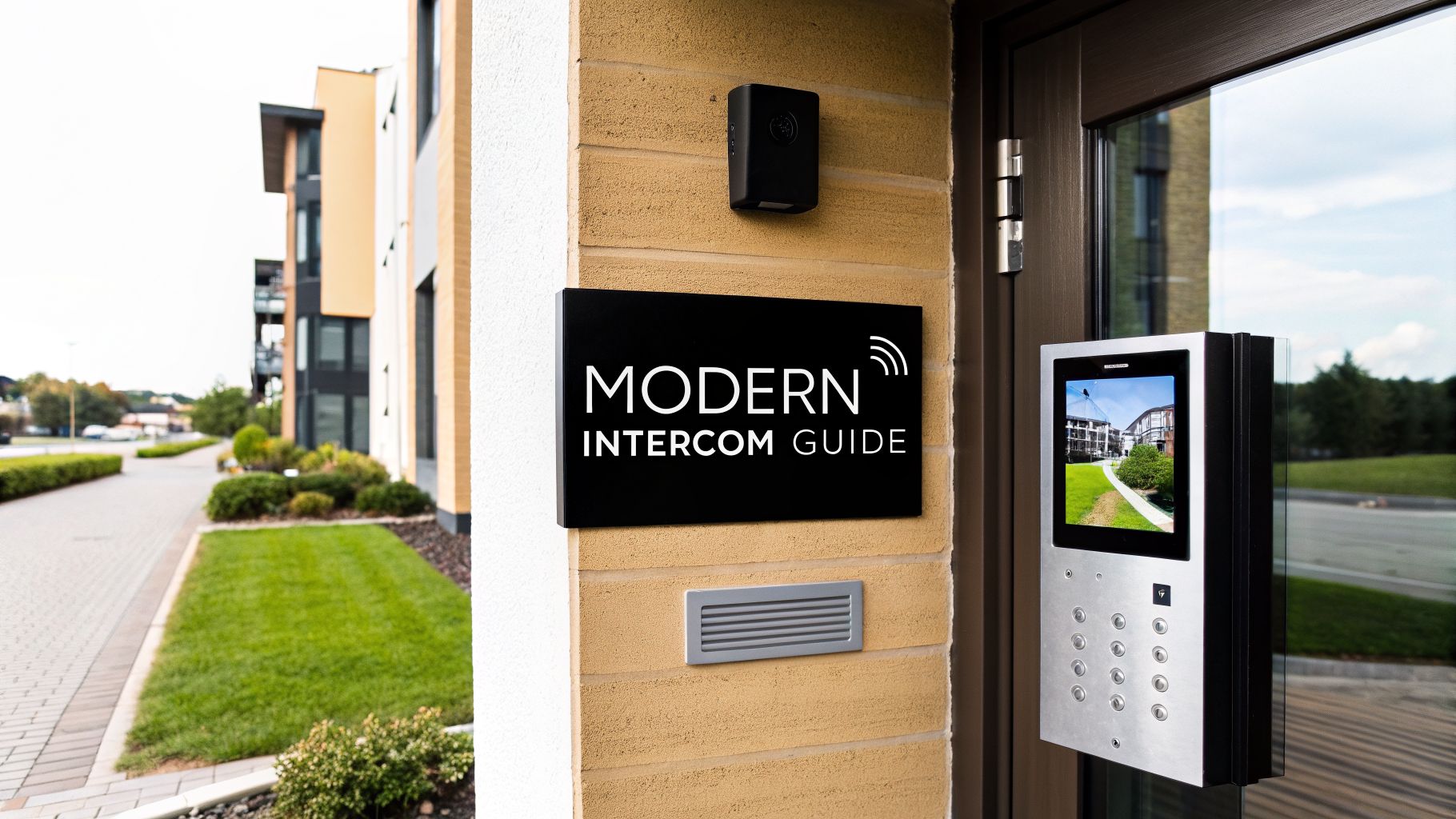
The biggest change has been the move from simple audio to intelligent, cloud-based video platforms. It’s a lot like the jump from a flip phone to a smartphone. The main job—communication—is still there, but what you can actually do with it is a world apart. A modern intercom delivers a whole suite of features built for how we live now.
For property owners and managers, this means focusing on a few key areas when making a choice:
- Enhanced Security: Being able to see who's at the door is a game-changer. Video verification lets residents and staff visually confirm a visitor’s identity before granting access, and it creates a clear digital log of every single entry. This visual proof is one of the strongest deterrents to unwanted visitors.
- Operational Efficiency: With a cloud-based dashboard, your staff can manage the entire system from anywhere. They can update the resident directory, grant temporary access for a contractor, or review entry logs from a laptop or phone, without having to physically be at the property.
- Improved Resident Experience: Residents love the convenience. They can manage access for their guests, let in a delivery driver, or buzz in the dog walker right from their smartphone, whether they’re on the couch or on vacation.
Choosing an intercom is an investment in your property's future. It’s about adopting technology that not only solves today's problems—like missed deliveries and security gaps—but also provides a scalable foundation for future smart building integrations.
Ultimately, the right system should just make life easier for everyone. For a deeper dive into the specific hardware, you can learn more about the best apartment call box systems for your property. The goal is to find a solution that boosts your building's appeal, future-proofs your investment, and adds real value to your property.
The Evolution from Legacy to Smart Intercoms
To understand just how far residential intercoms have come, you have to remember what they used to be. Think back to those old, beige boxes mounted on the wall. They were the flip phones of building access—they did one job, and that was about it. Residents and staff were physically tethered to a handset on the wall.
The real headache with these traditional systems, though, was the wiring. They required a dedicated, complex nest of wires running from the front door panel to every single unit. Installation was a massive, expensive project, and repairs were a nightmare. If a single wire failed, a technician had to play detective, tracing it through walls and ceilings, often leading to disruptive and costly work.
Worse yet, they offered no flexibility for modern life. If a resident wasn't home to answer the buzz, that package got sent back and that visitor was turned away. There was no way to grant remote access, no log of who came and went, and certainly no way to visually see who was at the door. It was a system that created constant frustrations for residents and major security gaps for property managers.
The Shortcomings of Yesterday's Intercoms
Legacy intercoms were really defined by what they couldn't do. These limitations were more than just inconveniences; they directly impacted a building's security, created more work for staff, and hurt the resident experience. It's no surprise that property managers are looking to move on.
The main problems were always the same:
- Expensive Dedicated Wiring: The cost and complexity of running a separate physical wire to each unit made both initial installation and future maintenance a significant financial burden.
- No Remote Access: Residents had to be physically inside their apartment to grant entry. This is completely out of sync with today's on-the-go lifestyle.
- Lack of Entry Logs: No audit trail meant no accountability. If a security issue arose, management had no record of who had entered the building or when, leaving them completely in the dark.
- Audio-Only Communication: Without video, residents couldn't be sure who they were letting in. This led to "buzzer-bombing," where people would just grant access to anyone who rang, creating a serious security risk.
The Leap to Smart IP and Cloud Solutions
Fast forward to today, and modern intercom systems for residential buildings are built on a totally different foundation: the internet. Just like your smartphone uses Wi-Fi and cellular data, these IP-based systems run on your building's existing network infrastructure. This single shift from analog wires to digital networks opens up a whole new world of possibilities.
To help you see the difference clearly, here's a side-by-side comparison.
Legacy vs Modern Intercom Systems Feature Comparison
| Feature | Legacy Systems (Analog, Telephone Entry) | Modern IP & Cloud Systems (Smart Video Intercoms) |
|---|---|---|
| Communication | Audio-only, often with poor quality. | Two-way video and high-definition audio. |
| Access Method | Physical buzz-in from an in-unit station. | Mobile app, virtual keys, PIN codes, key fobs, facial recognition. |
| Wiring | Dedicated, complex wiring to each unit. | Uses existing network infrastructure (Ethernet or Wi-Fi). |
| Management | On-site, manual updates to the directory. | Cloud-based portal accessible from any web browser. |
| Security | No entry logs or visual verification. | Time-stamped photo/video audit trail of all entries. |
| Remote Access | Not possible. Resident must be home. | Full remote access from anywhere via smartphone. |
| Integration | Standalone system with no integration capabilities. | Integrates with property management software (PMS), elevators, and other smart building tech. |
The gap is huge. What was once a simple, one-function device has become a central hub for building security and operations.
The move to a smart intercom isn’t just a hardware upgrade; it’s a strategic shift. It fundamentally changes how you manage property access, streamline day-to-day operations, and improve the living experience for your residents.
This evolution is happening for a reason. As high-speed connectivity becomes the new must-have for smart home upgrades, residents increasingly expect the advanced features that only modern intercoms can provide.
This flowchart breaks down the core benefits you gain when you make the switch.

As you can see, the benefits all feed into each other, creating a stronger, more efficient, and more desirable property.
How Modern Systems Solve Old Problems
A smart intercom stops being a source of problems and becomes a powerful management tool. By using cloud software and mobile apps, these systems fix every major issue found in older models. If you’re thinking about making the change, our guide on modernizing legacy systems provides a great roadmap.
Here’s a quick look at how they tackle those old-school pain points head-on:
- Mobile App for Remote Entry: The game-changer. Residents can see, speak with, and grant access to visitors directly from their smartphone, whether they're on the couch or on vacation. Missed deliveries and locked-out visitors are a thing of the past.
- Virtual Keys for Guests: Staff and residents can generate temporary, time-restricted virtual keys or PINs for cleaners, dog walkers, or visiting family. Access is easily granted and just as easily revoked, all from an app.
- Video Audit Trails: Every single entry event is captured with a time-stamped photo or video clip. This creates an invaluable security log that management can review to investigate incidents or simply monitor traffic.
- Cloud-Based Management: Property managers can handle everything—from updating the resident directory to revoking access for a former tenant—through a simple web portal. There's no more need to be physically on-site to manage the system.
Must-Have Features of a Modern Residential Intercom

When you're outfitting a property with a new intercom, you quickly realize it's not just about buzzing people in anymore. The basic function is a given, but the real value—for you and your residents—lies in the specific features that make daily life easier and the building more secure.
Picking the right feature set is what separates a frustrating, high-maintenance gadget from a truly smart system that streamlines your operations. Let's dig into the features that really matter for intercom systems for residential buildings and deliver a tangible return.
High-Definition Video and Two-Way Audio
Crystal-clear video isn’t a luxury; it’s the bedrock of a modern system. If residents can’t clearly see who’s at the door, they can’t make a confident decision about letting them in. Grainy, low-resolution video just doesn't provide the security you need.
You'll want a system with a wide-angle camera lens, ideally 156º or more, to get a full picture of your entrance. This eliminates the dangerous blind spots where someone could hide just out of view. This visual proof is your first and best defense against unwanted entry.
Of course, video is only half the story. It needs to be paired with crisp, two-way audio that sounds like a modern phone call, not a crackly walkie-talkie. This combination of seeing and speaking clearly with visitors is the core of a secure and convenient experience. For those curious about the nuts and bolts, you can learn more about how VoIP technology works in our detailed guide.
Multiple and Flexible Access Methods
People expect options. A rigid, one-size-fits-all approach to building access is a recipe for complaints. Your residents, staff, and delivery drivers all have different needs, and a great intercom should cater to them all with flexible entry methods.
The best systems offer a mix of credentials, including:
- Mobile App Access: This is non-negotiable. Residents expect to unlock the door from their smartphone, whether they’re on the couch or across town.
- PIN Codes: Perfect for giving temporary access to vendors, cleaning crews, or contractors. Some systems even let residents generate their own unique codes for guests.
- Virtual Keys (QR Codes): A resident can text a time-sensitive QR code to a visitor, who simply scans it at the panel for hassle-free entry. It's seamless and secure.
- Key Fobs and Cards: Many residents still prefer a physical fob. A good system should work with existing key fobs and cards, giving people a familiar way to get in.
The goal is to provide a path of least resistance for authorized individuals while creating a strong barrier for everyone else. By offering multiple ways to open the door, you cater to every user's preference and situation.
A Powerful Cloud-Based Management Portal
For property managers, this is the game-changer. A cloud-based dashboard is the command center for your entire access control system. Instead of being chained to a desk on-site to manage the system, your team can handle everything from a web browser, anywhere in the world.
From this single portal, you should be able to:
- Instantly Update the Resident Directory: Add a new tenant or remove an old one in seconds. The directory on the intercom updates immediately.
- Review Entry Logs: Pull up a time-stamped visual audit trail of every entry. This log, with photos or video clips, is invaluable for investigating any incidents.
- Remotely Grant or Revoke Access: Onboard a new employee or disable a former resident’s credentials instantly, without ever needing to track down a physical key.
- Manage Permissions for All Entrances: If your property has a lobby door, a garage, and a gym, you can control access rules for all of them from one place.
This remote management capability is what elevates an intercom from a simple door buzzer to a powerful operational asset. It drastically cuts down on administrative tasks, saves your staff countless hours, and gives you a complete picture of who is coming and going.
Weaving Your Intercom into Your Building’s Tech
An intercom that just opens the front door is a wasted opportunity. The real magic happens when you integrate it with your building's other systems, turning it from a simple doorbell into the central hub for your entire property. This is what truly separates a modern, smart building from one that's just getting by.
Think of it this way: a powerful intercom is like a great quarterback. On his own, he's impressive. But he can't win the game without a solid offensive line and skilled receivers to work with. Your building’s network and other security devices are that team, and they all need to work together.
Laying the Network Groundwork
Modern intercom systems for residential buildings are IP-based. Forget the old, dedicated wiring of the past; these systems run on your property's internet network. This means your intercom is only as reliable as the network supporting it. A spotty or slow connection will result in dropped calls, pixelated video, and a frustrating experience for everyone.
To head off those problems, you need a rock-solid network. This really comes down to two things:
- Structured Cabling: This is the physical wiring that forms your network's backbone. Having a professional run high-quality Ethernet cables (like Cat5e or Cat6) directly to the main intercom station is crucial. It creates a stable, high-speed connection that Wi-Fi just can't match in terms of reliability.
- Managed Wi-Fi: While the main unit needs a hardwired connection, your residents will be answering calls and opening doors from their smartphones using your building's Wi-Fi. A professionally managed network ensures you have strong, consistent coverage everywhere, with enough bandwidth to go around.
A well-planned network does more than just support your intercom. It sets your building up for the future, creating a reliable foundation for any other smart tech you decide to add down the road, from smart thermostats to automated lighting.
Creating a Single, Unified Security System
Once your network is solid, you can start connecting your intercom to other security devices. This is where it goes from being a communication tool to the brain of your property's security and access operations. To get this right, you need to understand the principles of system interconnection.
When your systems talk to each other, they automate tasks, share information, and give you a much clearer picture of what’s happening on your property.
Here are a few of the most impactful integrations I’ve seen work wonders:
- Connecting with CCTV Cameras: Link your intercom to the building's security cameras. Now, whenever a visitor makes a call, you can automatically trigger specific cameras to record the event. This gives you a video record from multiple angles, capturing important context the intercom's own camera might miss.
- Syncing with Smart Locks and Access Control: When you sync your intercom with smart locks on common area doors—like the gym, pool, or even individual apartment doors—you create a completely seamless entry process. One credential, whether it’s a mobile app, a PIN code, or a key fob, can grant a resident or visitor access through every checkpoint they're authorized for.
- Integrating with Elevator Controls: For an extra layer of security, you can tie the intercom into your elevator system. When a resident lets a guest in, the system can automatically give the elevator permission to travel only to the resident's floor. This is a simple but powerful way to keep visitors from wandering onto floors they shouldn't be on.
- Tying into Property Management Software (PMS): This is a massive time-saver for your staff. When the intercom is synced with your PMS, the resident directory manages itself. Add a new tenant to your PMS, and they're instantly granted access on the intercom. When they move out, their credentials are just as quickly revoked. No more manual updates.
By connecting your residential intercom system with the other technology in your building, you’re not just installing a fancy door phone. You're putting in place a core piece of infrastructure that strengthens security, simplifies day-to-day operations, and delivers the kind of modern, convenient experience that today's tenants expect.
Best Practices for Installation and Maintenance

You can buy the best intercom system on the market, but if it's installed poorly, it's just an expensive source of frustration. A great deployment isn't just about screwing hardware to a wall; it’s a mix of careful planning, professional work, and a smart maintenance plan that protects your investment for years to come.
Think about it this way: You wouldn't install a gourmet kitchen on top of a crumbling foundation. In the same way, your new intercom systems residential properties rely on a solid base of professional installation and ongoing support to actually work as promised.
Planning for a Flawless Installation
A smooth installation starts long before a technician ever shows up. This initial planning phase is your chance to get ahead of problems and avoid costly changes or resident complaints later. Rushing the process is a recipe for performance issues down the road.
The first step is always to partner with a qualified technology provider for a thorough site survey. They need to walk your property and get a real feel for its layout, existing infrastructure, and specific access points.
During this crucial planning stage, your provider should dig into a few key areas:
- Wiring and Network Assessment: They'll figure out the best way to get everything connected. While some modern systems can technically use older wiring, pulling new Ethernet (Cat6) cable is almost always the right move for IP-based video intercoms. This guarantees a stable connection and future-proofs the building, preventing the choppy video and dropped calls that drive everyone crazy.
- Hardware Placement and ADA Compliance: Where you put the intercom matters. A lot. It has to be positioned at a height and location that’s truly accessible for everyone, including residents with disabilities, to meet Americans with Disabilities Act (ADA) requirements. The camera angle also needs to be just right for a clear view of visitors.
- Power over Ethernet (PoE) Requirements: Most modern intercoms get their power right through the Ethernet cable, which is incredibly convenient. Your installer’s job is to make sure your network switches can actually deliver enough power to every single device without being overloaded, which can cause random shutdowns.
A professional installation isn't an expense—it's an investment in reliability. Taking the time to properly plan the network, power, and physical placement of your intercom is the single most important factor in its long-term performance.
Proactive Maintenance vs. Reactive Fixes
Once your system is up and running, the job shifts to keeping it that way. Too many properties get stuck in a "break-fix" cycle, only calling for help when a resident reports a problem. This is a terrible approach. It’s inefficient and leads to downtime that makes your staff look bad and residents angry.
A far better strategy is to adopt a proactive, managed service approach. It’s like getting regular oil changes for your car instead of waiting for the engine to seize on the highway. A managed service provider keeps a constant eye on your system to spot tiny issues before they turn into major meltdowns.
This proactive model gives you some serious advantages:
- Continuous Health Monitoring: Your provider is actively watching your system's connection and performance. They'll often know a device is offline before you or your residents do, and they can start fixing it immediately.
- Automatic Software Updates: Like your phone, modern intercoms get regular software updates to add features and patch security holes. A managed service ensures these updates are installed automatically, keeping your system secure and current without you lifting a finger.
- 24/7 Support: Problems don't stick to a 9-to-5 schedule. With managed support, you have experts on call around the clock. Any issue that pops up can be addressed quickly, minimizing the headache for your residents.
By choosing a managed service plan, you're essentially handing off the technical burden to dedicated experts. This not only guarantees the best possible uptime and security for your intercom systems residential solution but also frees your staff to focus on what they do best: taking care of residents.
Choosing Your Intercom System: A Final Checklist
Alright, you’re in the home stretch. Making the final call on a new residential intercom system is a big deal, and it’s a decision that will affect your property's security, daily operations, and resident happiness for a long time.
To help you get it right, we've boiled this guide down to a simple, actionable checklist. Think of this as your final walkthrough before you commit. It’s here to help you cut through the sales pitches, ask the questions that matter, and pick the best intercom system for residential properties like yours.
Core System Requirements
Before you even start comparing brands, there are a few must-haves. These are the non-negotiables that separate a modern, future-proof system from something that will be a headache in a year. If a system can't check these boxes, move on.
- High-Definition Video: You need to see who's at the door, clearly. Insist on a camera with a wide-angle lens of at least 156° to get the full picture. Grainy, narrow video just doesn't cut it.
- Cloud-Based Management: Your team needs the power to manage everything—from adding new residents to checking entry logs—from a simple web browser. No more running down to a physical server. This is the bedrock of efficient management.
- Multiple Ways to Get In: A good system is a flexible one. Look for a mix of access methods like a mobile app, guest-friendly virtual keys (like QR codes), PINs for deliveries, and the ever-reliable key fobs or cards.
Evaluating Potential Providers
Once you have a shortlist of systems that meet your core needs, it’s time to scrutinize the companies behind them. The provider you pick is just as important as the hardware they sell.
Remember, this isn't a one-time purchase. You're starting a long-term relationship, so you need a partner with a solid reputation for both reliability and support when you need it.
When you're talking to potential providers, hit them with these direct questions:
- What does your support really look like? Is 24/7 live support available? You want a partner who actively monitors your system's health and pushes updates automatically, not one you have to chase down when something breaks.
- Will this play nice with our other tech? Your intercom should connect seamlessly with your Property Management Software (PMS), existing CCTV cameras, and smart locks. When these systems talk to each other, your entire operation becomes smarter and more automated.
- What's the total cost of ownership? Get a clear, itemized breakdown of hardware, installation, and any recurring monthly or annual software fees. Some companies, like Clouddle Inc, even offer a Network-as-a-Service model that eliminates the upfront cost, turning a huge capital purchase into a predictable operating expense.
Final Due Diligence Before Signing
You’ve narrowed it down to your top one or two contenders. Before you put pen to paper, run through this final checklist. This is your last chance to make sure you’re making a confident investment that truly fits your building's goals.
- Check the App Reviews: Your residents will live in the mobile app. Head to the Apple App Store and Google Play Store and read what actual users are saying. A pattern of bad reviews or complaints about bugs is a huge red flag.
- Insist on a Live Demo: Don't settle for a slick, pre-recorded video. Schedule a live one-on-one demo where you can see the management dashboard in action and ask questions specific to your property’s quirks.
- Confirm Installation Standards: Who is actually installing this? Make sure the provider uses certified, in-house installers who will properly assess your building’s wiring and infrastructure. A shoddy installation can undermine even the best hardware.
Frequently Asked Questions
Even with a solid grasp of the technology, it's the practical, real-world questions that matter most. Let's dig into the common queries we hear from property owners and managers who are considering a new intercom system.
What Is the Typical Cost of a Modern Intercom System?
This is the big one, and the honest answer is: it depends. The final price tag is a mix of your building’s size, the specific features you choose, and how complex the installation will be.
For a single-family home, a good video doorbell can run you $200 to $350. But for multi-tenant residential buildings, the scope changes dramatically. You’re often looking at a hardware cost between $2,000 and $7,000, with installation fees typically falling in a similar range.
A major shift we're seeing in the industry is a move away from massive upfront costs. Many providers now offer service-based plans that roll the hardware, professional installation, and ongoing 24/7 support into a single, predictable monthly payment. This turns a capital expense into a manageable operating expense.
Can I Use My Old Intercom System's Wiring for an Upgrade?
We get this question a lot. While it's sometimes technically possible to repurpose an old 2-wire setup, we almost always advise against it for modern IP-based video intercoms. Think of it like trying to stream 4K video over an old dial-up modem—it just wasn't built for that kind of data load.
Sticking with old wiring is often a recipe for headaches like poor video quality, dropped calls, and general unreliability. The best-practice approach is to run new Ethernet (Cat5e/Cat6) cabling. This not only guarantees a stable, high-speed connection for your intercom but also future-proofs your building for other smart technologies down the road. A professional site survey is the only way to know for sure what your building needs.
How Do Cloud-Based Intercoms Improve Security?
This is where modern systems really shine. Cloud-based intercoms add several layers of security that older systems simply can't match.
- Visual Audit Trail: Every single time someone enters, the system captures a time-stamped photo or video. This log gives you a clear, accessible record of who came and went, which you can review from anywhere.
- Remote Verification: When a guest arrives, residents get a live video call on their smartphone. They can see and speak to the person before ever buzzing them in, which is a powerful tool against tailgating and unauthorized entry.
- Flexible Access Control: Forget the risks of lost or unreturned keys. You can instantly grant—and just as easily revoke—temporary virtual keys or PIN codes for visitors, cleaning crews, or delivery drivers.
Ready to bring your property’s access and security up to modern standards? Clouddle Inc. provides comprehensive managed technology services, including state-of-the-art intercom systems with zero-down payment options and 24/7 support. Learn more and schedule your consultation today.