

Cyberattacks cost businesses $4.45 million on average in 2023, making professional cybersecurity support more important than ever. IT cybersecurity companies offer specialized protection that most internal teams simply can’t match.
We at Clouddle understand the challenge of finding the right security partner. This guide breaks down the main types of cybersecurity companies and helps you choose the best fit for your business needs.
What Type of Cybersecurity Company Do You Need?
The cybersecurity industry splits into three distinct categories, each serving different business needs and budgets. Understanding these options helps you match your security requirements with the right provider type.
Managed Security Service Providers Handle Everything
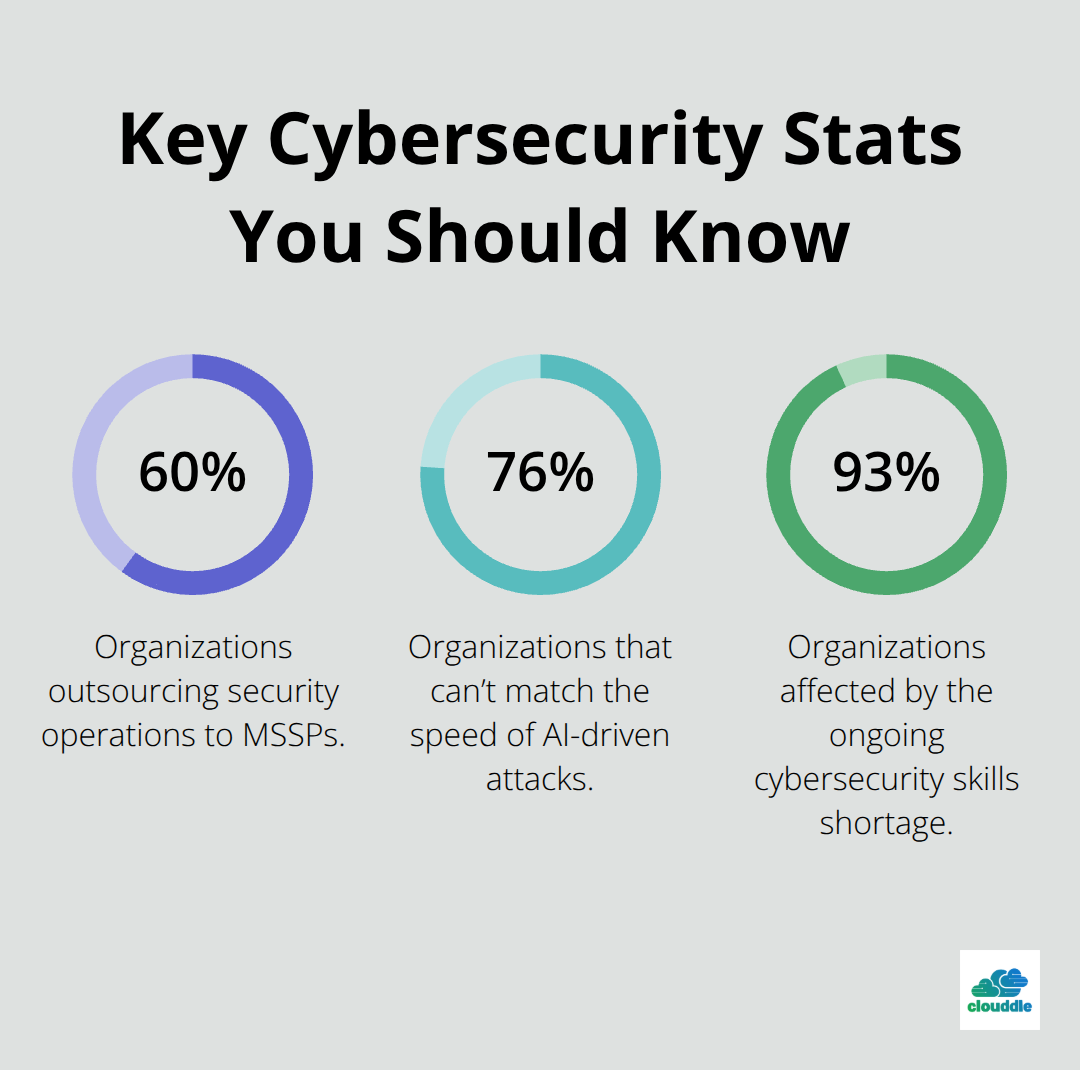
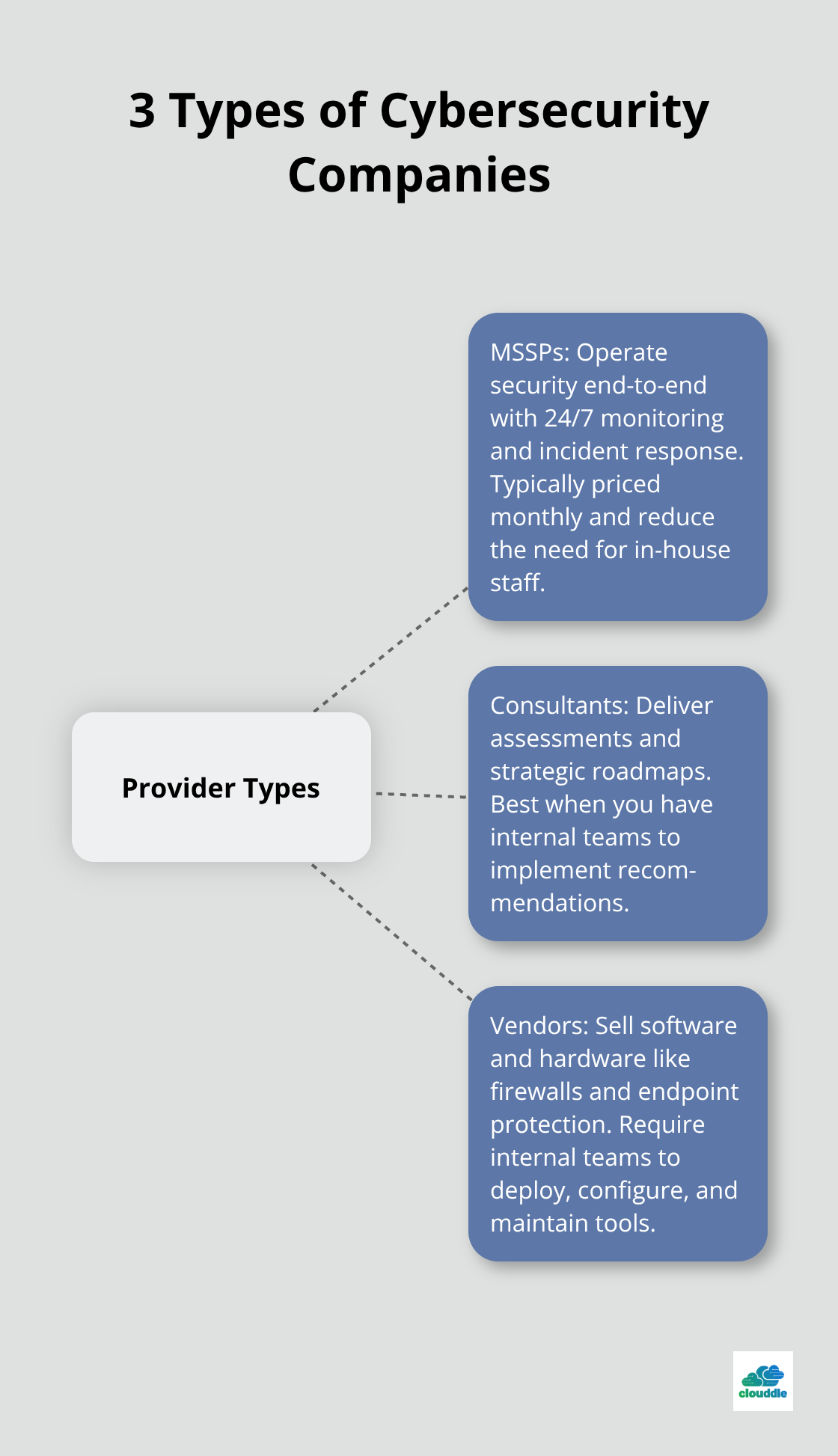
Managed Security Service Providers take control of your entire security operation remotely. Companies like IBM and CrowdStrike lead this space with 24/7 monitoring and incident response capabilities. MSSPs charge between $5,000 to $50,000 monthly (depending on your network size), but they eliminate the need for internal security staff.
Over 60% of companies now outsource their security operations to MSSPs because qualified cybersecurity professionals cost $124,910 annually per analyst according to recent workforce data. This approach makes sense when you lack internal expertise or want to focus your IT team on other priorities.
Security Consultants Focus on Strategy
Cybersecurity consultants analyze your current defenses and create improvement roadmaps rather than manage daily operations. These firms typically charge $200 to $500 per hour for assessments and strategic planning. Major consulting firms like Deloitte and PwC dominate this market, but specialized boutique consultants often provide better value for mid-sized businesses.
Consultants work best when you need compliance guidance, risk assessments, or security architecture design but have internal teams to implement their recommendations.
Technology Vendors Sell Solutions
Security software vendors like Palo Alto Networks (which generates $8.0 billion annually) and Fortinet with $5.3 billion in revenue focus on selling licenses and hardware. These companies offer firewalls, endpoint protection, and cloud security tools that your IT team manages internally.
Vendor relationships work well for companies with strong technical capabilities who prefer to control their security tools directly. However, you need dedicated staff to configure, monitor, and maintain these solutions effectively since vendors typically provide limited ongoing support after the initial setup.
Each category serves different organizational needs, and the next step involves understanding what specific services these companies actually provide to protect your business.
What Services Do Cybersecurity Companies Actually Provide
Modern cybersecurity companies deliver three core services that directly impact your business protection and operational costs. These services work together to create comprehensive defense strategies that protect against evolving threats.
Network Monitoring Detects Threats in Real-Time
Round-the-clock network monitoring forms the foundation of professional cybersecurity services. Advanced providers like CrowdStrike face challenges as 76% of organizations can’t match the speed of AI attacks according to their 2025 ransomware report. This speed difference translates to millions in potential savings since each day of delayed detection increases breach costs by approximately $37,000.
Professional monitoring teams use AI-powered tools to analyze network traffic patterns and flag anomalies that internal teams typically miss due to alert fatigue and skill gaps. These specialists maintain dedicated security operations centers that process thousands of alerts daily and escalate only genuine threats to your IT team.
Incident Response Saves Your Business Reputation
When attacks succeed, professional incident response teams minimize damage through structured containment and recovery protocols. Companies with documented incident response plans save an average of $2.66 million per breach compared to those without proper procedures. Response specialists isolate compromised systems within hours, preserve forensic evidence for legal proceedings, and coordinate with law enforcement when necessary.
The best providers maintain dedicated response teams available within 15 minutes of notification and provide detailed post-incident reports that help prevent similar attacks. Recovery services include data restoration from secure backups, system rebuilding, and business continuity support that gets operations running while security teams investigate the breach scope.
Compliance Management Prevents Legal Penalties
Regulatory compliance services protect businesses from hefty fines that average $14.8 million for GDPR violations and $1.4 million for HIPAA breaches according to recent enforcement data. Professional compliance teams conduct regular audits, maintain documentation trails, and implement controls that satisfy specific industry requirements like PCI DSS for payment processing or SOX for public companies.
These specialists stay current with changing regulations and provide quarterly compliance reports that demonstrate due diligence to auditors and insurance providers (often reducing cyber insurance premiums by 10-15% annually). With these foundational services in mind, the next step involves evaluating which cybersecurity company can best deliver these capabilities for your specific business needs.
How Do You Pick the Right Cybersecurity Partner
Verify Professional Certifications and Industry Expertise
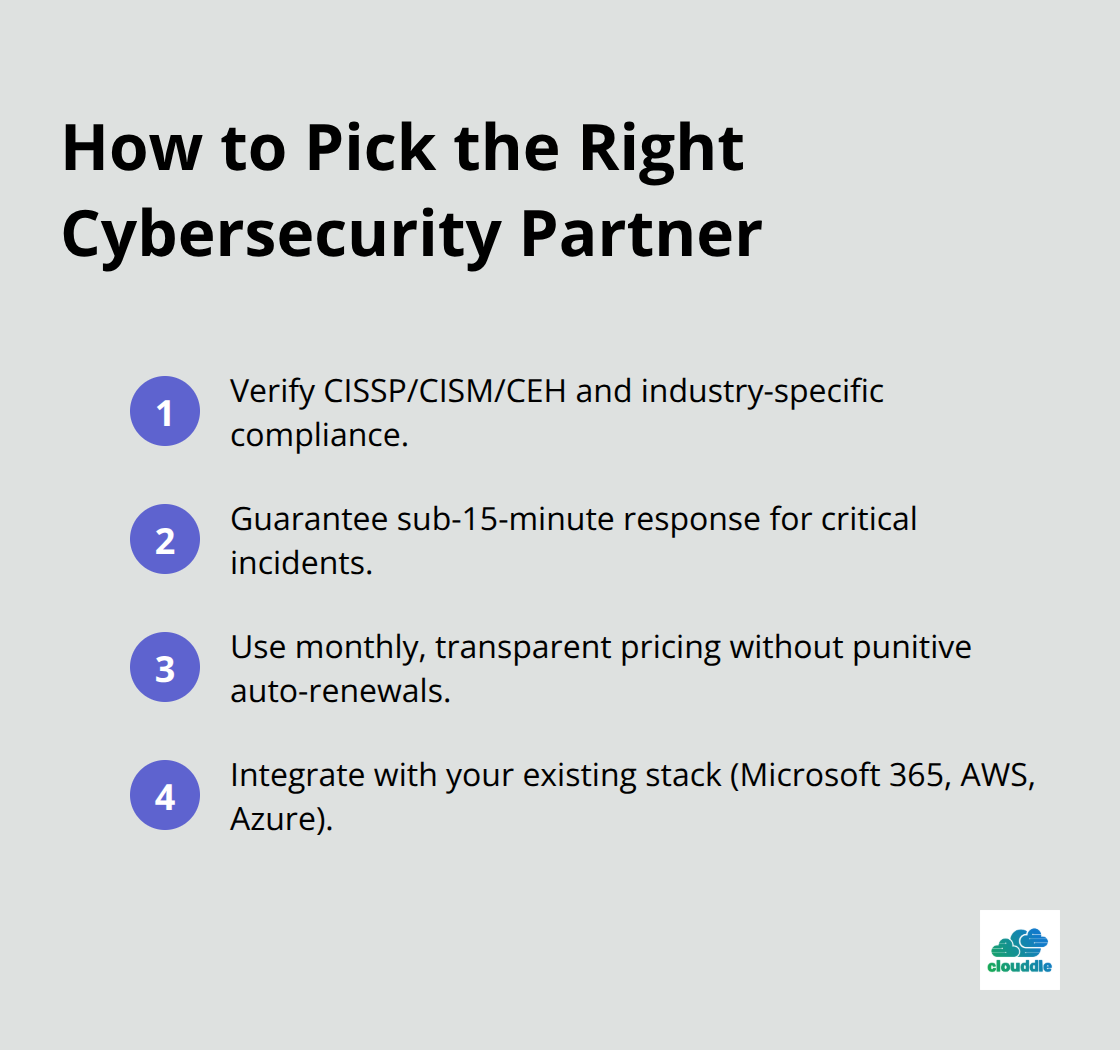
Professional certifications separate legitimate cybersecurity companies from wannabes who lack proper training. Look for providers with CISSP, CISM, or CEH certifications since these require 3-5 years of verified experience and pass rigorous exams. Companies that serve financial services need SOC 2 Type II compliance, while healthcare providers require HIPAA expertise. Certified security professionals provide significant advantages in threat detection and response capabilities, which translates to substantial breach cost savings according to industry research.
Demand Fast Response Times for Critical Incidents
Security incidents demand immediate action since every hour of delay increases breach costs significantly based on industry research. Demand guaranteed response times under 15 minutes for critical alerts and 4-hour maximum for all incidents. Test their emergency contact system during your evaluation process. Companies that offer only business-hours support fail catastrophically since 76% of infections begin either after hours or during weekends. Verify they maintain dedicated night and weekend staff rather than outsource to call centers.
Analyze Contract Terms and Pricing Transparency
Monthly contracts protect your interests better than multi-year commitments since cybersecurity needs change rapidly as businesses grow. Avoid providers that demand upfront payments exceeding $10,000 or impose automatic renewal clauses longer than 12 months. Transparent pricing models list specific costs for additional services like forensic analysis or emergency response rather than charge surprise fees during crises. The best providers offer performance guarantees with service credits when they miss response time commitments (demonstrating confidence in their capabilities rather than hiding behind legal disclaimers).
Evaluate Technical Capabilities and Tool Integration
Modern cybersecurity providers must integrate with your existing technology stack without disrupting operations. Ask potential partners about their experience with your specific industry and current security tools. Providers should demonstrate their ability to work with popular platforms like Microsoft 365, AWS, or Azure environments. Companies that force you to replace all existing security tools often create more vulnerabilities during transition periods than they prevent. Choose providers who demonstrate deep understanding of your industry’s regulatory requirements and operational needs.
Final Thoughts
IT cybersecurity companies fall into three main categories that serve different business needs. MSSPs handle complete security operations remotely, consultants provide strategic guidance and assessments, while technology vendors sell security tools for internal management. Each type offers distinct advantages depending on your technical capabilities and budget constraints.
Professional cybersecurity services deliver network monitoring that detects threats in real-time, incident response teams that minimize breach damage, and compliance management that prevents regulatory penalties. These services work together to create comprehensive protection that internal teams struggle to match given the current skills shortage (affecting 93% of organizations). Quality providers separate themselves through verified certifications, guaranteed response times under 15 minutes, and transparent contract terms.
We at Clouddle understand that cybersecurity represents just one component of comprehensive business protection. Our managed IT services combine security and support solutions that provide 24/7 monitoring for your business infrastructure. Action now protects your business from the threat landscape that costs companies millions annually.