IT projects fail when teams pick the wrong approach from the start. Waterfall works for some situations, Agile for others, and frameworks like Scrum or PRINCE2 add structure on top.
At Clouddle, we’ve seen organizations waste months and budgets because they didn’t match their IT project management methodology to their actual needs. This guide walks you through the core differences, shows you which frameworks fit where, and reveals the mistakes that derail most projects.
Waterfall vs. Agile: Understanding Core Differences
Sequential Planning and Execution in Waterfall
Waterfall demands complete planning upfront. You map every requirement, every deliverable, every timeline before a single line of code runs. The Department of Defense and government contractors have used this approach for decades because changing requirements mid-project costs millions. Once you lock in requirements, teams move through design, development, testing, and deployment in strict sequence.
A 2023 analysis by the Standish Group found that 52% of waterfall projects either failed or were challenged, primarily because early assumptions proved wrong once actual development began. This methodology works when requirements are genuinely fixed-building infrastructure for a bank’s legacy system or migrating to a new database where the end state is completely defined.
The problem emerges when business needs shift, market conditions change, or stakeholders realize they specified something incorrectly three months into a six-month project. You cannot easily pivot without scrapping work and blowing budgets.
Iterative Development and Flexibility in Agile
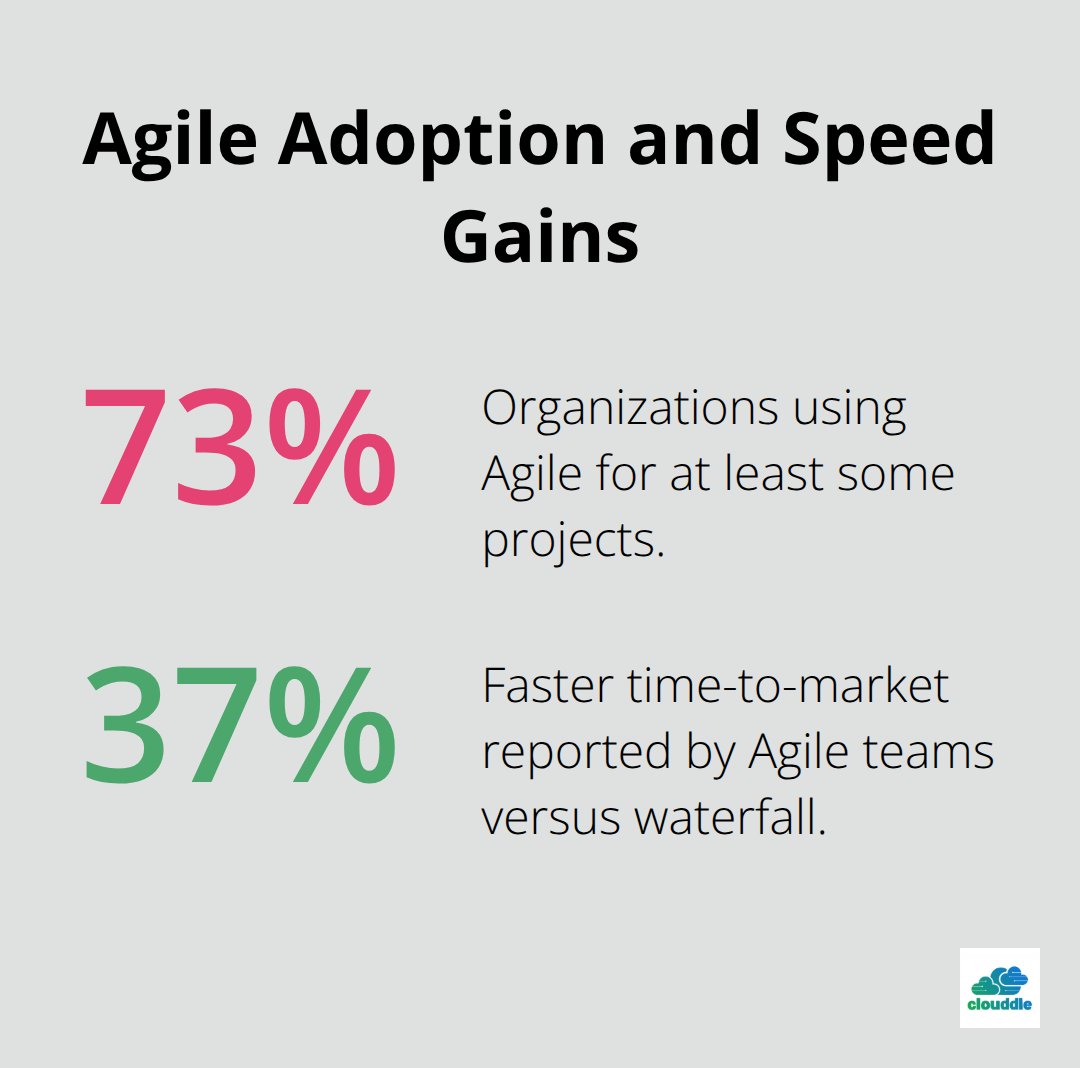
Agile operates on the opposite principle: teams release working software in two-week sprints, gather feedback, adjust course, then repeat. Companies like Spotify and Amazon have abandoned waterfall entirely because market pressures require constant adaptation. The 2024 State of Agile report from Collabnet VersionOne showed that 73% of organizations now use Agile for at least some projects, and those teams report 37% faster time-to-market compared to waterfall teams.
Agile works brilliantly when requirements will evolve, when you need to test assumptions with real users quickly, or when competitive advantage depends on speed. However, Agile creates chaos in situations where you need regulatory compliance documentation, fixed budgets, or contracts that specify exact deliverables months in advance.
Healthcare systems implementing FDA-regulated software or financial institutions building payment processing systems often cannot absorb the uncertainty Agile introduces.
When to Use Each Methodology
The real decision comes down to your actual constraints: if requirements are locked and budgets are fixed, waterfall reduces waste. If you need flexibility and fast feedback, Agile wins. Most organizations fail because they choose based on trend rather than their specific situation.
Your next step involves understanding which frameworks-Scrum, Kanban, PRINCE2, or PMI-actually fit your chosen methodology and how to implement them without creating bottlenecks.
Key IT Project Management Frameworks and Tools
Scrum and Kanban for Team Collaboration
Scrum dominates the Agile space because it enforces discipline through fixed-length sprints, defined roles, and daily standups that surface blockers immediately. A 2023 survey by the Scrum Alliance found that 66% of Agile teams use Scrum as their primary framework, and organizations implementing it correctly report 25-30% faster delivery cycles. The critical part most teams miss: Scrum requires a dedicated Product Owner who makes decisions daily, not a steering committee that meets monthly. Without this single decision-maker, sprints stall waiting for approvals.
Kanban works differently-it limits work-in-progress to prevent teams from drowning in parallel tasks, making it ideal for maintenance teams or support operations where work arrives unpredictably. Netflix uses Kanban-inspired approaches for infrastructure management precisely because you cannot predict when servers fail.
PRINCE2 and PMI for Structured Governance
PRINCE2 and PMI represent the opposite philosophy: they demand extensive governance, documentation, and formal change control procedures. PRINCE2 works exceptionally well for regulated industries and large government contracts where audit trails matter more than speed. PMI’s Project Management Body of Knowledge focuses on ten knowledge areas and formal project phases, attracting traditional enterprises that value predictability over innovation. However, both frameworks add overhead that strangles small teams and startups.
Popular Software Platforms for Tracking Progress
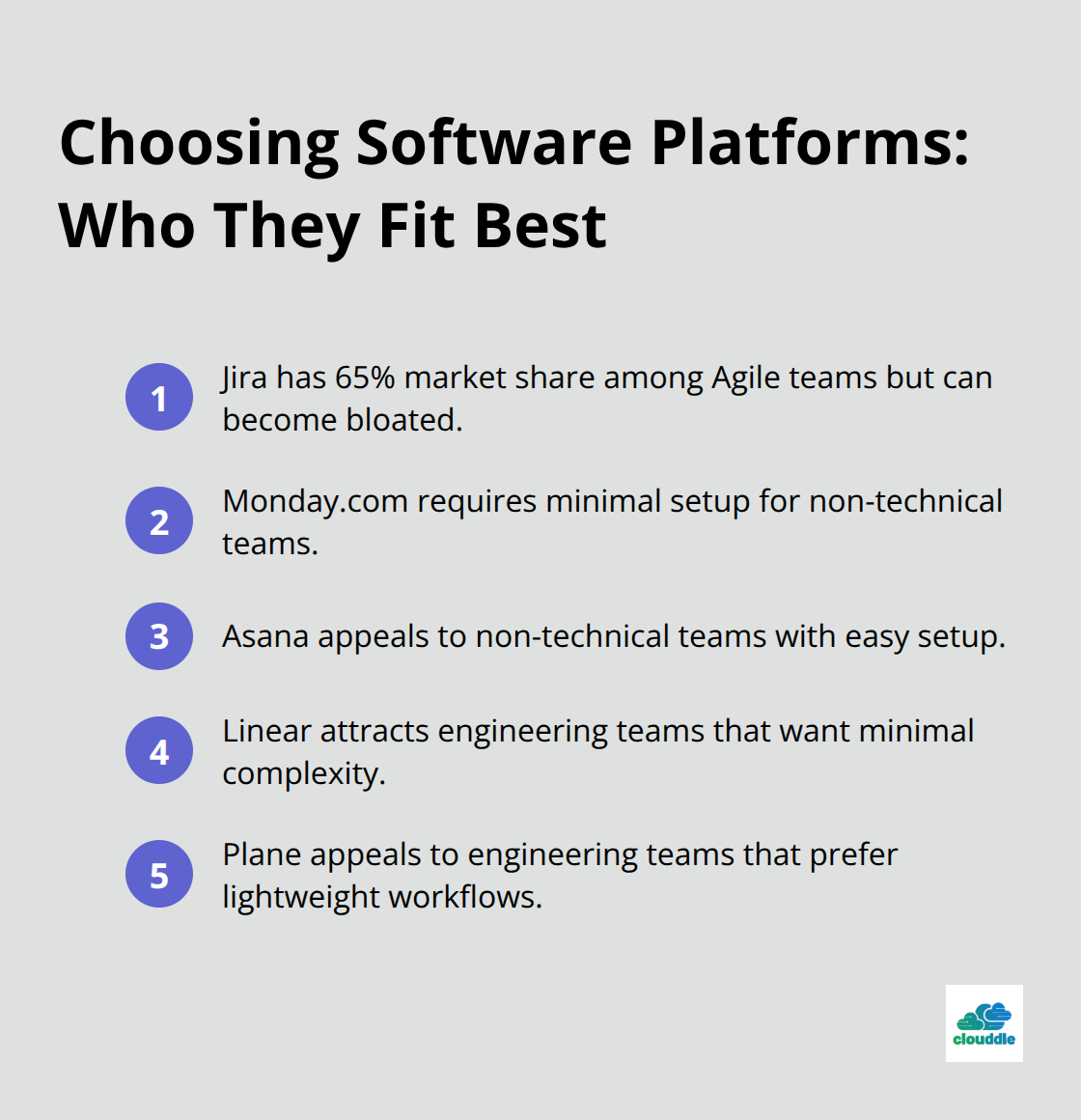
The software you select determines whether teams actually follow processes or abandon them for spreadsheets. Jira dominates with 65% market share among Agile teams according to a 2024 Gartner analysis, but it requires configuration expertise and often becomes bloated. Monday.com and Asana appeal to non-technical teams because they require minimal setup. Linear and Plane attract engineering teams who despise unnecessary complexity.
The tool choice matters less than adoption-if your team hates using it, they will not use it.
Matching Frameworks to Your Constraints
Organizations make a critical mistake when they choose a framework before understanding their actual constraints. A team managing a fixed-price contract for a bank’s core system needs PRINCE2 or PMI rigor. A SaaS company iterating on features needs Scrum or Kanban. Your decision should prioritize tools that match how your team actually works, not how you wish they worked.
The framework and tool you select set the foundation for how your team executes daily work. What separates successful projects from failures, however, is what happens when reality collides with your plan-scope expands, budgets tighten, and team members burn out. Understanding these common pitfalls and how to prevent them determines whether your methodology becomes a strength or a liability.
Common Pitfalls and How to Avoid Them
Scope Creep Destroys Budgets and Timelines
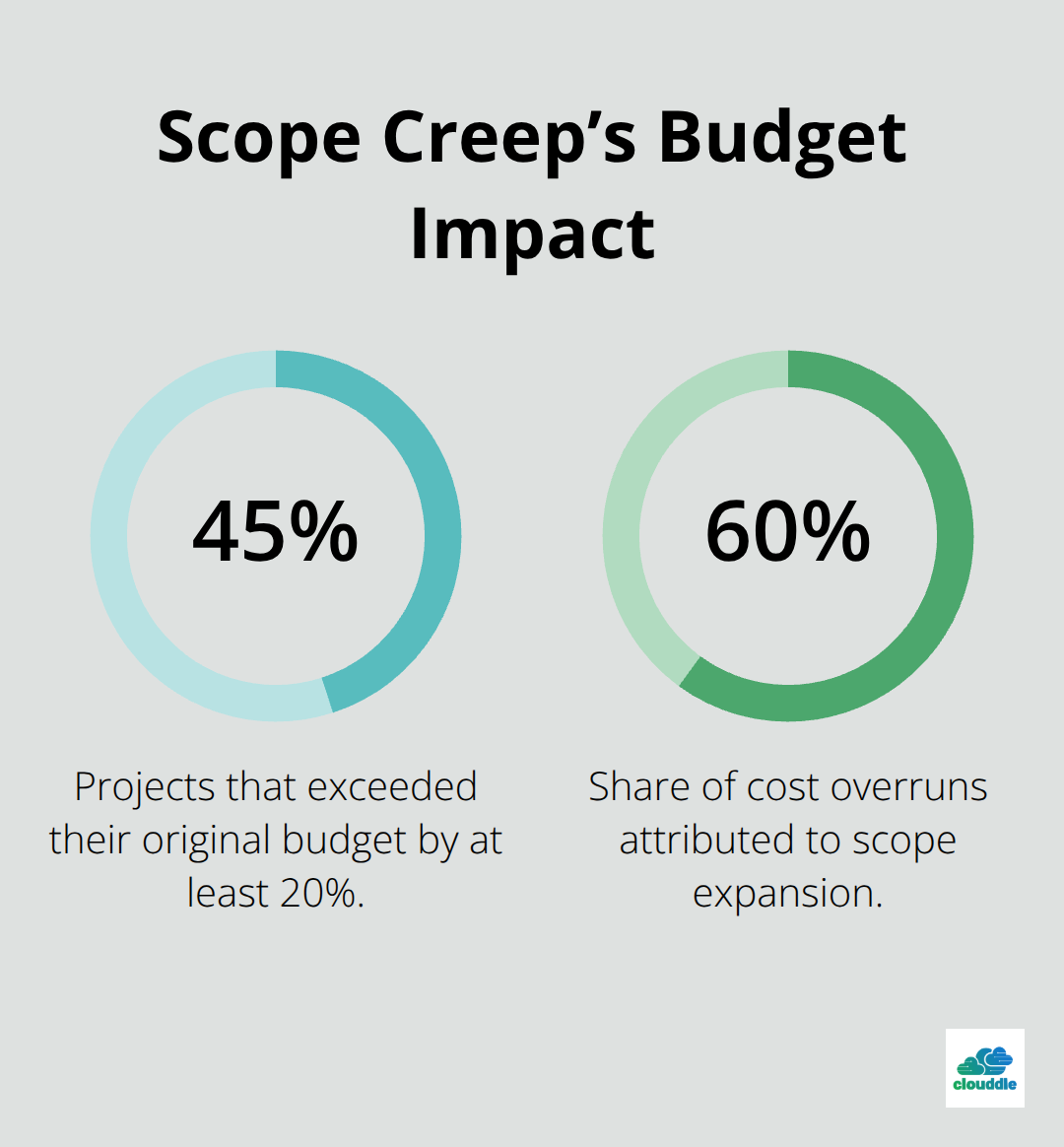
Scope creep kills more projects than bad planning. A 2023 McKinsey analysis of 5,400 IT projects found that 45% exceeded their original budget by at least 20%, and scope expansion accounted for roughly 60% of those overruns. Teams treat scope creep as inevitable rather than preventable, which is the real mistake.
You prevent it by documenting what is explicitly not included in the project, then enforcing a formal change control process that forces stakeholders to acknowledge the cost and timeline impact before adding work.
When a stakeholder requests new features mid-sprint, do not absorb them into the current iteration. Instead, calculate the exact days or weeks required, show them what gets delayed as a result, then let them decide if the addition is worth the tradeoff. Most requests disappear when stakeholders see the real cost. Waterfall teams must do this upfront during requirements gathering, forcing stakeholders to sign off on a fixed scope. Agile teams must do this sprint by sprint, making the cost of change visible rather than hidden.
Misalignment Between Technical and Business Teams
Poor communication between technical teams and business stakeholders creates a second failure pattern. The Standish Group’s 2023 Chaos Report identified inadequate stakeholder involvement in 40% of failed projects. This happens because project managers assume alignment exists when it does not. A technical lead interprets a requirement differently than a business owner, work proceeds for three weeks, then suddenly the deliverable misses expectations.
Prevent this by establishing a single decision-maker on the business side who can answer questions without needing committee approval. That person should review work incrementally, not at the end. For waterfall projects, this means detailed walkthroughs during design and development phases before code reaches testing. For Agile projects, this means the Product Owner attends sprint reviews and provides feedback on working software every two weeks.
Understaffing Triggers Burnout and Turnover
Inadequate resource planning compounds these problems because understaffed teams cut corners on communication to meet deadlines. A 2024 survey by the Project Management Institute found that 28% of project failures traced directly to insufficient staffing. When you underfund a project, teams work longer hours, quality suffers, and people burn out. Burnout increases turnover, which forces new team members to climb the learning curve exactly when you need speed.
The practical solution is to staff projects generously at the start rather than adding people mid-project when they cannot contribute immediately. A developer brought in halfway through a project requires weeks to understand context, architecture decisions, and accumulated technical debt before producing meaningful work. Front-loading your team prevents the cascading failures that emerge when experienced people leave and replacements struggle to catch up.
Final Thoughts
Selecting the right IT project management methodology requires matching your constraints to your approach, not following industry trends. If your requirements are locked and budgets are fixed, waterfall reduces waste and prevents scope creep. If you need flexibility and rapid feedback, Agile frameworks like Scrum or Kanban let you adapt without derailing timelines. Organizations that choose a methodology before understanding whether they operate in a fixed or variable environment waste resources on approaches that fight their actual situation.
Successful IT project delivery depends on three non-negotiable practices: establish a single decision-maker on the business side who answers questions without committee delays, staff projects generously at the start rather than adding people mid-project when they cannot contribute immediately, and make scope changes visible by calculating their exact cost in days or weeks before work begins. These practices work regardless of whether you use waterfall, Agile, Scrum, Kanban, PRINCE2, or PMI. Organizations that treat methodology as static rather than evolving repeat the same mistakes across projects, while those that review what actually happened after each project concludes-scope creep percentages, communication breakdowns, team burnout-adjust their process and improve outcomes.
Your IT project management methodologies only become effective when you execute them consistently and remove infrastructure distractions that derail timelines. Clouddle provides managed IT, networking, and security services designed to eliminate technical surprises so your teams focus on delivery. With 24/7 support and flexible contracts, you gain the stability required to execute projects without infrastructure complications interfering with your methodology.


0 Comments