
IT service management frameworks are the backbone of efficient operations. Without structure, IT teams waste time on reactive firefighting instead of strategic work.
At Clouddle, we’ve seen firsthand how the right framework transforms chaos into order. This guide walks you through the most practical frameworks available and how to implement one that actually fits your organization.
What IT Service Management Actually Does
The Real Problem IT Teams Face
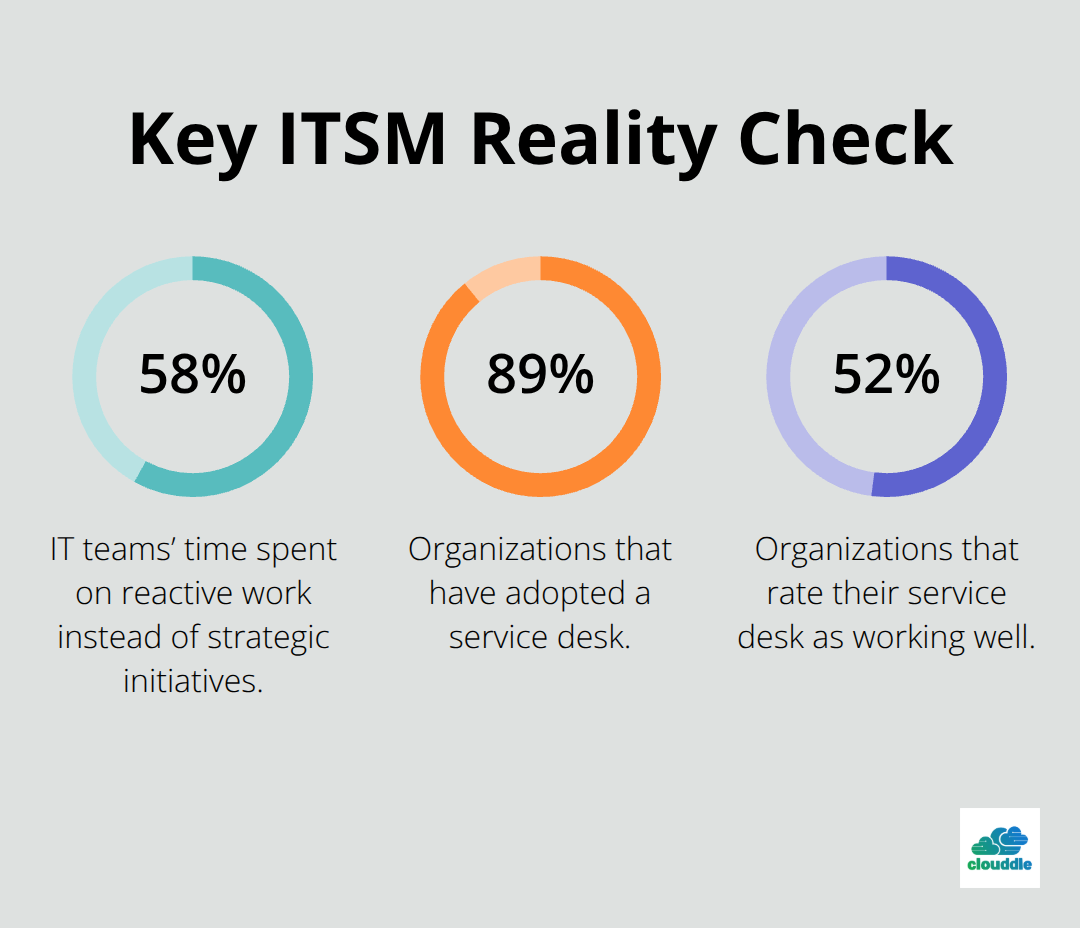
ITSM addresses a fundamental challenge: IT teams spend roughly 58 percent of their time on reactive work instead of strategic initiatives. According to the AXELOS 2022 ITSM Benchmarking Report, only about half of organizations rate their ITSM capabilities as good or great, while a quarter say they’re getting there and the rest admit they have much to improve. This gap exists because most IT departments lack consistent processes for handling incidents, managing changes, or organizing knowledge.
ITSM frameworks close this gap by creating repeatable workflows that reduce downtime, lower operational costs, and align IT work with actual business goals.
From Reactive to Proactive Operations
When organizations implement ITSM properly, they shift from constantly reacting to problems toward preventing them in the first place. The framework establishes who does what, when it happens, and how success gets measured. Without it, a password reset might take hours because no one knows the fastest path to resolution, or a critical incident might slip through cracks because priorities aren’t clear. Structure replaces chaos when teams follow defined processes instead of improvising solutions on the fly.
Five Core Processes That Transform Operations
ITSM frameworks provide specific guidance on five core processes that matter most. Incident management brings response times down by standardizing how problems get reported, categorized, and escalated. Change management prevents new deployments from breaking existing systems through approval workflows and testing gates.
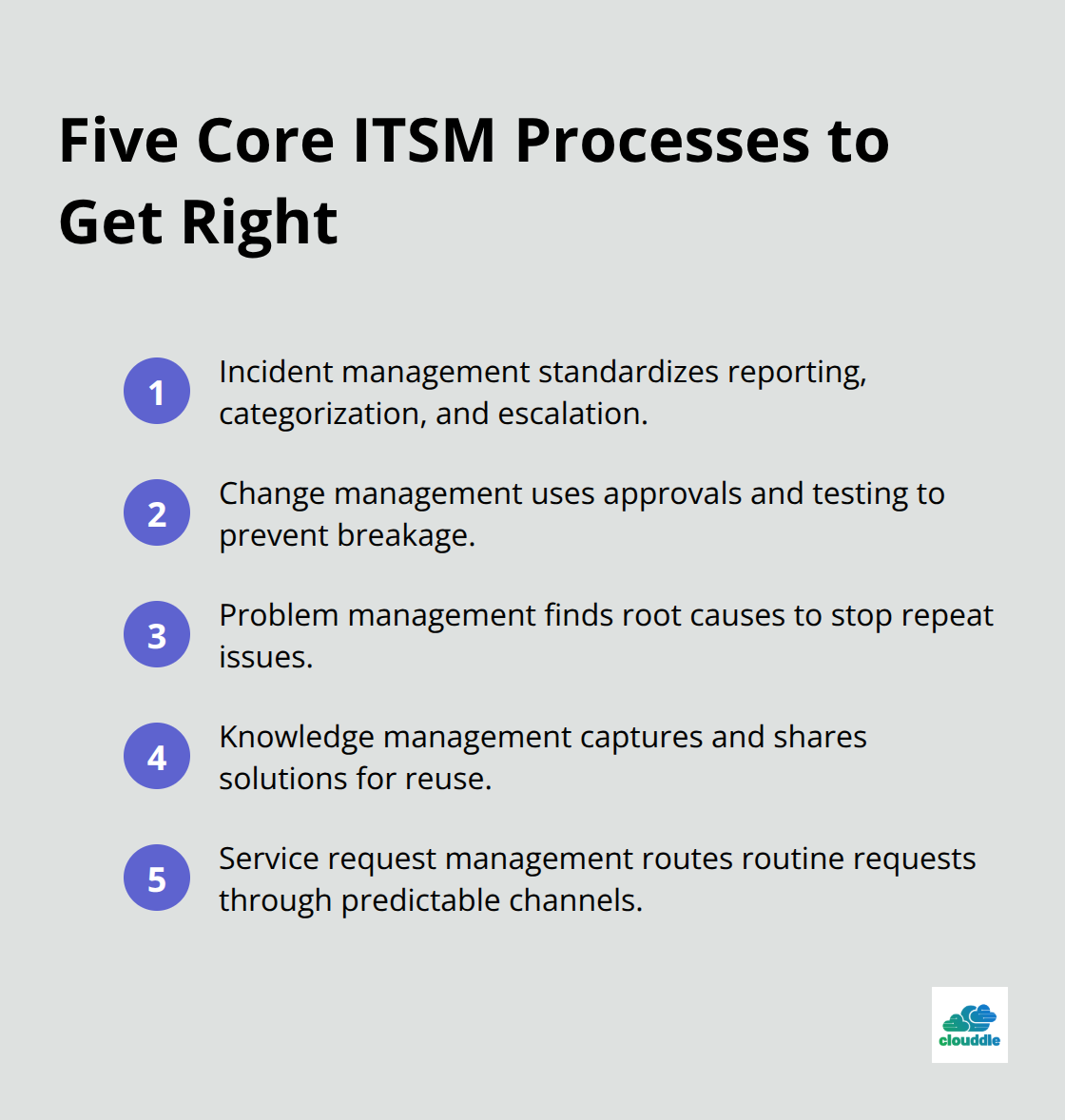
Problem management stops recurring incidents by identifying root causes instead of just fixing symptoms each time. Knowledge management captures solutions so teams don’t reinvent answers repeatedly. Service request management handles routine requests like software installations or account setup through predictable channels.
The AXELOS data shows that 89 percent of organizations have adopted a service desk, yet only 52 percent rate it as working well, indicating that having a process isn’t enough without proper structure and tools. Organizations reporting great ITSM success are far more likely to have advanced enterprise service management initiatives in flight compared with the overall population, suggesting that structured frameworks enable organizations to scale beyond basic helpdesk functions.
Why Structure Matters for Your Team
Implementing these five processes creates accountability, reduces decision fatigue, and frees IT staff to focus on work that actually drives business value rather than handling the same problems repeatedly. Teams that follow structured frameworks spend less time on repetitive tasks and more time on initiatives that support business growth. The next section explores the most popular frameworks available and how each one approaches these core processes differently.
Which Framework Fits Your Organization’s Needs
ITIL Leads the Market for Good Reason
ITIL dominates because it works at scale and offers clear guidance for organizations of any size. Published by AXELOS, ITIL 4 emphasizes value creation through looking at ITSM, development, operations, business relationships, and governance holistically. The framework avoids rigid rules and instead offers principles that teams adapt to their specific environment. Most ITSM tools and training materials center on ITIL processes, which means your team finds resources and expertise more readily than with alternative frameworks. The global ITSM solutions market reached 13.46 billion dollars in 2024, driven largely by organizations implementing ITIL-based practices alongside AI automation and cloud adoption.
ISO/IEC 20000 When Compliance Matters
ISO/IEC 20000 takes a different approach by providing a formal certification standard that organizations can audit against. If your business requires compliance documentation or third-party validation of service management capabilities, ISO/IEC 20000 Part 1 certification proves that you meet internationally recognized standards. This framework appeals to regulated industries where external auditors expect documented proof of service management maturity. The certification process itself creates accountability and forces organizations to formalize processes that might otherwise remain informal or inconsistent.
COBIT for Governance and Risk Control
COBIT serves organizations focused on IT governance and risk management rather than pure service delivery, making it valuable for regulated industries where control and compliance matter more than operational speed. This framework addresses specific gaps when your IT department struggles with vendor management, risk oversight, or control frameworks across complex technology environments. COBIT’s emphasis on governance controls helps organizations manage technology investments strategically rather than reactively.
Layering Frameworks for Maximum Benefit
Most successful organizations don’t choose one framework in isolation. Instead, they layer ITIL for operational processes, incorporate ISO/IEC 20000 principles for quality assurance, and adopt COBIT’s governance controls where business risk demands it. AXELOS data shows that organizations rating their ITSM capabilities as great are far more likely to have advanced enterprise service management initiatives in flight, suggesting that framework consistency matters more than framework prestige. This combination approach lets teams optimize for their specific business context rather than forcing operations into a single rigid model.
Starting with Your Biggest Pain Point
The framework selection conversation should start with identifying your organization’s biggest pain point, not with selecting the most prestigious framework name. If your primary challenge is reducing incident response time and improving end-user experience, ITIL gives you the fastest path. If you operate in a heavily regulated sector like finance or healthcare where compliance audits happen regularly, ISO/IEC 20000 certification becomes a business requirement.
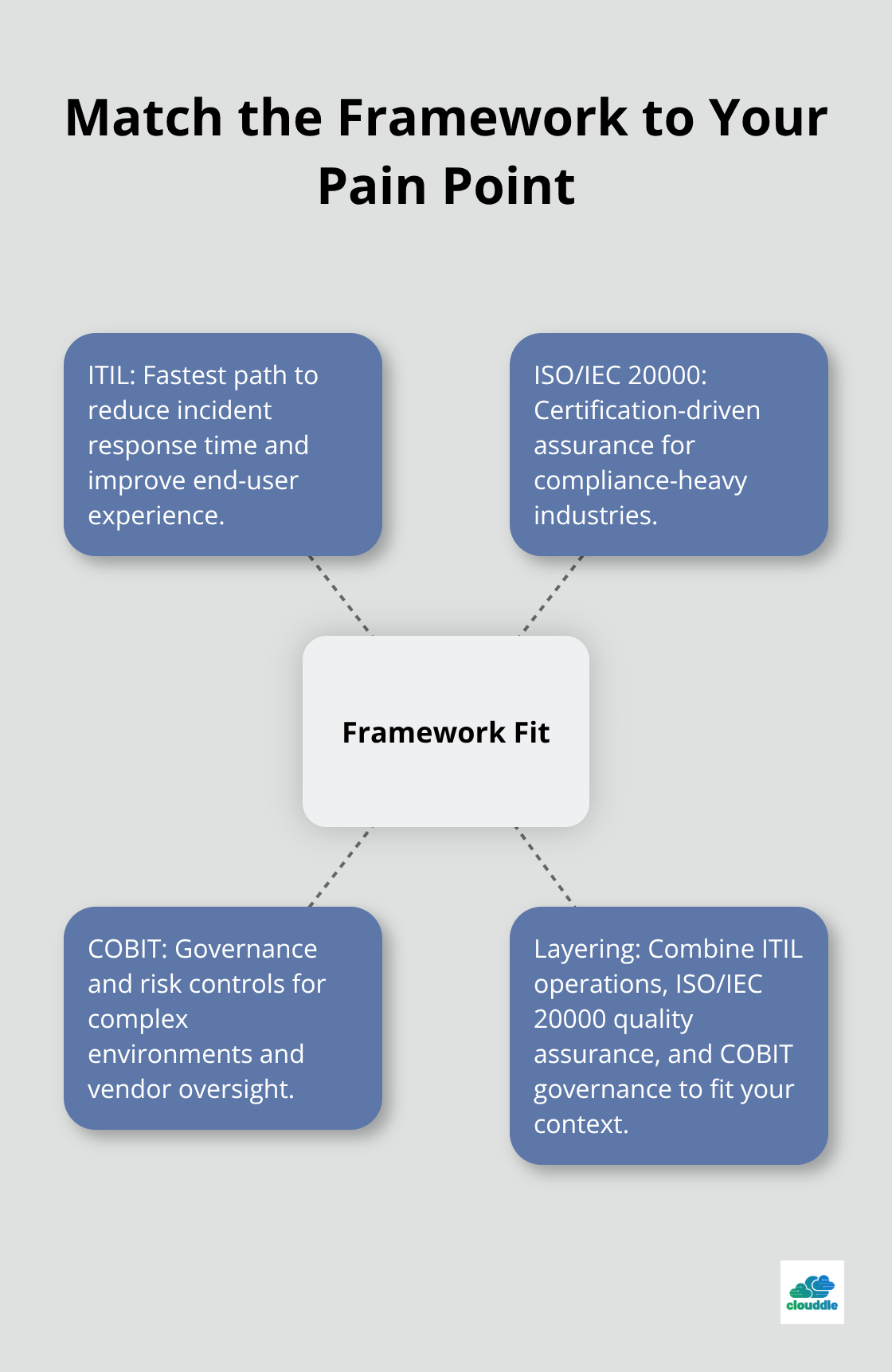
If governance, vendor management, or risk oversight across complex technology environments creates friction, COBIT’s control frameworks address those specific gaps. Once you identify which framework aligns with your immediate needs, the next step involves assessing your current IT operations to understand what changes implementation will require.
Implementing ITSM in Your Organization
Map Your Current Operations Before Making Changes
Start your ITSM implementation by documenting what actually happens in your IT department right now, not what you think happens. Organizations that succeed with ITSM identify their biggest operational bottleneck rather than attempting to overhaul everything simultaneously. Run a current-state assessment by recording how incidents currently get reported, who handles them, how long resolution typically takes, and where requests disappear in the process. Interview your IT staff and end users separately because their perspectives differ significantly. Your staff might say a process works fine while users experience constant delays. This gap reveals where structure matters most. Look specifically at your service desk adoption-most teams lack the processes and tools to make their helpdesk actually function. Document your existing knowledge management practices too, since knowledge management consistently scores lowest among ITSM capabilities and represents your fastest improvement opportunity.
Choose Your Framework Based on Real Pain Points
Stop attempting to implement everything at once. Select one framework that directly addresses your biggest pain point rather than selecting the most prestigious option. If incident response time destroys your team’s productivity, ITIL gives you proven incident management processes immediately. If compliance audits create constant friction, ISO/IEC 20000 certification becomes your framework. If vendor management and governance control your biggest challenges, COBIT’s control frameworks serve you better. The framework selection should take hours, not weeks. Most organizations that fail at ITSM implementation choose their framework through endless meetings instead of decisive action based on actual business needs.
Build a Phased Roadmap with Quick Wins
After selecting your framework, construct a phased roadmap that delivers quick wins within 90 days while establishing long-term capabilities over 12 months. Your first phase should tackle one specific process-either incident management or service request management-and implement it fully with clear metrics before moving to the next process. Assign clear ownership to someone with authority to make decisions and remove blockers, not a committee that debates endlessly. Set specific KPIs immediately, such as reducing average incident resolution time from 8 hours to 4 hours or reducing service desk ticket volume by 30 percent through better self-service. These metrics guide your implementation and prove value to skeptics.
Prioritize Training Over Tool Selection
Training matters far more than tool selection, yet most organizations reverse this priority. Invest in getting your team to understand why the framework matters before showing them the tool. Poor adoption happens because staff don’t understand the reasoning behind new processes, not because the tool is inadequate. Involve your best IT performers in designing how the framework gets adapted to your environment rather than imposing top-down changes they didn’t help create. Organizations reporting great ITSM success maintain their tools for more than two years, indicating that implementation success requires patience and continuous refinement rather than expecting immediate perfection.
Measure Progress and Adjust Monthly
Your roadmap should include monthly reviews where you measure progress against your KPIs, gather feedback from both IT staff and end users, and adjust processes based on what you actually learn. Implementation typically takes 6 to 12 months to show measurable results, so communicate realistic timelines to leadership to prevent premature abandonment when quick fixes don’t materialize. This iterative approach (measuring, learning, adjusting) transforms ITSM from a theoretical exercise into a practical system that your organization actually uses and values.
Final Thoughts
ITSM frameworks succeed when organizations stop treating them as theoretical exercises and start using them to solve real operational problems. The frameworks covered in this guide-ITIL, ISO/IEC 20000, and COBIT-all deliver measurable results, but only when you select based on your actual pain points rather than industry prestige. Organizations rating their ITSM capabilities as great report significantly better digital transformation outcomes, proving that structured service management directly impacts business performance.
Getting started requires three concrete actions. First, run a current-state assessment to identify your biggest bottleneck, whether that’s incident response time, compliance requirements, or governance gaps. Second, select one IT service management framework that directly addresses that bottleneck and commit to a phased 12-month roadmap with clear KPIs. Third, prioritize training your team on why the framework matters before introducing tools, since most implementation failures happen because staff don’t understand the reasoning behind new processes rather than because the technology is inadequate.
The long-term benefits compound over time as teams shift from reactive firefighting to proactive problem prevention, reducing downtime and operational costs while freeing staff to focus on strategic work. Your IT department becomes predictable and measurable, with clear processes that scale as your organization grows, and end users experience faster resolution times and better self-service options. Our managed IT and networking solutions complement your ITSM framework by providing reliable infrastructure and 24/7 support, so your team can concentrate on implementing the processes that matter most.




0 Comments