Traditional networking locks enterprises into expensive hardware purchases and rigid infrastructure that can’t keep pace with business changes. At Clouddle, we’ve seen firsthand how the NaaS model benefits organizations by eliminating these constraints.
The shift to flexible, managed networking isn’t just about cost savings-it’s about giving your business room to breathe and adapt.
Why Traditional Networks Cost More Than You Think
Traditional networking demands massive upfront capital that most enterprises can’t justify anymore. A single enterprise-grade firewall costs $15,000 to $50,000, while load balancers run another $20,000 to $100,000 depending on throughput.
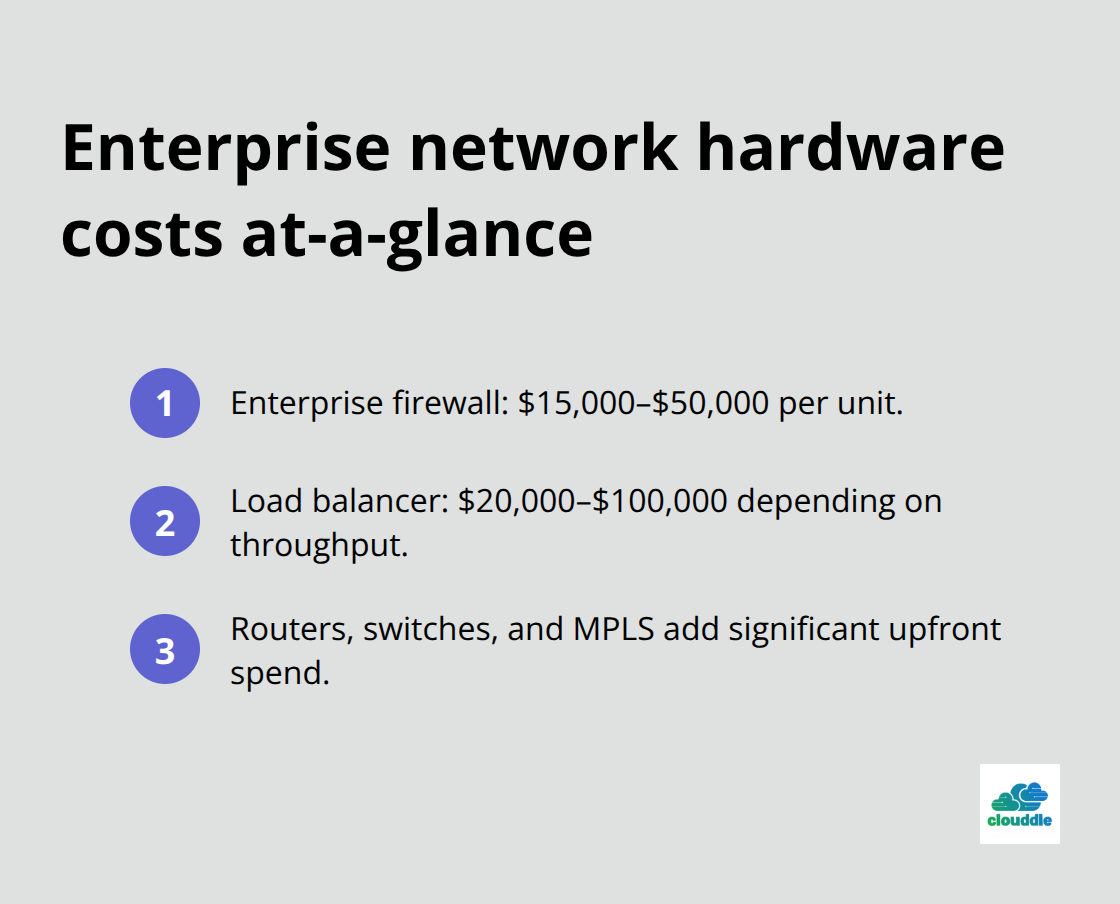
Add routers, switches, and MPLS connections, and you’re looking at hardware investments that consume significant portions of annual IT budgets before you’ve even powered anything on. These aren’t one-time expenses either-hardware maintenance contracts, replacement parts, and eventual obsolescence mean you’re locked into ongoing costs that grow harder to predict.
The real problem is that traditional networks force you to overprovision capacity to handle peak demand, leaving you paying for bandwidth and processing power you rarely use. A company that experiences seasonal traffic spikes maintains expensive infrastructure year-round, even during slow periods when that investment sits idle.
The Scalability Trap
Traditional infrastructure becomes a bottleneck the moment your business needs to expand. Adding a new office location requires you to order hardware weeks or months in advance, wait for delivery, coordinate installation, and configure everything from scratch. If you need to increase bandwidth to a branch office, you don’t adjust a slider in a dashboard-you contact vendors, schedule technicians, and manage downtime while upgrades happen.
This inflexibility prevents you from responding quickly to market opportunities or customer demands. Enterprises with multiple locations or remote operations face even steeper challenges, as maintaining separate network infrastructure across geographies multiplies complexity and cost. Your IT team becomes consumed with manual provisioning and longer time-to-delivery for services instead of focusing on strategic initiatives that actually drive business value. With vendor-managed provisioning, setup time drops from months to weeks, enabling organizations with ambitions to scale rapidly.
Hidden Operational Overhead
What enterprises rarely calculate is the true cost of keeping traditional networks running. Your IT staff spends countless hours on routine maintenance, applies security patches, manages hardware replacements, and handles performance issues reactively instead of proactively. These operational tasks consume resources that could address business transformation or innovation.
Compliance and security updates require manual deployment across the entire infrastructure, creating windows of vulnerability and operational disruption. When something fails, your team responds after the fact rather than preventing problems before they impact operations. The staffing costs alone-paying skilled network engineers to manage aging infrastructure-often exceed the hardware expenses themselves over a five-year period.
Why Managed Services Change the Equation
This operational burden is precisely why enterprises are abandoning the traditional model. Managed services handle these responsibilities automatically, freeing your team to focus on what matters most. The shift from capital expenditure to operational expenditure transforms how you budget and plan for growth, making it possible to scale without the constraints that traditional infrastructure imposes.
What Makes NaaS Financially Superior to Traditional Networking
The financial case for NaaS rests on a simple principle: you pay only for you use, when you use it. This subscription-based model eliminates the firewall purchases and load balancer investments that traditional networks demand upfront. Instead of committing capital that depreciates the moment you deploy it, enterprises shift to monthly or annual subscriptions aligned with actual consumption. IDC research shows that this OpEx-based approach allows organizations to align costs directly with usage patterns, meaning seasonal businesses no longer subsidize idle infrastructure during slow periods. A hospitality chain experiencing peak demand during summer months scales services up immediately and reduces capacity in winter without touching hardware or renegotiating contracts. This flexibility transforms network costs from fixed liabilities into variable expenses that move with your business.
Speed Accelerates Competitive Advantage
Traditional networks force enterprises to wait weeks or months for new hardware to arrive, be installed, and configured. NaaS providers deploy new sites and increase bandwidth within days through software-based provisioning. When a multi-family dwelling needs to add Wi-Fi coverage to newly renovated units, waiting three months for hardware procurement and installation means lost revenue and frustrated tenants. With NaaS, that expansion happens in days. The Mordor Intelligence report projected the NaaS market to grow at a 34.5% CAGR from 2021 to 2026, with the broader market valued at USD 11.76 billion in 2023 and expected to reach USD 215.56 billion by 2032 at a 37.60% CAGR. This explosive growth reflects enterprises recognizing that speed directly impacts competitive advantage. Senior living facilities implementing NaaS report faster deployment of safety monitoring systems and communication platforms that improve resident outcomes. The time-to-value difference isn’t marginal-it’s the difference between months of delay and immediate implementation.
Managed Services Redirect IT Resources to Strategic Work
Your IT team shouldn’t spend half their time managing network infrastructure. NaaS providers handle 24/7 monitoring, security updates, patch management, and troubleshooting automatically. This eliminates the staffing costs that often exceed hardware expenses over five years. Your network engineers shift from reactive firefighting to strategic projects that generate business value. A senior living facility no longer needs dedicated staff managing network maintenance; instead, they focus on resident services and operational improvements. Proactive monitoring detects latency and performance issues before they impact operations, replacing the traditional model where problems surface only after residents or guests experience disruptions.
Bundled Solutions Simplify Vendor Management
Combining networking, security, and entertainment delivery through a single provider removes the coordination overhead that plagues traditional environments. Rather than managing separate contracts with multiple vendors, you work with one partner who handles all three functions. This unified approach (networking, security, and entertainment) reduces complexity and eliminates the gaps that emerge when different vendors don’t communicate effectively. Your operations team spends less time coordinating between vendors and more time focusing on business outcomes. The shift from managing multiple relationships to partnering with a single provider that delivers all three services fundamentally changes how efficiently your organization operates.
How NaaS Transforms Operations Across Hospitality, Housing, and Senior Care
Hospitality: Guest Experience Drives Revenue and Reputation
Hospitality operators face a brutal reality: guest experience directly determines revenue and reputation. When Wi-Fi fails during peak season, properties lose bookings and damage reviews that took years to build. Traditional networks force hotels to choose between expensive hardware upgrades or accepting poor connectivity during busy periods. NaaS eliminates this trap entirely.
Hotels implementing NaaS report deployment timelines of 4-8 weeks instead of 3-4 months for traditional infrastructure, meaning peak season arrives with systems already operational. More critically, NaaS bundles networking, security, and entertainment delivery through a single provider, eliminating the coordination chaos that emerges when separate vendors manage different pieces. A property with 200 rooms needs reliable guest Wi-Fi, secure payment processing, and streaming entertainment simultaneously. Traditional approaches require managing multiple contracts and hoping vendors communicate effectively. NaaS providers handle all three functions, reducing operational friction and allowing front-desk staff to focus on guest service rather than troubleshooting connectivity issues.
Cost Flexibility Aligns with Seasonal Demand
The subscription model transforms how hospitality operators budget for networking. Properties shift from large capital expenditures to predictable monthly costs that scale with occupancy rates. During slower seasons, operators reduce bandwidth and costs without renegotiating contracts or waiting for hardware removal. A seasonal resort no longer subsidizes expensive infrastructure during off-peak months-costs move with actual demand rather than remaining fixed year-round.
Multi-Family Housing: Tenant Expectations and Operational Efficiency
Multi-family housing operators face mounting pressure to deliver Wi-Fi as a basic amenity. Tenants expect reliable connectivity, yet property managers lack the IT expertise to maintain complex networking infrastructure. Traditional networks require dedicated staff or expensive managed service contracts that strain budgets. NaaS providers deliver 24/7 monitoring and automatic issue resolution, replacing the need for dedicated IT personnel.
Multi-family properties deploying NaaS report faster tenant onboarding, reduced support requests from connectivity issues, and the ability to expand coverage to newly renovated units within days rather than months. Network monitoring capabilities enable property managers to redirect resources toward tenant satisfaction and community programs instead of network maintenance, fundamentally changing how these organizations allocate budgets and staff attention.
Senior Living: Safety, Communication, and Resident Outcomes
Senior living communities depend on communication systems for safety monitoring and resident engagement, yet cannot afford the staffing costs required for 24/7 network management. NaaS-based safety monitoring systems enable residents to access faster emergency response capabilities without the property bearing the burden of maintaining specialized network infrastructure. Automatic issue resolution means residents experience uninterrupted access to communication platforms that enhance their quality of life.
The real advantage emerges in maintenance and updates. Traditional networks require scheduled downtime for security patches and software updates, disrupting operations and frustrating residents. NaaS platforms apply updates automatically across all sites without interruption, meaning security stays current without operational disruption. Communities no longer sacrifice resident experience to maintain network infrastructure-the platform handles both simultaneously.
Final Thoughts
The NaaS model benefits extend far beyond subscription pricing-they transform how enterprises allocate budgets, deploy infrastructure, and redirect IT talent toward strategic work. Hospitality properties, multi-family housing operators, and senior living communities have already proven that managed networking delivers measurable results: guest satisfaction improves when Wi-Fi works reliably, tenants experience faster onboarding and fewer connectivity issues, and residents access safety systems without operational disruptions. These outcomes happen because NaaS providers handle the infrastructure burden while organizations focus on what they do best.
Financial advantages compound over time as you stop buying hardware, stop maintaining aging equipment, and stop paying network engineers to manage routine tasks. Deployment accelerates from months to weeks, scaling happens through software configuration rather than hardware procurement, and security updates apply automatically without downtime. Your IT team redirects attention toward revenue-generating initiatives instead of reactive firefighting, while 24/7 monitoring detects problems before they impact operations and automatic issue resolution means fewer service disruptions.
Making the transition to NaaS doesn’t require ripping out existing systems overnight. Clouddle combines networking, entertainment, and security through a single provider, delivering seamless operations without initial investment. With flexible contracts, 24/7 support, and bundled solutions, your organization accesses the services you need when you need them, without the burden of maintaining infrastructure yourself.
For more information, contact us at Solutions@clouddle.com