
In today's competitive property market, from bustling hotels and sprawling multi-family communities to senior living facilities and commercial hubs, uptime isn't just a goal; it's the bedrock of resident satisfaction and profitability. Reactive maintenance, with its surprise costs and disruptive downtime, chips away at your Net Operating Income (NOI). The solution lies in a strategic shift away from fixing what's broken toward preventing failure in the first place.
This guide moves beyond generic advice to provide a comprehensive roundup of the top 10 preventive maintenance best practices tailored specifically for modern property technology. We will explore actionable strategies for your networks, security systems, Wi-Fi, cloud services, cabling, alarms, and VoIP systems. This isn't just about checklists; it's about building a robust operational framework that anticipates needs and protects your investments. Adopting a proactive approach means looking beyond simple tasks. By integrating 10 facility management best practices, organizations can optimize their operations and significantly extend asset lifespans.
Inside, you will find prioritized checklists, recommended frequencies for key tasks, essential KPIs to track success, sample SOPs to standardize procedures, and practical vendor management guidance. We will also cover common pitfalls to avoid and provide quick justification points to demonstrate the ROI of a well-executed program. Prepare to transform your maintenance from a cost center into a powerful driver of operational excellence and financial return.
1. Scheduled Maintenance Planning
Scheduled maintenance planning is the foundation of any effective preventive maintenance strategy. It involves establishing a predetermined calendar or usage-based schedule for all maintenance activities. Instead of reacting to failures, this proactive approach addresses potential issues before they escalate, ensuring systems like your property's Wi-Fi, security cameras, and VoIP phones operate with maximum uptime and reliability.
This practice is one of the most crucial preventive maintenance best practices because it shifts your operations from a chaotic, reactive state to a controlled, predictable one. The core principle is to perform service based on fixed intervals, such as time (e.g., quarterly, annually), operational hours, or other metered usage metrics.
How to Implement Scheduled Maintenance
Implementing a robust schedule requires a systematic approach. Start by inventorying all critical assets, from network switches and access points to security alarm panels and cloud service subscriptions. Then, gather manufacturer recommendations, historical performance data, and operational requirements to define the maintenance frequency for each asset.
- Inventory Assets: Create a comprehensive list of all equipment and systems requiring maintenance.
- Define Frequencies: For a multi-family property's access control system, you might schedule semi-annual inspections of door readers and monthly software patch reviews. A hotel's network infrastructure may require quarterly firmware updates on all routers.
- Assign Responsibility: Clearly define who is responsible for each task, whether it's an in-house technician or a third-party vendor.
- Utilize Technology: A Computerized Maintenance Management System (CMMS) is essential for automating this process. These tools can automatically generate work orders based on your predefined schedule, track completion, and store valuable maintenance history. For more on this, you can explore some of the best work order apps available on clouddle.com.
Quick ROI Justification: By preventing just one major network outage during peak check-in hours at a hotel or a security system failure at a senior living facility, the cost savings in averted guest compensation, reputational damage, and emergency repair fees can pay for an entire year's scheduled maintenance program.
2. Condition Monitoring and Predictive Maintenance
Condition monitoring and predictive maintenance (PdM) represent an evolution from time-based schedules to a more intelligent, data-driven strategy. This approach involves using real-time data collection and analysis to monitor equipment condition and predict failures before they happen. Instead of servicing an access point or VoIP server on a fixed calendar date, you perform maintenance when data indicates it is actually needed, optimizing resources and preventing unexpected downtime.
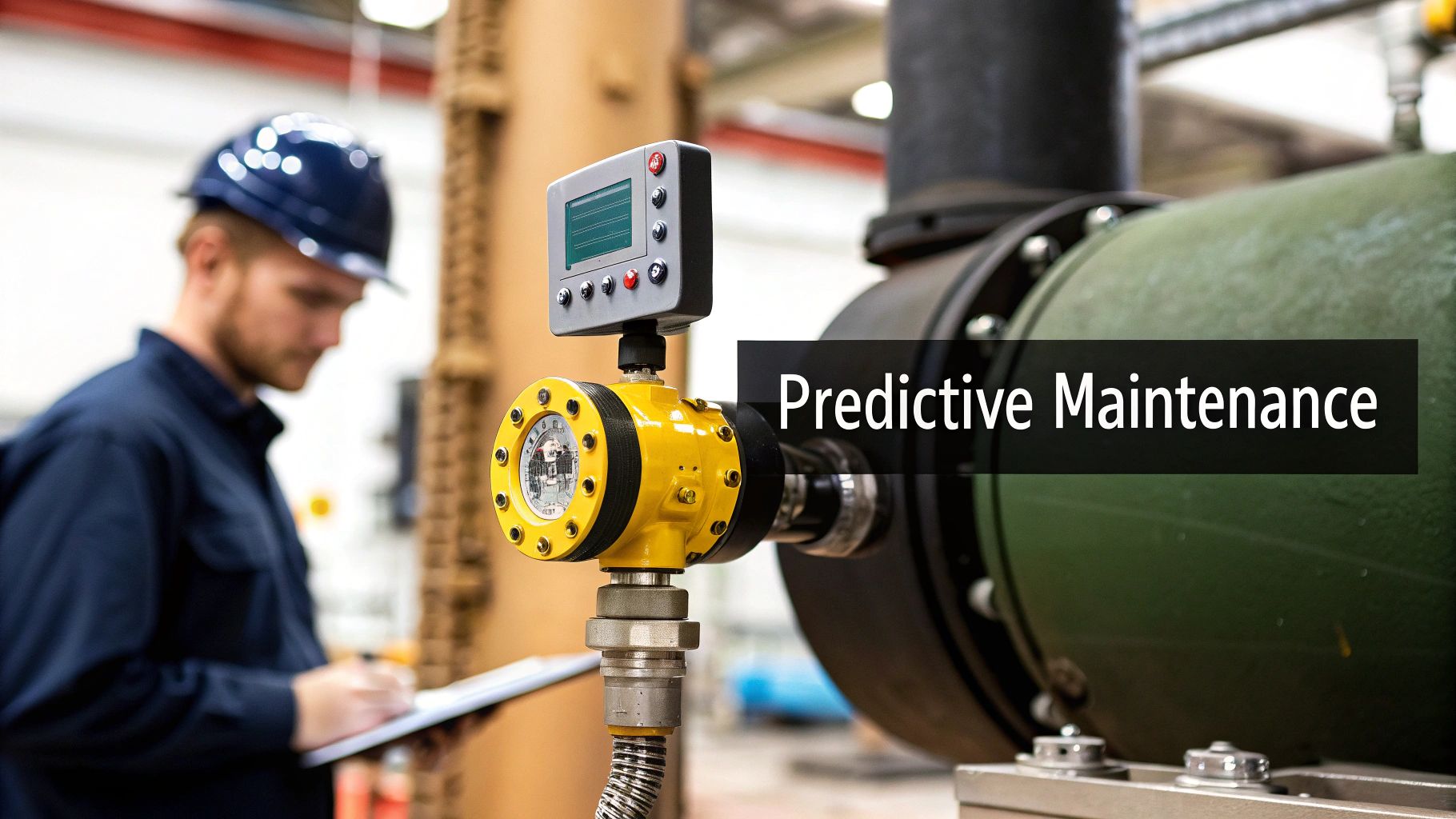
This method is a cornerstone of modern preventive maintenance best practices because it bases decisions on the actual health of an asset, not just assumptions. For instance, sensors monitoring a hotel's HVAC system can track vibration and temperature, flagging a component that is likely to fail in the coming weeks. This allows for planned, non-disruptive repairs, a significant leap forward from both reactive and purely scheduled maintenance. You can find out more by exploring the differences between proactive vs reactive maintenance strategies on clouddle.com.
How to Implement Condition Monitoring
Implementing PdM starts with identifying your most critical and failure-prone assets. For a senior living facility, this could be the emergency call system or network backbone supporting telehealth services. From there, you establish a baseline for normal operation and use technology to monitor for deviations.
- Identify Critical Assets: Focus first on high-value systems where failure would cause significant disruption, like security surveillance networks or building-wide Wi-Fi infrastructure.
- Establish Baselines: Use sensors and diagnostic tools to collect data on normal operating parameters, such as network latency, server temperature, or power consumption patterns.
- Deploy Monitoring Tools: Install sensors or use software agents to continuously gather real-time data from your target equipment.
- Analyze and Act: Integrate this data with a CMMS or analytics platform. When the system detects an anomaly that suggests impending failure, it automatically generates a work order for a technician to investigate.
Quick ROI Justification: A single predictive alert that prevents a central server from overheating at a commercial property can save tens of thousands of dollars. The averted costs include emergency IT vendor fees, lost productivity for all tenants, potential data loss, and the expense of replacing the entire server unit.
3. Preventive Inspection and Testing
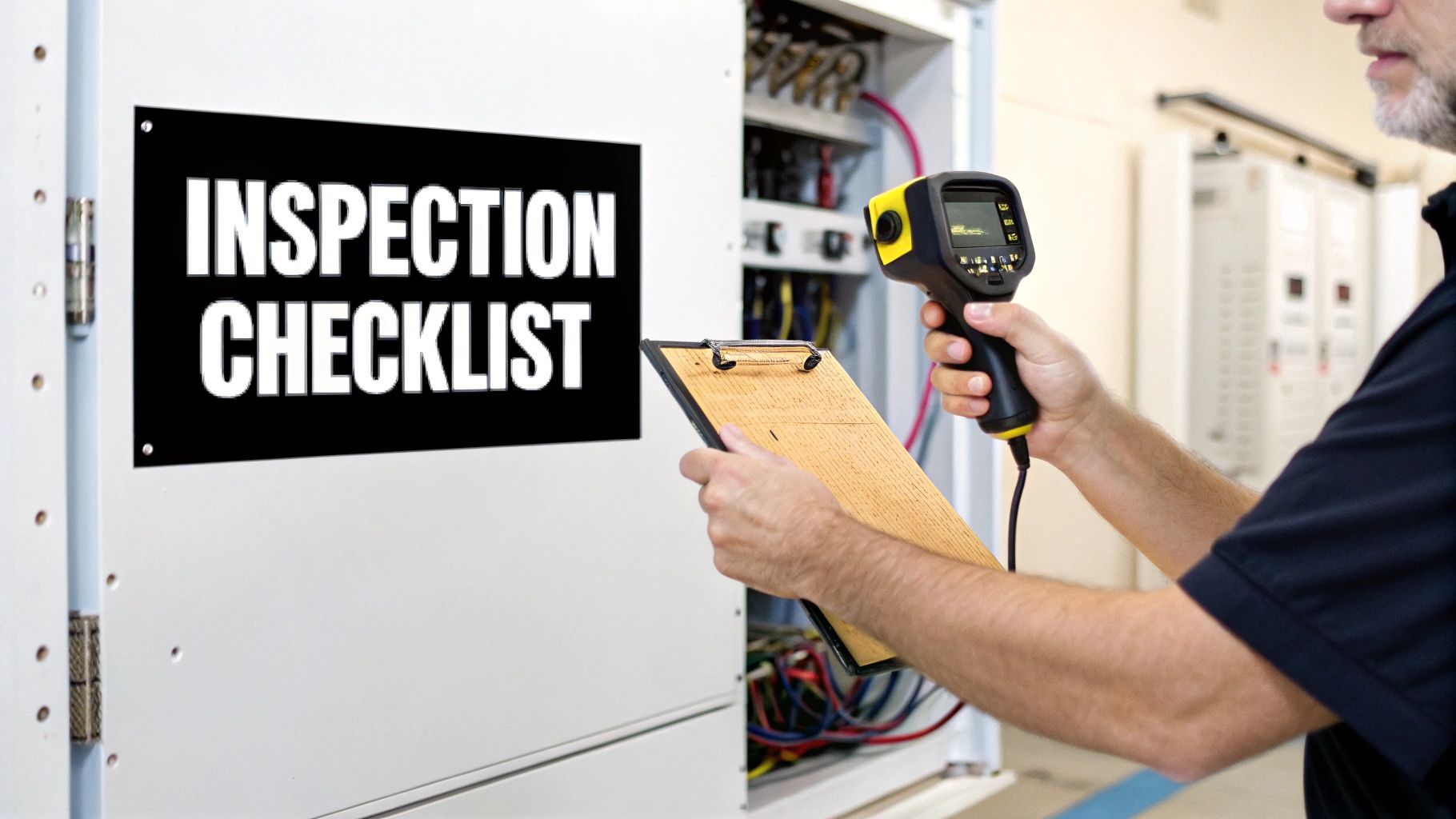
Preventive inspection and testing form the active, hands-on component of a world-class maintenance strategy. This practice involves conducting regular visual inspections, functional tests, and diagnostic checks to identify deterioration, wear, or potential failures. It’s a systematic examination approach that helps you catch problems early, while equipment is still operational, allowing for efficient, scheduled service instead of costly emergency repairs.
This is one of the most fundamental preventive maintenance best practices because it provides real-time data on asset health. Unlike purely scheduled tasks, inspections allow technicians to find and fix subtle issues that might otherwise go unnoticed until a full failure occurs, such as a frayed network cable causing intermittent Wi-Fi drops or a misaligned door sensor in an access control system.
How to Implement Preventive Inspection and Testing
Effective implementation hinges on structured processes and clear criteria. For tech systems in properties, this means going beyond a simple visual check. It requires detailed checklists tailored to each asset, from VoIP phone handsets in a hotel to security cameras in a senior living facility.
- Create Detailed Checklists: Develop specific, role-based inspection checklists. For a commercial building’s network closet, this could include checking for proper airflow, verifying UPS battery status, and inspecting cable integrity.
- Establish Pass/Fail Criteria: Clearly define what constitutes a pass or fail for each inspection point and create an escalation procedure. A "fail" on a server room temperature check should automatically trigger an alert to the IT manager.
- Use Photo Documentation: Train technicians to take photos during inspections to track changes over time. This visual history is invaluable for identifying gradual deterioration, like dust buildup in server fans or corrosion on outdoor-facing equipment.
- Schedule Intelligently: Conduct inspections at optimal times to minimize disruption. For example, test a multi-family property's emergency notification system during low-traffic weekday hours, not on a weekend evening.
Quick ROI Justification: A quarterly thermal imaging inspection of your main electrical and network distribution frames can identify an overheating circuit breaker before it fails. This simple, non-invasive test can prevent a catastrophic fire or a building-wide power outage, saving tens of thousands of dollars in potential damages, lost revenue, and emergency contractor fees.
4. Lubrication Management
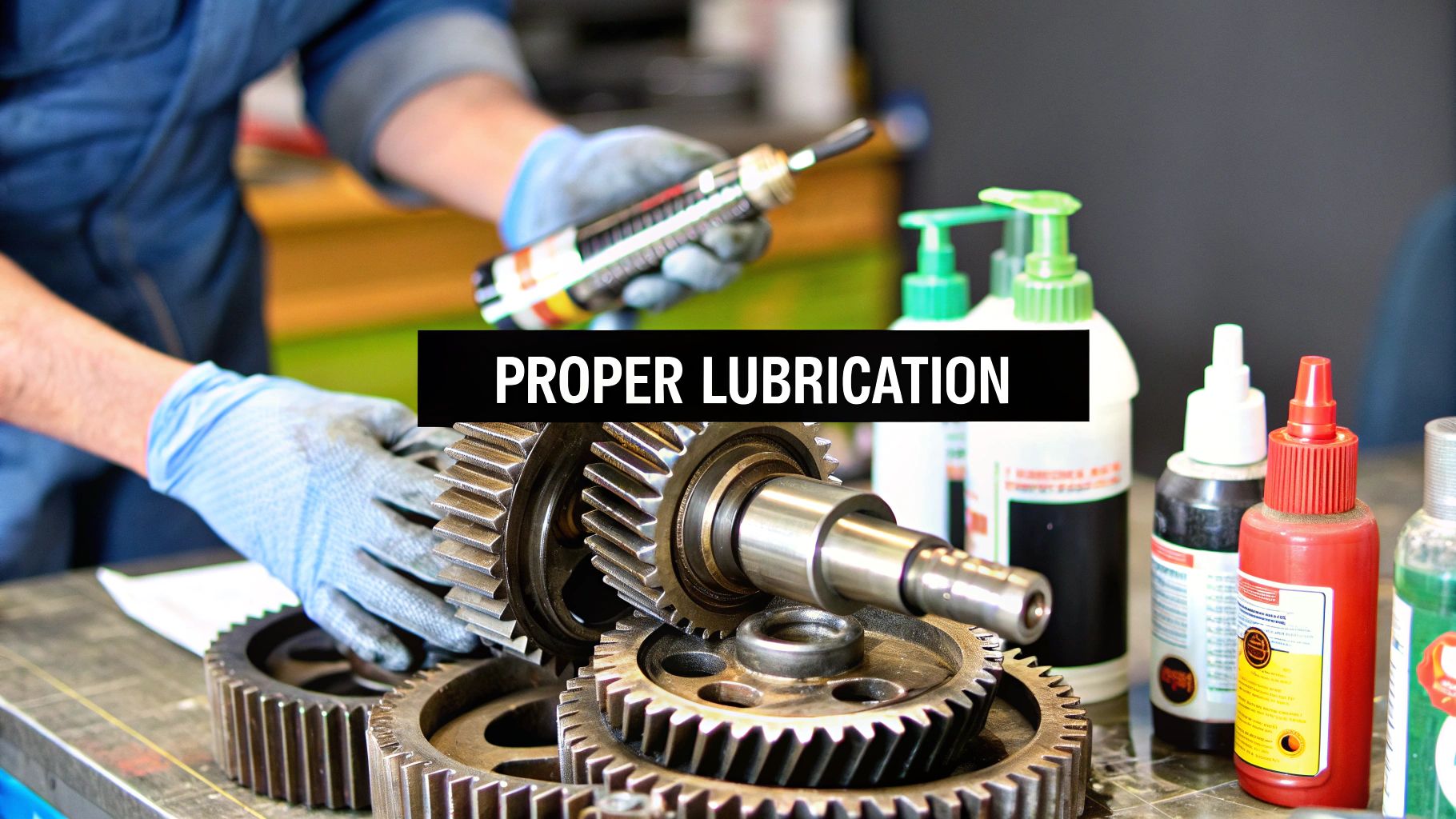
Proper lubrication management is a cornerstone of mechanical asset reliability, directly impacting equipment that supports property operations. This practice involves a systematic program for applying the correct lubricant, at the right time, in the right amount to reduce friction, prevent wear, and dissipate heat. For assets like HVAC systems, backup generators, or automatic doors, a disciplined lubrication strategy can extend equipment life by 50% or more, preventing costly premature failures.
This practice is one of the most effective preventive maintenance best practices because it directly combats the root causes of mechanical degradation. Instead of simply replacing parts as they fail, lubrication management preserves them, ensuring smoother, more efficient, and longer-lasting operation of the machinery that keeps a property functional and comfortable.
How to Implement Lubrication Management
Implementing a lubrication program requires precision and consistency. Begin by identifying all assets with moving parts that require lubrication, from elevator motors to commercial laundry machines. Consult OEM manuals to understand the specific lubricant types (viscosity, additives) and application frequencies recommended for each piece of equipment.
- Standardize Lubricants: Use ISO VG (viscosity grade) standards to select and consolidate your lubricant inventory, preventing misapplication.
- Schedule Proactively: Integrate lubrication tasks into your existing scheduled maintenance windows to maximize technician efficiency. For example, lubricate HVAC fan motor bearings during the semi-annual filter change.
- Analyze and Adjust: Implement oil analysis (checking for particle count, viscosity, and water content) for critical assets like generators every 500-1000 operating hours to detect underlying issues before they cause a breakdown.
- Train and Document: Ensure maintenance staff are trained on proper lubrication techniques, including cleaning fittings before application and avoiding over-lubrication. Log every activity in your CMMS to track history and adherence.
- Proper Storage: Store lubricants in a clean, dry, and climate-controlled area, clearly labeled to prevent cross-contamination or degradation.
Quick ROI Justification: Preventing the failure of a single critical HVAC chiller during a summer heatwave at a hotel or senior living facility avoids thousands in emergency repair costs, resident relocation expenses, and reputational harm. The cost of a well-managed lubrication program is minuscule compared to the expense of a single, preventable catastrophic failure.
5. Spare Parts Management and Inventory Optimization
Spare parts management is the strategic practice of maintaining and organizing an inventory of critical replacement components for your technology systems. For properties relying on consistent Wi-Fi, security, and communication, having the right part on hand can be the difference between a minor hiccup and a major operational shutdown. This practice ensures that when a component fails, a replacement is immediately available, drastically reducing downtime.
This is one of the most impactful preventive maintenance best practices because it directly supports rapid incident resolution. It moves you from a position of waiting days for a replacement network switch or security camera to having one ready for immediate deployment. The goal is to balance the cost of holding inventory with the high cost of extended system outages.
How to Implement Spare Parts Management
Effective implementation involves a data-driven approach to determine what to stock and in what quantity. Begin by analyzing failure rates and lead times for critical components like VoIP handsets, Wi-Fi access points, and security alarm sensors. This analysis will inform a strategic inventory that minimizes both risk and carrying costs.
- Categorize Your Parts: Use an ABC analysis. 'A' parts are critical, high-impact items like core network routers or a primary access control server. 'B' parts are important but less critical, and 'C' parts are common, low-cost items.
- Establish Stocking Levels: For a 200-unit apartment complex, this might mean keeping two spare Wi-Fi access points ('A' part) on-site, but only ordering replacement ethernet cables ('C' part) as needed.
- Use Technology to Track: Integrate parts inventory into your CMMS. The system can track usage, automatically suggest reorder points, and link specific parts to asset maintenance histories.
- Document and Organize: Clearly label all spare parts and store them in a secure, accessible location. Ensure technicians know exactly where to find a replacement PoE injector or door strike in an emergency.
Quick ROI Justification: The cost of keeping a spare 0 network switch on-site is minimal compared to the revenue lost and guest dissatisfaction from a property-wide internet outage that lasts 24-48 hours while you wait for a replacement to be shipped. This proactive stocking prevents significant service disruptions and protects your reputation.
6. Maintenance Training and Skill Development
Even the most sophisticated preventive maintenance plan is only as effective as the technicians executing it. Maintenance training and skill development involves establishing comprehensive programs to ensure your team possesses the current knowledge and skills required for proper equipment care. For complex systems like integrated security, VoIP, and Wi-Fi networks, well-trained technicians are fundamental to a successful preventive maintenance program.
This practice is one of the essential preventive maintenance best practices because technology evolves rapidly. A technician proficient in last year's access control system may not have the expertise to properly service today's cloud-managed solution. Continuous learning ensures that maintenance tasks are performed correctly, safely, and efficiently, preventing technician-induced errors and maximizing asset lifespan.
How to Implement Maintenance Training
Building a skilled team requires a structured approach to education and development. Begin by assessing your team's current skill levels against the technical demands of your property's systems, from network cabling infrastructure to modern security alarm panels. This gap analysis will form the basis of a targeted training curriculum.
- Assess Skill Gaps: Use performance reviews, technical quizzes, or observational assessments to identify critical knowledge gaps in areas like network diagnostics or security camera configuration.
- Develop Training Pathways: Create role-specific learning plans. A junior technician might focus on basic troubleshooting for in-unit Wi-Fi, while a senior engineer receives advanced certification training directly from a network equipment manufacturer.
- Partner with Vendors: Leverage the expertise of your technology suppliers. Many offer specialized certification programs on their specific VoIP phones, security systems, or network hardware, ensuring your team learns from the source.
- Create Mentorships: Pair experienced technicians with newer team members. This hands-on, job-shadowing approach is highly effective for transferring practical knowledge and reinforcing best practices for your specific property.
Quick ROI Justification: A well-trained technician can diagnose a VoIP system failure in 30 minutes instead of three hours. The cost savings in reduced system downtime, avoided specialist call-out fees, and maintained operational continuity for a hotel front desk or senior living communication system can easily justify the investment in a single training course.
7. Root Cause Analysis and Continuous Improvement
Root Cause Analysis (RCA) is a systematic problem-solving method that goes beyond addressing the immediate symptoms of a failure. It focuses on identifying the fundamental, underlying reasons for a malfunction. This practice is essential for transforming your maintenance strategy from a reactive cycle of fixing the same problems into a proactive loop of permanent solutions and continuous improvement.
Integrating RCA is a powerful preventive maintenance best practice because it stops recurring issues, whether it's a Wi-Fi access point that repeatedly drops connections or a security camera that frequently goes offline. Instead of just rebooting the device (addressing the symptom), RCA investigates why it failed, such as a faulty power-over-ethernet injector or a conflicting IP address assignment, to prevent it from happening again.
How to Implement Root Cause Analysis
Implementing RCA requires a structured approach and a culture that encourages open investigation. When a significant or recurring failure occurs, assemble a small, cross-functional team to analyze the incident from different perspectives. This prevents shortsighted conclusions and ensures a comprehensive solution is found.
- Train Your Team: Equip your staff with simple RCA methodologies like the "5 Whys" (asking "why" repeatedly to drill down to the source) or the Fishbone (Ishikawa) diagram to categorize potential causes.
- Establish a No-Blame Culture: Encourage transparent and honest reporting of failures without fear of reprisal. The goal is to fix the process, not to blame the person.
- Document and Track: Use your CMMS or a dedicated knowledge base to document the entire RCA process, from the initial problem to the implemented corrective actions. This creates a valuable library of lessons learned.
- Verify and Monitor: After implementing a corrective action, such as replacing a batch of known faulty network switches, continue to monitor system performance to confirm the solution was effective and didn't introduce new problems.
Quick ROI Justification: By performing an RCA on a recurring VoIP call quality issue at a senior living facility, you might discover the root cause is an improperly configured network switch, not the phones themselves. Fixing this single switch can prevent hundreds of future service calls, resident complaints, and the unnecessary cost of replacing perfectly good hardware, saving thousands in operational expenses.
8. Computerized Maintenance Management Systems (CMMS)
Implementing a Computerized Maintenance Management System (CMMS) is the digital backbone that transforms a preventive maintenance program from a collection of spreadsheets and calendars into an integrated, data-driven operation. A CMMS is a software platform designed to centralize maintenance information, automate work order management, track asset history, and schedule tasks, bringing unparalleled efficiency and transparency to your entire maintenance workflow.
This technology is one of the most impactful preventive maintenance best practices because it serves as the single source of truth for all maintenance activities. For properties managing complex systems like VoIP, access control, and network infrastructure, a CMMS eliminates guesswork, prevents tasks from being missed, and provides the data needed for continuous improvement and strategic decision-making.
How to Implement a CMMS
Deploying a CMMS effectively requires more than just choosing software; it demands a strategic approach to integration and adoption. The goal is to align the system's capabilities with your specific operational needs, from tracking a hotel's security camera inspections to managing a senior living facility's nurse call system updates.
- Define Objectives: Start by clearly identifying what you want to achieve. Goals might include reducing equipment downtime by 15%, improving technician productivity, or ensuring 100% compliance with scheduled network security patches.
- Establish Data Standards: Create a consistent naming convention and hierarchy for all assets. For example, a multi-family property might categorize assets by building, floor, and then unit, such as "BuildingA-Floor3-WiFi-AP-01".
- Plan User Training: Comprehensive training is crucial for adoption. Ensure all users, from technicians to managers, understand how to create work orders, log their time and materials, and access reports relevant to their roles.
- Start with Core Modules: Don't try to implement every feature at once. Begin with foundational modules like asset management, work order management, and preventive maintenance scheduling. Expand to inventory or mobile capabilities later. For a deeper dive, you can explore some of the top software for building maintenance on clouddle.com.
Quick ROI Justification: A CMMS provides detailed data on maintenance costs per asset. By identifying a specific model of Wi-Fi access point that costs 30% more in annual repairs than others, a portfolio manager can make a data-backed decision to replace the unreliable model across all properties, generating significant savings in both repair expenses and averted downtime.
9. Energy and Efficiency Optimization
Energy and efficiency optimization is a preventive maintenance approach focused on ensuring that technology and building systems operate at peak performance with minimal energy consumption. Rather than just preventing failures, this practice proactively identifies and corrects inefficiencies in systems like HVAC, data center cooling, and network hardware, directly reducing operational costs and supporting sustainability initiatives.
This strategy is one of the most impactful preventive maintenance best practices because it transforms maintenance from a cost center into a direct contributor to your property's net operating income (NOI). By methodically tuning equipment and processes, you can significantly lower utility bills for everything from network closets to common area lighting.
How to Implement Energy and Efficiency Optimization
Implementing an energy optimization program begins with understanding your current consumption patterns and setting clear targets. You must establish a baseline to measure improvements against, which requires a detailed audit of your critical systems and their energy usage.
- Establish a Baseline: Conduct a thorough energy audit of your property. Install sub-metering on high-consumption equipment like server racks or HVAC units in commercial buildings to precisely track where energy is being used.
- Identify Inefficiencies: Use tools like thermographic imaging to find heat loss from poor insulation around data closets or inefficient cooling. For industrial systems, conduct compressed air leak detection and repair programs.
- Schedule Regular Tuning: Clean critical components like condenser coils and air filters on a strict schedule. This simple task can improve HVAC efficiency by 5-15%. Beyond industrial equipment, even residential property elements like solar panels require specific preventive maintenance, such as regular solar panel cleaning for energy efficiency, to ensure optimal performance and energy yield.
- Educate and Empower: Train staff on energy-efficient practices, such as proper equipment shutdown procedures or adjusting thermostat settings in unoccupied hotel rooms or office spaces.
Quick ROI Justification: Optimizing a data center's cooling system can reduce its specific energy use by 20% or more. For a mid-sized property, this can translate into thousands of dollars in annual savings, providing a payback period of less than a year for the initial audit and tuning investment.
10. Safety and Compliance Integration
Safety and compliance integration involves embedding regulatory requirements and hazard management directly into every preventive maintenance task. This practice ensures that maintenance on systems like fire alarms, emergency call systems, and electrical infrastructure not only prevents failure but also adheres strictly to legal and industry safety standards, protecting residents, guests, and staff.
This approach is one of the most critical preventive maintenance best practices because it transforms routine upkeep from a purely operational function into a core component of your risk management strategy. The goal is to make safety a non-negotiable prerequisite for every work order, from testing a server room's fire suppression system to inspecting low-voltage cabling for potential trip hazards.
How to Implement Safety and Compliance Integration
A successful integration requires a deep understanding of the standards that govern your property type. Start by identifying all applicable regulations, such as OSHA for workplace safety, NFPA for fire codes, and HIPAA for data security in senior living facilities. Then, build these specific checks and procedures into your maintenance SOPs.
- Identify Applicable Standards: Compile a list of all local, state, federal, and industry-specific regulations that apply to your property's technology and life safety systems.
- Embed Safety in SOPs: For a hotel's VoIP phone system, an SOP might include a check for E911 service compliance. In a senior living facility, maintaining a nurse call system must include documented tests that meet healthcare standards.
- Train and Equip Staff: Ensure technicians receive regular training on safety protocols like lock-out/tag-out for electrical work and are provided with the correct Personal Protective Equipment (PPE).
- Document Everything: Meticulously log all safety checks, compliance verifications, and training sessions within your CMMS. This documentation is crucial for audits and demonstrates due diligence in the event of an incident.
Quick ROI Justification: Proactively integrating safety and compliance can prevent a single significant fine from a regulatory body like OSHA or a costly liability lawsuit. The savings from avoiding just one such event often exceed the total annual cost of the entire integrated safety and maintenance program.
10-Point Preventive Maintenance Comparison
| Approach | 🔄 Implementation complexity | ⚡ Resource requirements | 📊 Expected outcomes | 💡 Ideal use cases | ⭐ Key advantages |
|---|---|---|---|---|---|
| Scheduled Maintenance Planning | 🔄 Low–Medium — predefined schedules & workflows | ⚡ Low — staff time, basic planning tools or CMMS | 📊 Predictable downtime; ⭐ Improved reliability & lifespan | 💡 Stable assets with known usage patterns (airlines, HVAC) | ⭐ Predictability; easier workforce & budget planning |
| Condition Monitoring & Predictive Maintenance | 🔄 High — sensors, data pipelines, analytics | ⚡ High — sensors, IoT, AI expertise, integration | 📊 Max uptime; ⭐ Early-failure detection; lower long‑term costs | 💡 Critical/high-value assets (turbines, bearings) | ⭐ Precise maintenance timing; reduces unnecessary work |
| Preventive Inspection & Testing | 🔄 Medium — standardized checks and testing regimes | ⚡ Medium — skilled inspectors, diagnostic tools | 📊 Early problem detection; ⭐ Safety & compliance evidence | 💡 Regularly used equipment; safety‑sensitive systems | ⭐ Low-to-moderate cost; builds equipment knowledge |
| Lubrication Management | 🔄 Low–Medium — scheduled lubrication & analysis | ⚡ Medium — lubricants, analysis, possible central systems | 📊 Reduced wear; ⭐ Extended component life; energy savings | 💡 Rotating equipment, gearboxes, bearings | ⭐ Dramatic wear reduction; improves efficiency |
| Spare Parts Management & Inventory Optimization | 🔄 Medium — classification, reorder rules, forecasting | ⚡ Medium — storage, CMMS, supplier management | 📊 Reduced downtime; ⭐ Better cash flow & response times | 💡 Facilities with critical spares or long lead times | ⭐ Balances availability vs. inventory cost |
| Maintenance Training & Skill Development | 🔄 Medium–High — programs, curricula, certification | ⚡ High — training time, instructors, LMS | 📊 Higher first‑time fix rate; ⭐ Fewer errors, better safety | 💡 Complex equipment, regulated industries | ⭐ Improves effectiveness, retention, compliance |
| Root Cause Analysis & Continuous Improvement | 🔄 Medium–High — structured investigations & CAPA | ⚡ Medium — cross‑functional teams, data collection | 📊 Eliminates recurring failures; ⭐ Long‑term cost reduction | 💡 Recurring faults or systemic process issues | ⭐ Permanent fixes; fosters continuous improvement |
| Computerized Maintenance Management Systems (CMMS) | 🔄 High — software setup, data governance | ⚡ High — licenses, implementation, training | 📊 Centralized data; ⭐ Better KPIs (MTBF/MTTR) & scheduling | 💡 Multi‑site operations, complex asset fleets | ⭐ Transparency, reporting, workflow automation |
| Energy & Efficiency Optimization | 🔄 Medium–High — audits, tuning, retrofits | ⚡ Medium–High — meters, controls, expertise, CAPEX | 📊 Measurable energy savings; ⭐ Improved ESG performance | 💡 Energy‑intensive facilities, data centers | ⭐ Reduces energy costs; extends equipment life |
| Safety & Compliance Integration | 🔄 Medium–High — protocols, audits, LOTO systems | ⚡ Medium — training, documentation, safety equipment | 📊 Fewer incidents; ⭐ Legal compliance & lower liability | 💡 Regulated industries (chemical, healthcare, nuclear) | ⭐ Protects people & assets; demonstrates due diligence |
Future-Proof Your Properties with Proactive Technology Management
Navigating the complexities of modern property management requires a strategic shift from reactive problem-solving to proactive value creation. The preventive maintenance best practices detailed in this guide are not merely a series of technical tasks; they represent a fundamental change in operational philosophy. This approach transforms your property's technology infrastructure, including networks, Wi-Fi, security systems, and cloud services, from a potential liability into a powerful, reliable asset that directly enhances resident and guest satisfaction.
Moving beyond the traditional "break-fix" cycle is the single most impactful decision you can make for your property's long-term health and profitability. By systematically implementing scheduled maintenance, leveraging condition monitoring, and optimizing your spare parts inventory, you create a resilient operational ecosystem. This proactive stance significantly reduces the likelihood of costly, disruptive emergencies, such as a full-property Wi-Fi outage on a busy weekend or a critical security camera failure when you need it most.
From Checklist to Competitive Advantage
The journey to mastering preventive maintenance is one of continuous improvement and strategic alignment. The core takeaway is that these practices are interconnected, each one reinforcing the others to build a robust and efficient system.
- Integrate, Don't Isolate: A Computerized Maintenance Management System (CMMS) is the central nervous system of your program. It connects your maintenance schedules (Practice #1), condition-based alerts (Practice #2), and spare parts inventory (Practice #5) into a single, cohesive workflow. This integration is where true efficiency is unlocked.
- Empower Your People: Even the most advanced system is only as effective as the team operating it. Investing in maintenance training and skill development (Practice #6) ensures your staff can execute plans effectively and identify potential issues before they escalate. A well-trained team is your first and best line of defense.
- Learn from Every Failure: Adopting Root Cause Analysis (Practice #7) turns every minor issue into a valuable learning opportunity. Instead of just fixing a symptom, you uncover the underlying problem, preventing it from recurring and strengthening your entire maintenance strategy over time.
Key Insight: Effective preventive maintenance is not about adding more tasks to your team's workload. It's about implementing smarter, data-driven processes that prevent larger, more time-consuming problems from ever occurring, ultimately freeing up resources and boosting your Net Operating Income (NOI).
Actionable Next Steps: Building Your Proactive Framework
Embarking on this path can feel overwhelming, but progress is made through deliberate, incremental steps. Begin by focusing on the highest-impact areas to build momentum and demonstrate early ROI.
- Conduct a Technology Asset Audit: You cannot maintain what you don't know you have. Start by creating a comprehensive inventory of all critical technology assets, from network switches and access points to security cameras and VoIP phones.
- Prioritize Based on Impact: Identify which systems would cause the most significant disruption if they failed. Is it the resident Wi-Fi network? The access control system for your senior living facility? Focus your initial preventive maintenance efforts on these mission-critical components.
- Start with a Pilot Program: Select one key area, such as Wi-Fi network health, and implement a focused preventive maintenance plan. Track key performance indicators (KPIs) like uptime, support ticket volume, and guest satisfaction scores to measure success and build a case for broader implementation.
Ultimately, adopting these preventive maintenance best practices is an investment in the future of your property. It’s a commitment to operational excellence that protects your assets, enhances the user experience, and solidifies your reputation as a forward-thinking, reliable property manager. This proactive approach ensures your technological infrastructure is not just functional but a true competitive differentiator in a crowded market.
Ready to implement a world-class preventive maintenance program without overburdening your team? Partner with Clouddle Inc to leverage their expertise in managed technology services for hospitality, multi-family, and commercial properties. Their Network-as-a-Service (NaaS) model and 24/7 support offload the complexity of technology management, allowing you to focus on delivering an exceptional experience for your residents and guests. Learn more at Clouddle Inc.


0 Comments