
Senior living communities face a real problem: residents struggle to stay connected, staff can’t manage operations efficiently, and outdated networks put sensitive data at risk. Senior living WiFi solutions aren’t optional anymore-they’re what separates thriving communities from those losing residents to competitors.
At Clouddle, we’ve seen firsthand how the right network infrastructure transforms daily life for residents and operations for staff. This guide walks through what modern senior living connectivity actually requires and how managed services eliminate the headaches of building it yourself.
Why Reliable WiFi Matters Now
Statista reports that 90% of seniors used the internet as of June 2025. Residents arrive with smartphones, tablets, and wearables. They video call family, manage healthcare appointments online, and stream entertainment. Without reliable WiFi, you frustrate people who chose your community partly because of connectivity promises.
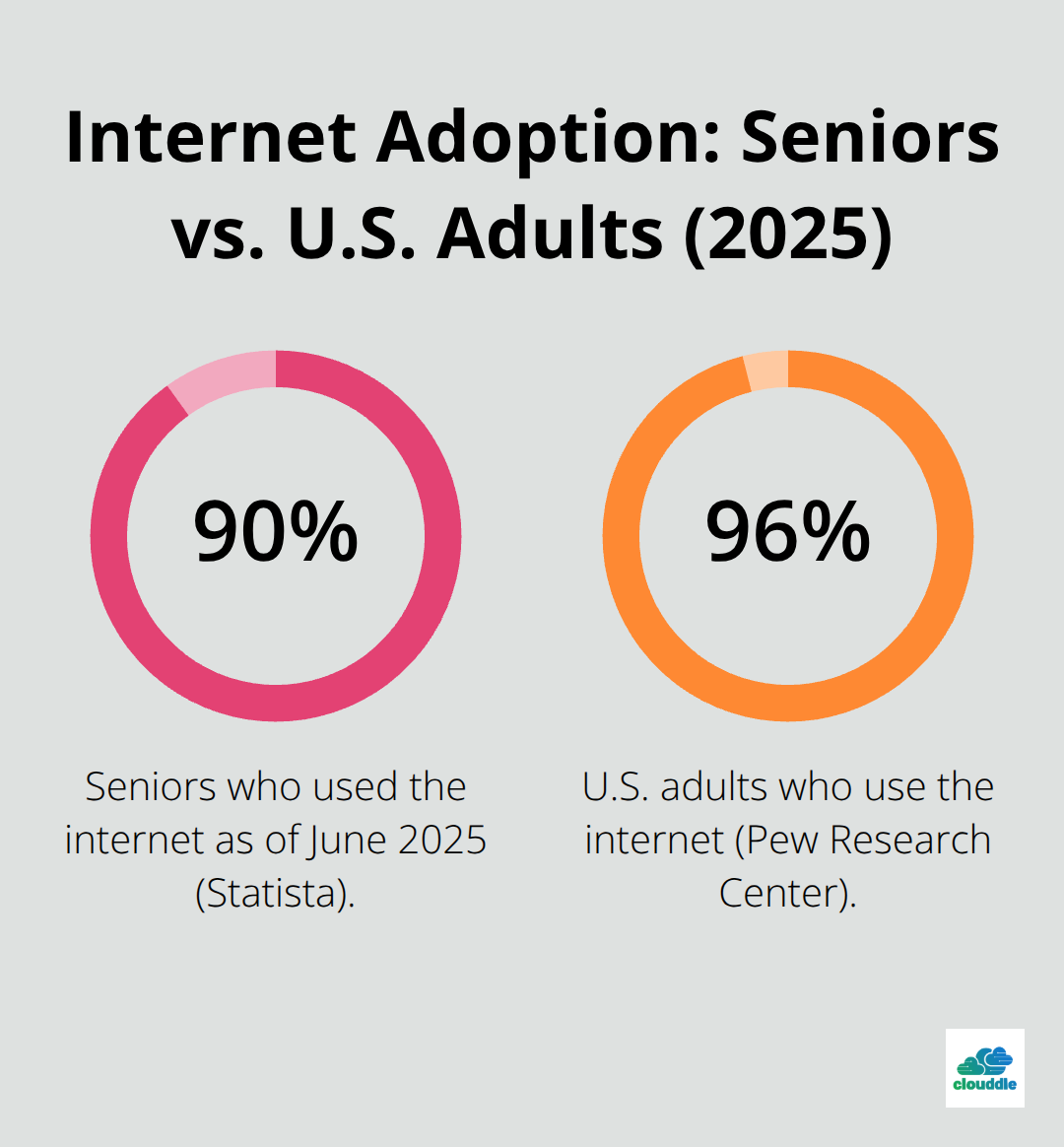
Staff face the same reality. Nurses document care in real time, dietary teams coordinate meal plans, and administrators manage occupancy and billing systems. A network outage disrupts medication schedules, emergency response protocols, and daily operations. Pew Research Center data shows 96% of U.S. adults use the internet, which means your residents won’t tolerate spotty coverage or slow speeds. They compare your facility to competitors and factor connectivity into their decision to stay or leave.
Residents Expect Seamless Digital Access
Residents don’t separate “WiFi” from “daily life” anymore. They stream shows, video call grandchildren, and access telehealth appointments through the same network. A single dead zone in a resident’s unit or common area creates frustration that spreads quickly through word-of-mouth and online reviews. Families touring facilities now ask about internet speed and coverage as seriously as they ask about amenities. Adult children evaluating options for their parents want assurance that relatives can stay digitally connected and access telehealth services without friction. Outdated or unreliable networks become a liability that marketing can’t overcome. Modern, internet-ready communities appeal directly to families making placement decisions.
Staff Efficiency Multiplies With Stable Infrastructure
Caregivers spend less time troubleshooting connectivity and more time on resident care when infrastructure works seamlessly. Administrative teams access real-time data for occupancy management, billing, and compliance reporting without delays. Telehealth platforms, remote monitoring devices, and smart room features depend entirely on stable, high-bandwidth networks. If your infrastructure can’t handle simultaneous video calls, wearable sensor data, and operational systems, you leave revenue and safety improvements on the table.
Competitive Positioning Drives Occupancy Growth
Communities that treat WiFi as a strategic asset-not an afterthought-attract better residents, retain staff longer, and operate more efficiently. Occupancy rates improve when families see that connectivity matches the quality of care and amenities. Staff efficiency multiplies when they spend less time managing network problems and more time on core operations. The next section explores how to design networks that actually meet these demands across multiple buildings and outdoor spaces.
How to Design WiFi That Actually Works in Senior Living
Building WiFi for senior living requires thinking differently than standard commercial networks. Your residents live there 24/7, move between independent units and shared spaces, and depend on connectivity for health and safety. That means coverage cannot have dead zones, speeds must handle simultaneous devices across multiple buildings, and security has to protect health data without creating friction. The physical layout of senior communities-sprawling campuses with multiple buildings, courtyards, dining halls, and outdoor recreation areas-demands strategic planning from the start.
Site surveys matter enormously here. Before any installation, measure square footage, identify structural obstacles like concrete walls or metal roofs that block signals, and count expected devices per unit and common area. A typical independent living unit might have five to ten connected devices per resident, including smartphones, tablets, smart home controllers, and wearables. Multiply that across a 150-unit community and you face 750 to 1,500 devices competing for bandwidth. Add staff devices, telehealth platforms running simultaneously in multiple units, and emergency alert systems that must prioritize, and undersized networks fail fast. Plan for peak load, not average usage.
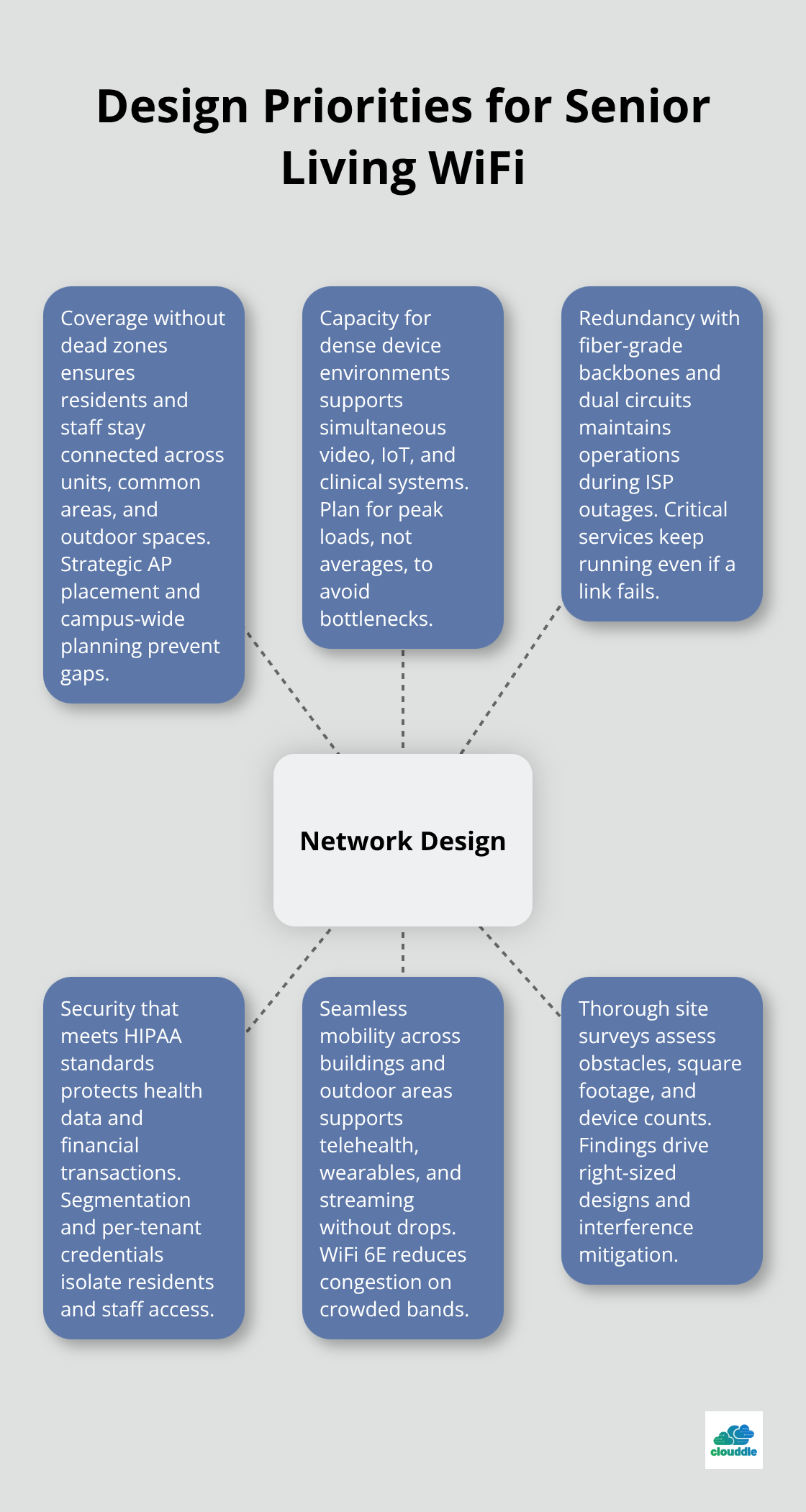
Most providers recommend fiber-grade backbone speeds with redundant internet circuits so that a single ISP outage does not cripple operations. If your community relies on telehealth, remote monitoring sensors, or nursing call systems over WiFi, redundancy becomes mandatory for safety.
Wired Infrastructure for Life-Safety Systems
Wired connections for critical infrastructure are non-negotiable. Nurse call systems, security cameras, emergency alarms, and medical devices must run on dedicated wired networks to guarantee speed, security, and reliability. WiFi handles resident mobility and general staff workflows, but life-safety systems live on hardwired connections. This hybrid approach balances flexibility with dependability.
For WiFi itself, extensive coverage in resident units and common spaces prevents the frustration of dropped calls or buffering streams. Outdoor areas like courtyards and walking paths need coverage too-residents expect seamless connectivity everywhere on campus. Access points positioned strategically minimize interference, and modern WiFi 6E adoption helps by shifting compatible devices to the less-crowded 6GHz band, reducing congestion in dense environments. Plan inter-switch connectivity and overall capacity to support growing devices and services such as telehealth, IoT, and streaming without bottlenecks.
Privacy and Security That Residents Trust
Health data transmitted over your network falls under HIPAA, so encryption, firewalls, and access controls are fundamental, not optional upgrades. Residents conduct online banking, manage prescriptions, and video call doctors-all sensitive activities that demand strong protections. Multiple Pre-Shared Keys enable per-tenant security so each resident has a private area network with individualized device management, preventing neighbors from accessing each other’s data.
Regular security audits catch vulnerabilities before they become breaches. Staff and residents need separate network access with appropriate permission levels. A caregiver’s device should not access resident billing systems, and a resident should not see other residents’ health records. SOC 2 Type II certification from your provider signals they have undergone independent audits of their security controls. Transparent documentation of how data moves, where it is stored, and who can access it builds trust with residents and families.
Simplifying Technology for Non-Technical Users
Residents arrive with varying comfort levels around technology. Some navigate complex smart home ecosystems effortlessly; others struggle with basic WiFi connection steps. Network setup must be intuitive. Captive portals guide new residents through connection without requiring passwords they will forget or technical jargon they will not understand. Guest networks let visiting family members connect without accessing resident systems.
Smart devices in rooms-thermostats, lighting, emergency call buttons-should work intuitively without requiring residents to download multiple apps or remember complex commands. Voice assistants and simple touchscreen interfaces reduce barriers for residents with mobility or cognitive challenges. Staff training matters equally. If your team cannot troubleshoot basic connectivity issues or explain to residents why their device is not connecting, frustration spreads quickly. Providers offering 24/7 support reduce burden on facility staff who should not need advanced networking expertise to run daily operations.
The goal is making connectivity invisible-residents and staff use devices and services without thinking about the network infrastructure underneath. Once you establish this foundation, the next step involves choosing the right service model to manage and maintain your network without straining internal resources.
Network as a Service Transforms Senior Living Operations
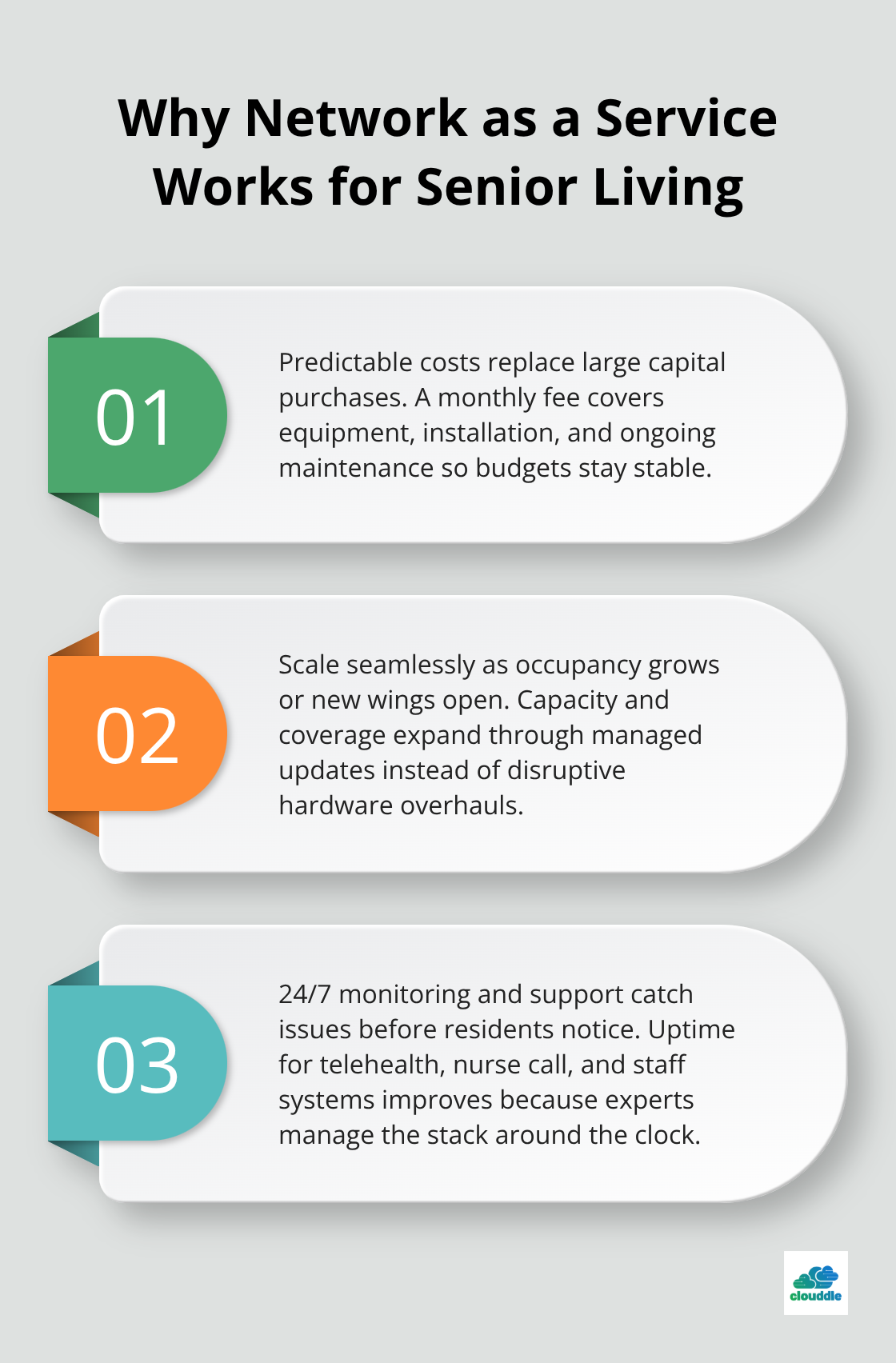
Building and maintaining enterprise-grade WiFi infrastructure yourself demands hiring IT staff, purchasing equipment upfront, managing upgrades, and handling 24/7 support calls when systems fail. Most senior living operators lack the specialized expertise to design networks for HIPAA compliance, redundancy, and the dense device environments that modern communities require. Network as a Service flips this model entirely. Clouddle combines networking, entertainment, and security into a single managed solution that requires zero capital investment upfront. Your community pays a predictable monthly fee instead of absorbing equipment costs, installation expenses, and ongoing maintenance overhead.
Scale Without Capital Expenses
This approach works especially well for senior living because communities scale bandwidth and coverage as occupancy grows without renegotiating infrastructure or replacing hardware. If your facility adds a new wing or expands memory care services, your network grows with you through software and service adjustments rather than costly physical upgrades. The financial predictability matters when budgeting operations across multiple departments. Rather than IT staff spending hours troubleshooting outages or managing patch updates, they focus on resident experience and core operations.
Senior living executives consistently report that interoperability ranks among the top three barriers to technology adoption, according to Argentum research. Managed solutions address this directly by handling device compatibility, software updates, and ecosystem integration so your team does not need to become networking experts.
24/7 Monitoring Prevents Emergencies
The practical advantage becomes clearest during emergencies. When a network fails in a traditional setup, your staff scrambles to contact vendors, wait for technicians, and manage resident complaints while care operations suffer. With managed WiFi, 24/7 monitoring catches problems before residents notice them, and dedicated support teams resolve issues without burdening your staff. Your community maintains uptime for telehealth platforms, nursing call systems, and staff workflows because someone else manages the infrastructure around the clock.
Integrated Services Reduce Complexity
Bundled services mean entertainment systems, security camera networks, and resident WiFi operate on integrated platforms rather than fragmented solutions from different vendors. This integration reduces complexity, lowers training burden, and creates data visibility across operations. A resident cannot access another resident’s network segment, staff permissions align with their roles, and audit trails capture who accessed what and when, satisfying compliance requirements without manual documentation.
Most importantly, managed services free your team to do what they were hired for instead of becoming de facto network administrators.
Final Thoughts
Senior living WiFi solutions reshape how communities operate and how residents experience daily life. When connectivity works seamlessly, residents stay engaged with family, access healthcare remotely, and enjoy entertainment without frustration. Staff spend less time troubleshooting network problems and more time delivering care. Families touring your facility see a modern, forward-thinking community that takes resident needs seriously.
Professional network services eliminate the burden of managing infrastructure yourself. Rather than hiring IT specialists, purchasing equipment, and handling emergency support calls, you pay a predictable monthly fee and let experts handle the complexity. This approach frees your team to focus on what matters most-resident care and community operations. Managed solutions also scale with your facility, growing bandwidth and coverage as occupancy increases without requiring capital investment or infrastructure overhauls.
At Clouddle, we understand that senior living communities need connectivity solutions that work reliably, protect sensitive health data, and integrate seamlessly with daily operations. Contact Clouddle to explore how managed connectivity can transform your community.


0 Comments