
Your network backbone is only as strong as the cabling that supports it. Poor installation choices lead to dropped connections, slow speeds, and costly downtime-problems that compound as your property grows.
Structured data cabling installation done right eliminates these headaches. At Clouddle, we’ve seen how proper cabling transforms network reliability across hospitality, multi-family, and senior living properties. This guide covers what you need to know to build infrastructure that actually works.
What Structured Data Cabling Actually Is
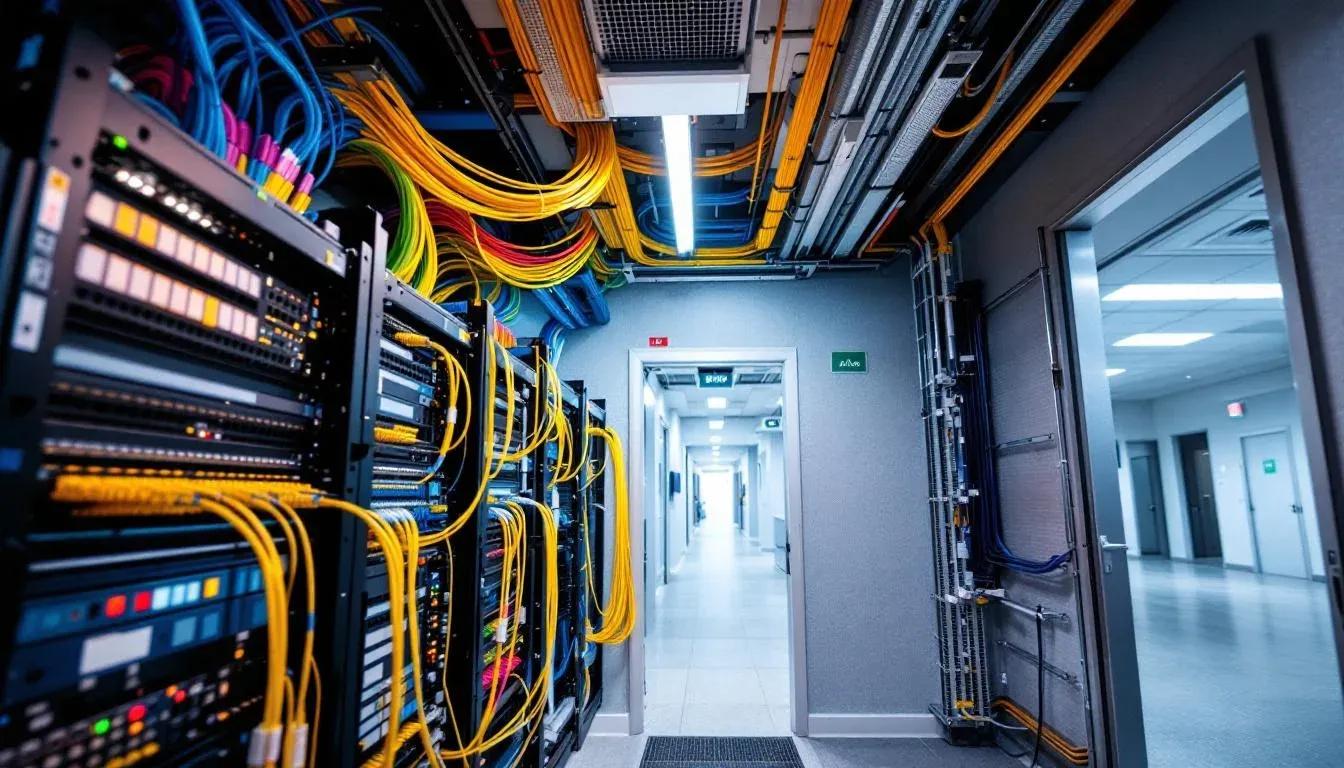
Structured data cabling creates a standardized system of cables, connectors, and infrastructure that carries all your network traffic in one organized framework. Most properties operate with tangled cables that nobody understands, but structured cabling follows TIA/EIA-568 standards that dictate everything from cable types to installation methods. The core components include horizontal cabling that runs from your main distribution frame to individual rooms, vertical backbone cabling connecting different floors or buildings, and patch panels that organize all your connections. Twisted-pair copper cables handle most installations today, though fiber optic cables work better for longer distances or high-interference environments. Structured systems use clearly labeled pathways, proper grounding, and consistent documentation so anyone can understand your network months or years later.
Why Installation Quality Determines Network Performance
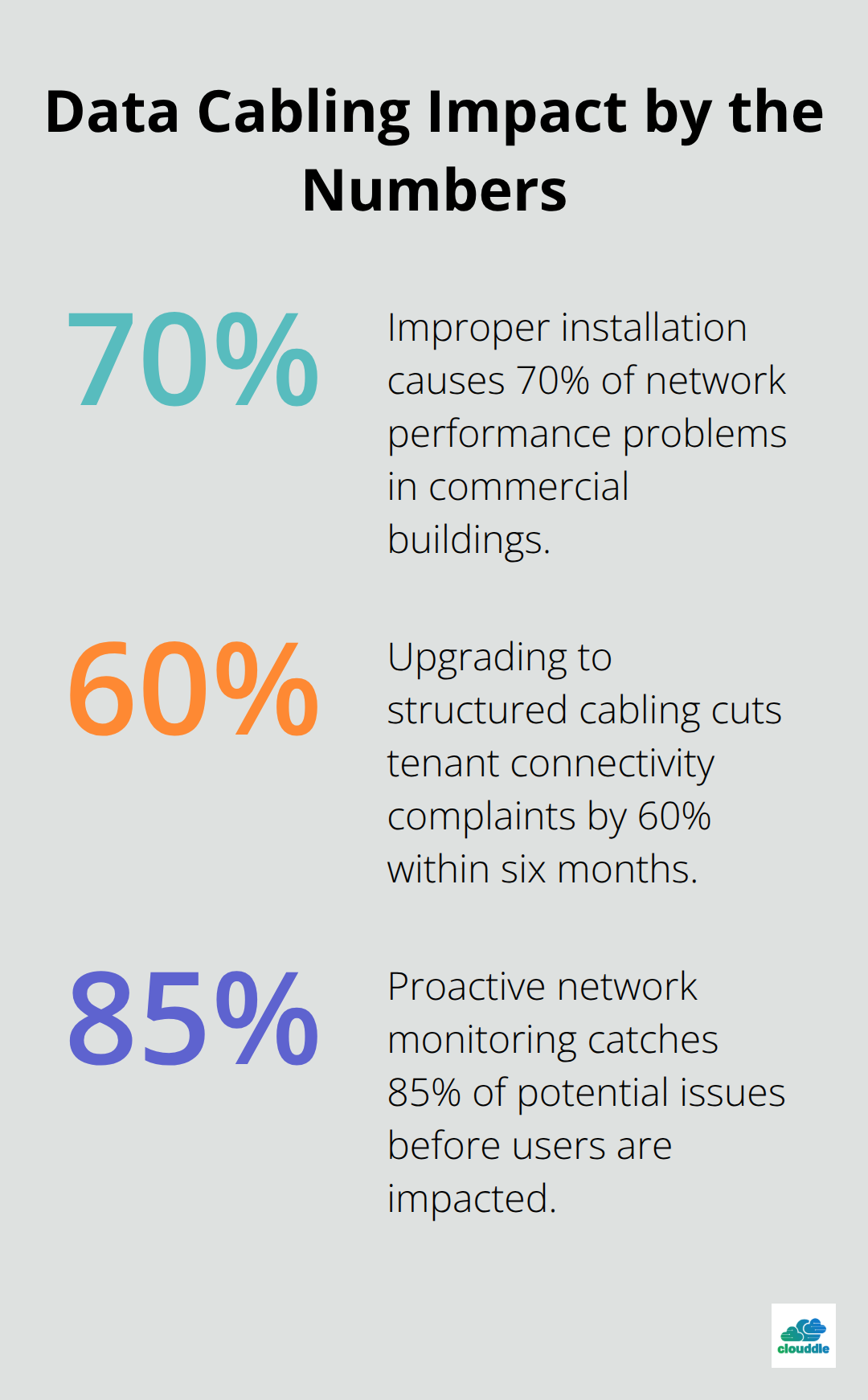
Poor cabling kills network speed faster than oversized devices ever could. When cables run too close to electrical lines, they pick up electromagnetic interference that corrupts data signals. The Telecommunications Industry Association found that improper cable installation accounts for roughly 70% of network performance problems in commercial buildings. Hospitality properties especially suffer because guests expect 100+ Mbps speeds, and one bad cable run can drop that to 30 Mbps in specific rooms. Senior living communities need reliable networks for emergency alert systems and telehealth services, so cable failures create genuine safety risks, not just frustration. Multi-family properties with hundreds of units face exponential complexity because one mistake in the basement affects entire floors. Structured cabling prevents these cascades through proper cable separation, appropriate conduit sizing, and strategic placement away from power lines and HVAC systems. Correct installation the first time avoids the 40% cost premium that emergency repairs typically run compared to planned maintenance.
How Structured Cabling Moves Business Results
Properties that invest in proper cabling infrastructure see measurable operational improvements. Hospitality venues report 15-20% increases in guest satisfaction scores when Wi-Fi performs consistently, and that reliability starts with solid backbone cabling. Multi-family properties reduce tenant complaints about connectivity issues by 60% within six months of upgrading to structured systems, according to property management benchmarking data. Senior living communities using properly installed cabling report fewer technology-related incidents during emergency situations because their systems stay online when they matter most. Structured cabling typically costs 12-18% more upfront than amateur installations but eliminates 70% of future troubleshooting expenses.
Properties planning expansion add new rooms or buildings without rewiring everything because structured systems accommodate growth. The financial case becomes even stronger when you factor in reduced staff time spent troubleshooting network problems and the revenue impact of reliable guest connectivity.
What Separates Professional Installation from DIY Approaches
Professional installers follow strict protocols that amateur setups ignore. They test cable runs with specialized equipment to verify signal integrity before walls close up, catching problems that would cost thousands to fix later. They maintain detailed documentation that shows exactly where every cable runs, what it connects to, and when it was installed (information that proves invaluable during expansions or repairs).
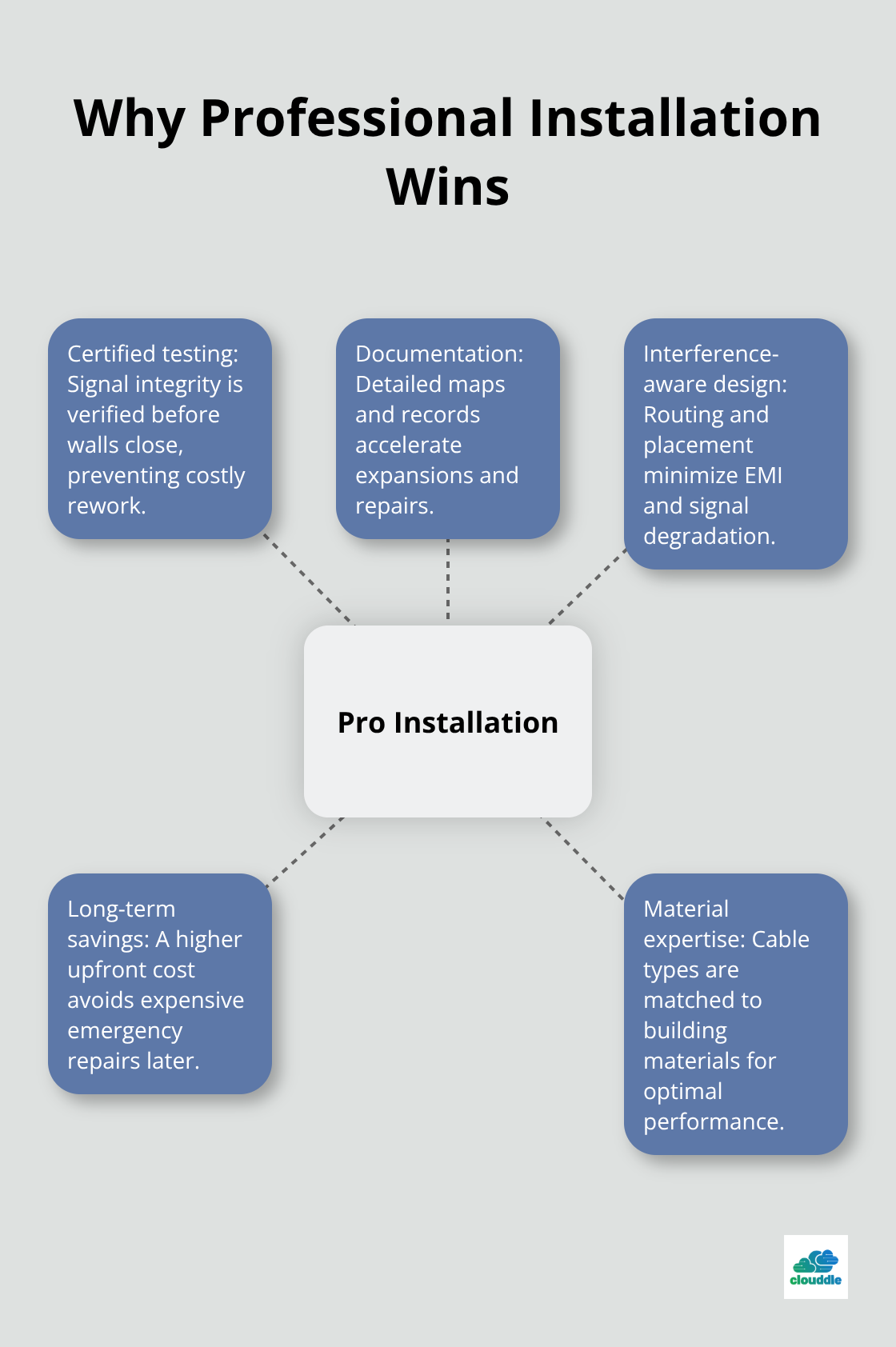
They understand how different cable types interact with building materials and electrical systems, positioning runs to minimize interference. DIY installations often skip these steps, creating hidden problems that surface months later when you’ve already paid for the work. The difference between a $5,000 professional installation and a $3,000 amateur job typically shows up as $15,000 in emergency repairs within two years.
Planning Your Cabling System for Current and Future Needs
Your cabling infrastructure must support both today’s operations and tomorrow’s growth. Start by mapping your current network needs: how many access points do you need, where will servers sit, which areas require the most bandwidth? Then add 30-40% capacity beyond that projection because your actual needs will exceed initial estimates. Consider how your property might expand-adding floors, annexing adjacent buildings, or converting spaces to new purposes. Structured cabling systems designed with this flexibility in mind cost slightly more upfront but save enormous amounts when you actually need to expand. The next section covers the specific standards and compliance requirements that govern proper installation, ensuring your system meets industry expectations and performs reliably for years.
Best Practices for Data Cabling Installation
Assess Your Property Before Installation Begins
Conduct a thorough site survey before any cables go in the ground or walls. Walk through your entire property and identify where network equipment currently sits, where it should sit, and where future expansion might happen. Measure distances from main distribution frames to the farthest access points because cable runs longer than 90 meters lose signal integrity regardless of cable quality. Document electrical panel locations, HVAC ducting, and plumbing routes so your installer knows which areas to avoid.
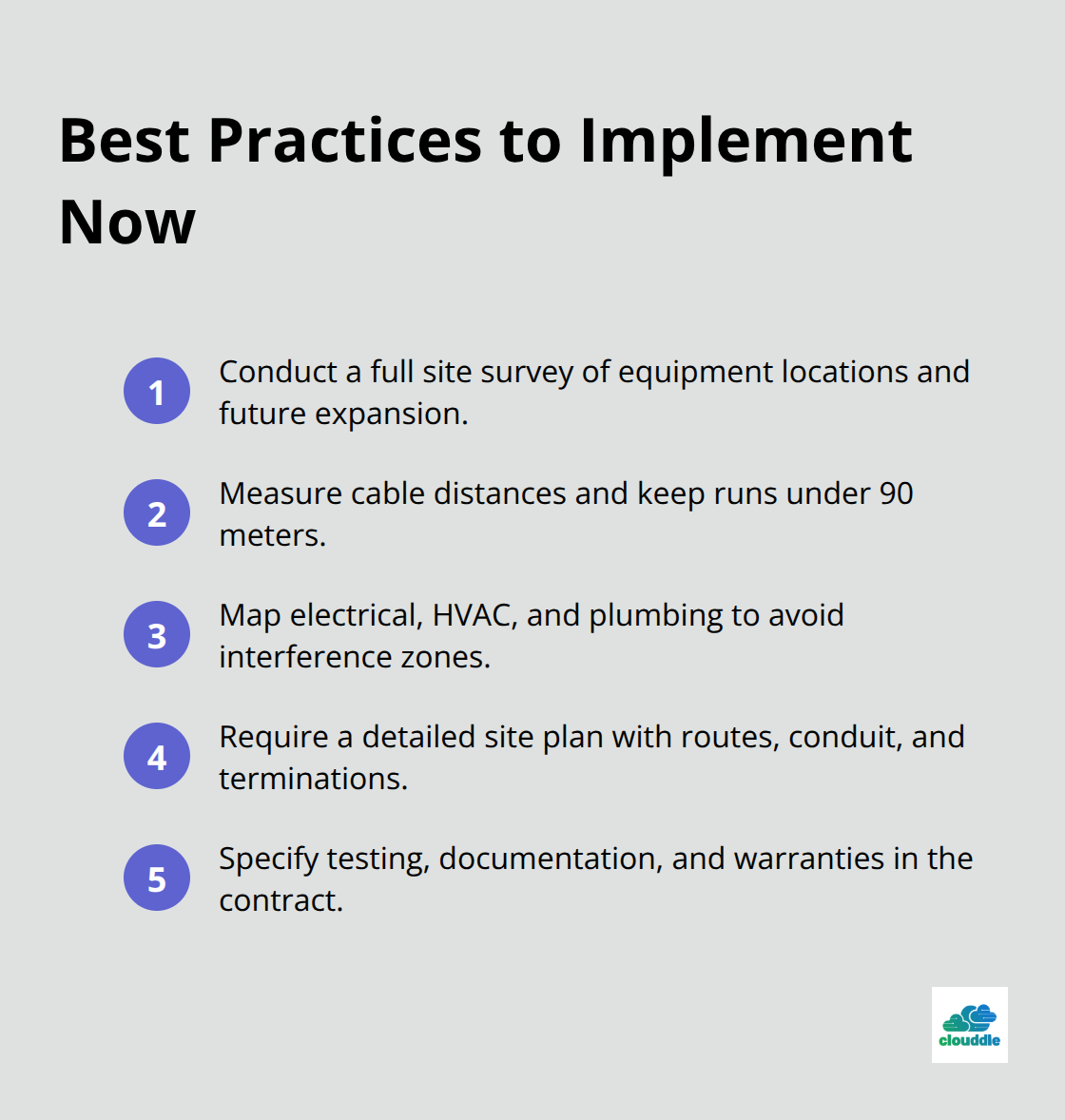
Properties that skip this assessment phase typically discover problems mid-installation when walls are already open, adding 20-30% to project costs. Request that your installer provide a detailed site plan showing proposed cable routes, conduit placement, and termination points before work begins. This forces clarity about expectations and prevents the common scenario where installers take shortcuts because nobody specified requirements upfront.
Follow TIA/EIA-568 Standards Without Exception
TIA/EIA-568B standards aren’t suggestions-they’re the foundation that determines whether your cabling system performs and remains compatible with future upgrades. These standards specify cable categories (Cat6A handles most modern installations, Cat5e is outdated for new builds), proper termination methods, grounding requirements, and maximum bend radii that prevent signal degradation. Your installer must test every cable run with a certified tester that measures signal integrity across all four pairs in twisted-pair cables, not just check for continuity with a basic multimeter. Documentation matters far more than most property managers realize: your installer should provide a complete cabling map showing every run, termination point, and installation date in a format you can actually reference later.
Verify Testing and Documentation Standards
Installers who resist providing detailed documentation or skip testing are cutting corners that will haunt you during troubleshooting. Specify in your contract that the installer provides a warranty on workmanship for at least three years and stands behind their testing results. The difference between a rushed installation and a properly executed one often comes down to whether the installer takes time for thorough documentation and verification. Certified installers maintain records that prove compliance with industry standards, protecting your investment and simplifying future expansions or repairs.
Identify Common Installation Mistakes
Cable runs positioned too close to electrical lines pick up electromagnetic interference that corrupts data signals. Improper conduit sizing restricts airflow and causes cables to overheat, degrading performance over time. Inadequate grounding creates safety hazards and introduces noise into your network signals. Installers who fail to label cables and termination points create confusion that compounds during troubleshooting (what should take 30 minutes stretches into hours when nobody knows which cable does what). Skipping bend radius specifications damages cable jackets and internal conductors, reducing lifespan and reliability. These mistakes cost far more to fix after installation than they cost to prevent during the initial project.
Plan for Scalability and Future Upgrades
Your cabling infrastructure must accommodate both today’s operations and tomorrow’s growth without complete replacement. Structured systems designed with flexibility in mind cost slightly more upfront but save enormous amounts when you actually need to expand. Oversizing conduit runs and planning extra pathways during initial installation allows you to add cables later without tearing into walls. The next section covers how to optimize your cabling infrastructure for long-term growth and integration with emerging technologies that your property will depend on.
Optimizing Your Cabling Infrastructure for Future Growth
Plan for Expansion Before You Need It
Your initial cabling installation becomes obsolete the moment your property expands, which is why oversizing capacity during the planning phase matters far more than most property managers realize. Structured cabling systems designed with future growth in mind typically cost 15-25% more upfront but eliminate the need for complete rewiring when you add floors, units, or buildings. The math is straightforward: a $50,000 expansion that requires new backbone cabling costs $70,000-$85,000 when you must tear into existing infrastructure versus $60,000 when your original system included extra conduit runs and pathways.
Hospitality properties planning renovations should install Cat6A cabling instead of Cat5e, even if current equipment only uses Cat5e speeds, because upgrading later means walls come down again. Multi-family communities frequently underestimate bandwidth needs by 40-50%, according to property management industry data, so plan for at least double your current usage projections. Senior living facilities often add telehealth capabilities, emergency communication systems, and resident Wi-Fi access years after initial installation, making Optimizing Your Cabling Infrastructure for Future Growth non-negotiable for long-term operations.
Position your main distribution frame in a central location accessible for future expansion rather than cramming it into a mechanical closet where you cannot add equipment later. Oversized conduit runs cost almost nothing during initial installation but prove invaluable when you need to pull additional cables without re-running everything from scratch.
Integrate Cabling With Wi-Fi and Security Systems
Integration between your cabling backbone and Wi-Fi systems determines whether your wireless coverage actually performs as promised, yet most installations treat these as separate projects managed by different contractors who never communicate. Your structured cabling must support enough access points across your property to deliver consistent coverage, which typically requires one access point per 1,500-2,000 square feet in hospitality settings and per 2,000-2,500 square feet in multi-family properties according to Wi-Fi industry standards.
Backbone cabling should connect these access points with dedicated runs rather than sharing capacity with general network traffic, preventing bandwidth bottlenecks that slow guest or resident connectivity. Security systems integrated with your cabling infrastructure must operate on isolated network segments to prevent compromised cameras or door locks from affecting general operations, requiring separate VLAN capabilities that your cabling and switching equipment must support from day one.
Monitor Performance and Maintain Your System
Maintenance monitoring systems track cable performance, identify failing connections before they cause outages, and alert you to interference problems. Properties using network monitoring tools catch 85% of potential network issues before they impact users, making proactive monitoring vastly superior to reactive troubleshooting.
Schedule quarterly physical inspections of cable runs to identify damage from construction work, pest activity, or environmental factors that degrade performance over time. Document all changes to your cabling system immediately rather than updating records months later when details fade, preventing confusion during emergency repairs when speed matters.
Final Thoughts
Structured data cabling installation forms the foundation that separates properties with reliable networks from those plagued by constant connectivity problems. Professional installation reduces downtime because certified installers test every cable run before walls close, catch problems that would surface months later, and maintain documentation that speeds future repairs. When network issues occur, detailed cabling maps let technicians identify problems in minutes rather than hours, freeing your staff to focus on operations instead of troubleshooting.
The financial case is straightforward: proper cabling costs 12-18% more upfront but eliminates 70% of future troubleshooting expenses and avoids the 40% cost premium that emergency repairs typically run. Properties planning expansion avoid complete rewiring because systems designed with growth in mind accommodate new floors, units, or buildings without tearing into existing infrastructure. Senior living communities maintain reliable emergency systems, hospitality venues deliver the Wi-Fi speeds guests demand, and multi-family properties reduce tenant complaints by 60% within six months of upgrading.
Assess your current cabling infrastructure honestly by walking your property and identifying cable runs that violate TIA/EIA-568 standards. At Clouddle, we help hospitality, multi-family, and senior living properties build networking infrastructure that actually works through professional installation and ongoing support that keeps your network reliable as your property grows. Contact us to discuss how structured data cabling transforms your operations.


0 Comments