
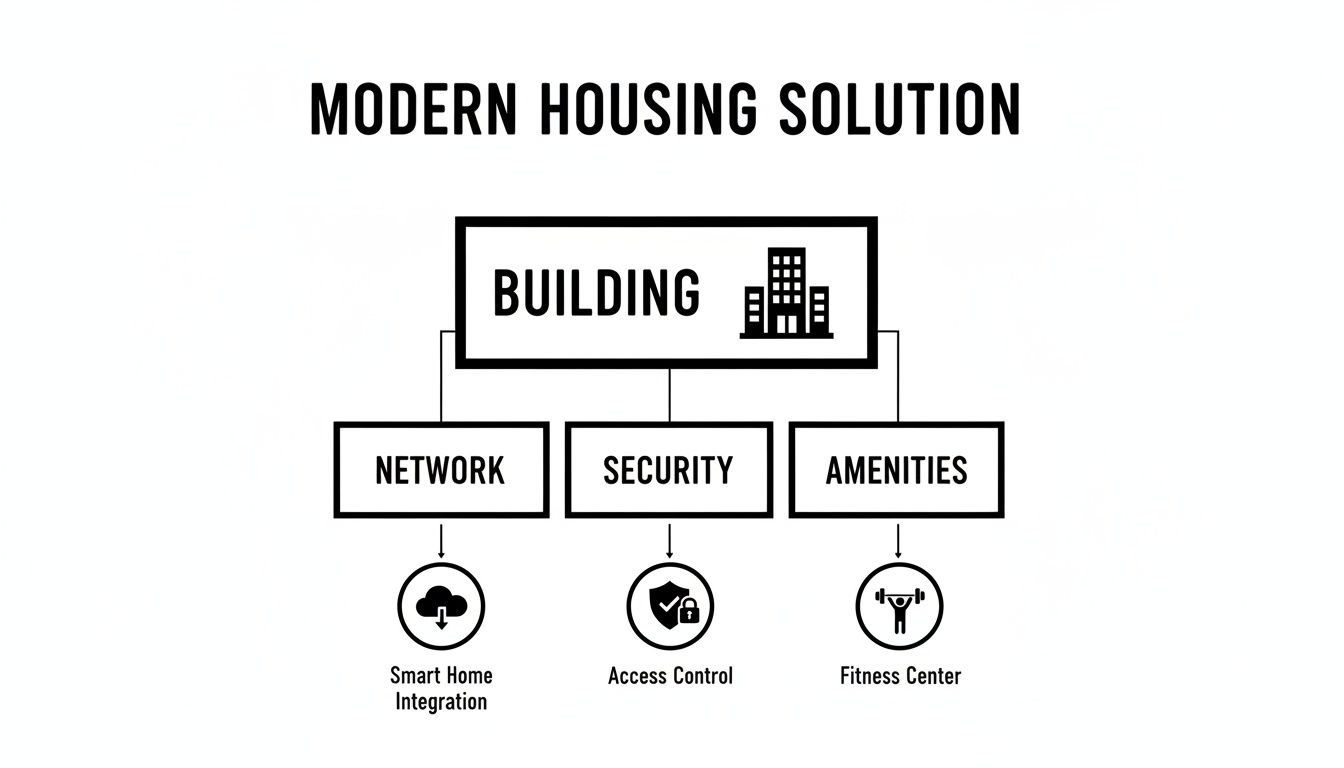
A modern student housing solution isn't just about providing faster Wi-Fi. It’s about building a complete technology backbone for your property—a single, professionally managed system that bundles everything from connectivity and security to smart amenities.
The New Standard for Student Living
It wasn’t long ago that just having an internet connection was a decent perk for a student apartment. Those days are gone. Today’s students are digital natives who expect their living spaces to be as connected and seamless as their online lives.
Trying to meet that expectation with a patchwork of different vendors—one for internet, another for security cameras, and a third for key fobs—is a recipe for headaches. You end up with systems that don't talk to each other, creating a clunky experience for residents and a management nightmare for your staff.
A modern, integrated solution fixes that. Think of it as installing a central nervous system for your building. It ensures every piece of technology works in harmony, from the moment a student logs onto the network to when they unlock their door with their phone. This is the kind of premium experience that sets a property apart and one that students are happy to pay for. You can get a deeper look at this approach in our complete guide on technology for property management.
More Than Just Fast Internet
A true solution is a stack of services designed to work together, from the foundational wiring in the walls to the apps on a student's phone.
Let's break down exactly what that looks like. The table below shows how these different technology layers come together to create a cohesive system.
Key Components of a Modern Student Housing Solution
| Technology Layer | Core Components | Primary Benefit for Tenants & Operators |
|---|---|---|
| Foundation (Connectivity) | High-speed internet, property-wide managed Wi-Fi, structured cabling. | Provides the reliable, high-performance backbone for all other services. |
| Security & Access | IP cameras (CCTV), video monitoring, smart access control (key fobs/mobile). | Ensures resident safety and gives operators complete control over property access. |
| Smart Amenities | Smart thermostats, smart lighting, package management systems, IoT sensors. | Delivers the modern conveniences tenants expect while improving operational efficiency. |
| Communication & Services | VoIP phone systems, cloud services for property management, tenant portal. | Streamlines communication and administrative tasks for both staff and residents. |
Each layer builds on the one before it. You can't have reliable smart locks or security cameras without a rock-solid network underneath it all.
Meeting a Growing Market Demand
The push for these advanced properties couldn't come at a better time. The student housing market is grappling with a serious supply-and-demand problem. In the U.S. alone, only about 22% of over 20 million undergraduates were able to secure a bed in purpose-built or on-campus housing last year.
With North America representing 42.3% of global student accommodation revenue in 2023, the opportunity is massive for property owners who can meet this demand. You can explore more data on the global student housing market on bonard.com.
By investing in a comprehensive tech solution, you're not just upgrading a building; you're creating a highly desirable community where students genuinely want to live.
The Technology That Powers Modern Student Living
A truly great student housing solution is so much more than just a fast internet connection. It’s a complete digital foundation, a carefully engineered ecosystem that supports everything a student does—from streaming lectures and collaborating on projects to gaming and staying in touch with family.
Think of it like building a house. You can't put a modern, tech-filled smart home on top of a crumbling foundation. In the same way, you can’t just bolt new gadgets onto an old, creaky network and expect it to work. You need a unified, professionally managed system where every piece is designed to work together perfectly.
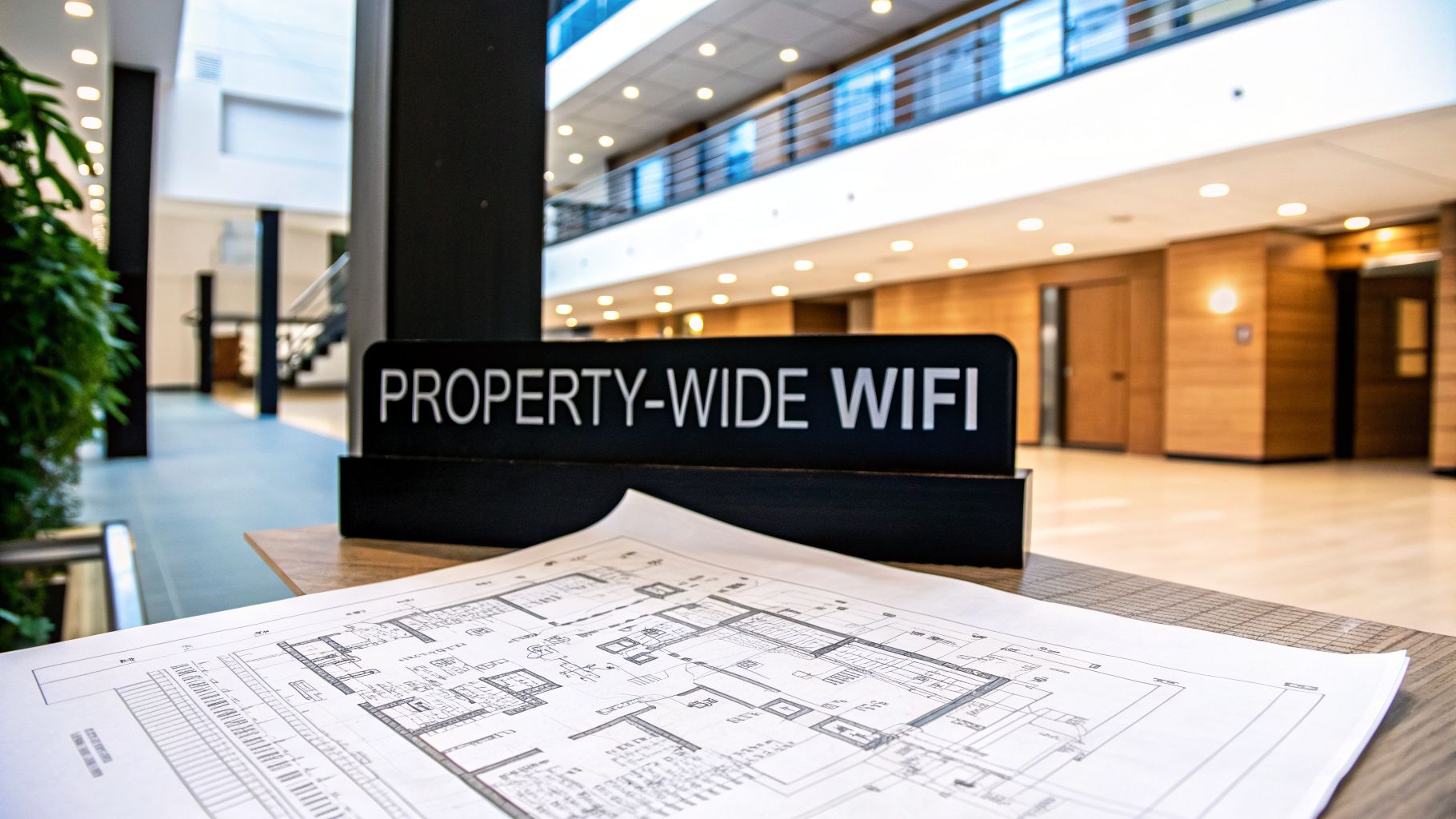
Property-Wide Managed Wi-Fi
Let's start with the most obvious piece of the puzzle: managed Wi-Fi. It’s what residents see and use every single minute. Today’s students are walking tech magnets, each bringing an average of five to seven internet-connected devices. In a 200-unit building, that’s well over a thousand devices fighting for bandwidth.
Your typical home internet setup would collapse under that kind of pressure. That’s why you need a system built for high-density living. It means installing dozens of access points across the property—not just in the hallways, but in common areas and every unit—to blanket the entire building with a strong, reliable signal.
But it’s not just about signal strength. It's about smart management. A true managed system juggles all that traffic, making sure a student’s critical video lecture isn't interrupted by someone else’s 4K movie stream. Every resident gets their own secure, private network, just like they would at home. For a deeper look at the design principles, check out our guide to Wi-Fi for apartment buildings.
When you use a patchwork of vendors, problems turn into a blame game. The internet provider points at the router company, who points at the cabling guy. A single managed service provider owns the entire system, from the wall jack to the cloud. That means clear accountability and much faster fixes.
Integrated Security and Access Control
Nothing is more important to students and their parents than safety. Modern security tech offers genuine peace of mind with a network of connected devices that are miles ahead of old-school locks and cameras. This includes:
- Smart Access Control: Say goodbye to physical keys. With key fobs, smartphone apps, or keypads, you eliminate the security headache of lost keys. Property managers can grant or revoke access instantly for residents, staff, or even visiting vendors.
- IP-Based CCTV: High-definition security cameras connected to your network give you a crystal-clear view of entrances, common areas, and parking lots. The footage is securely stored in the cloud, so you can review it from anywhere, anytime.
- Integrated Alarms: Smart fire, smoke, and carbon monoxide detectors can be tied into the system to automatically notify both residents and the management office the second an emergency happens.
The real power comes when these systems talk to each other. For example, when someone uses their key fob at the main entrance, a nearby camera can automatically start recording, creating a clear visual log of who is coming and going.
Modern Communication with VoIP
Old-school landline phone systems are a costly relic. Voice over Internet Protocol (VoIP) is a modern alternative that runs on the same network as your Wi-Fi. It gives your staff a professional phone system with all the bells and whistles—like an auto-attendant and call forwarding—without paying for separate, expensive phone lines.
It’s a win for residents, too. VoIP can power intercom systems that ring straight to their smartphones, letting them buzz in a friend or a delivery person even if they’re across campus. It's this kind of seamless integration that makes a property feel truly modern. In fact, many of the best property management apps are designed to work alongside these communication tools.
The Unseen Foundation: Structured Cabling
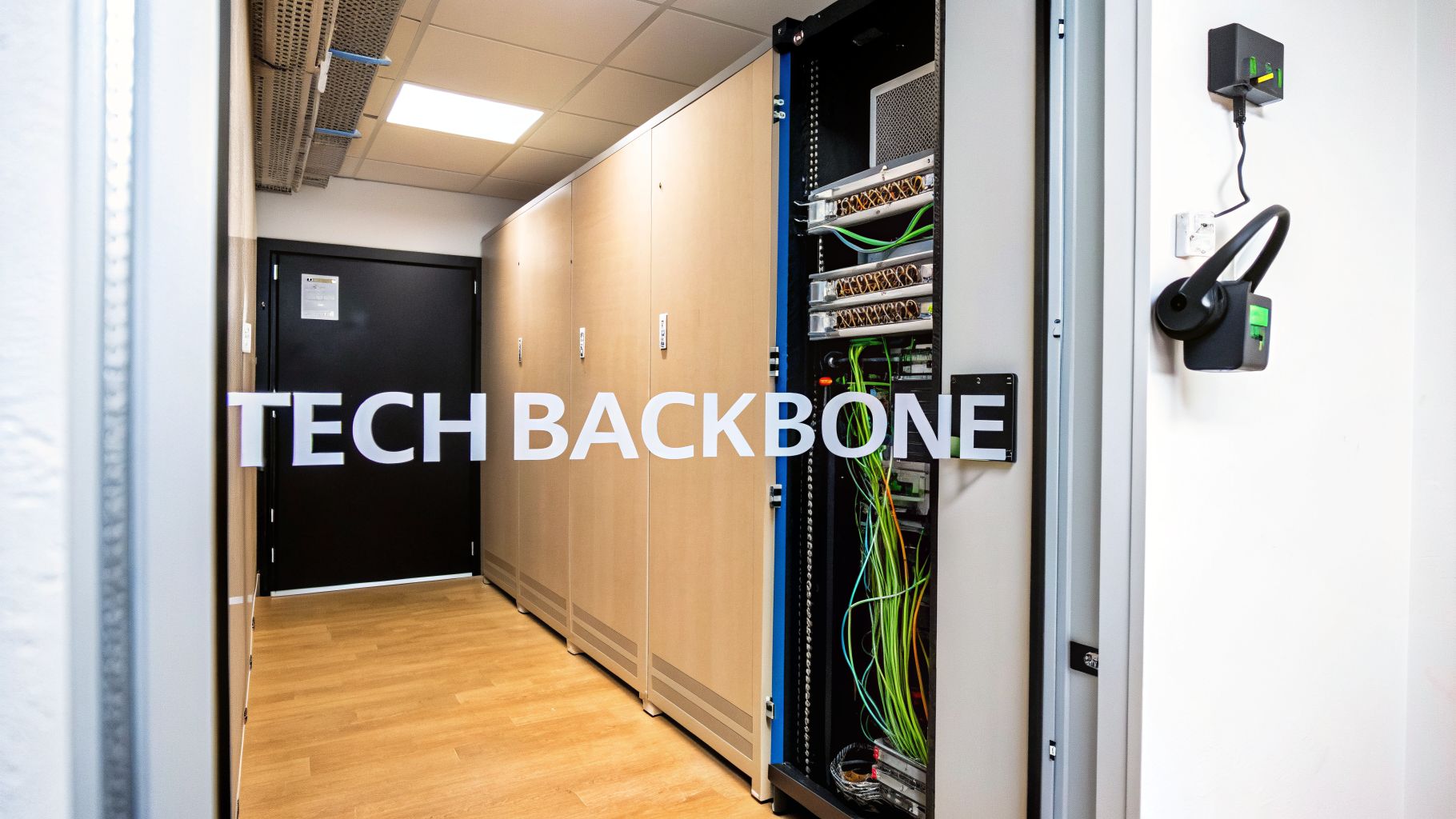
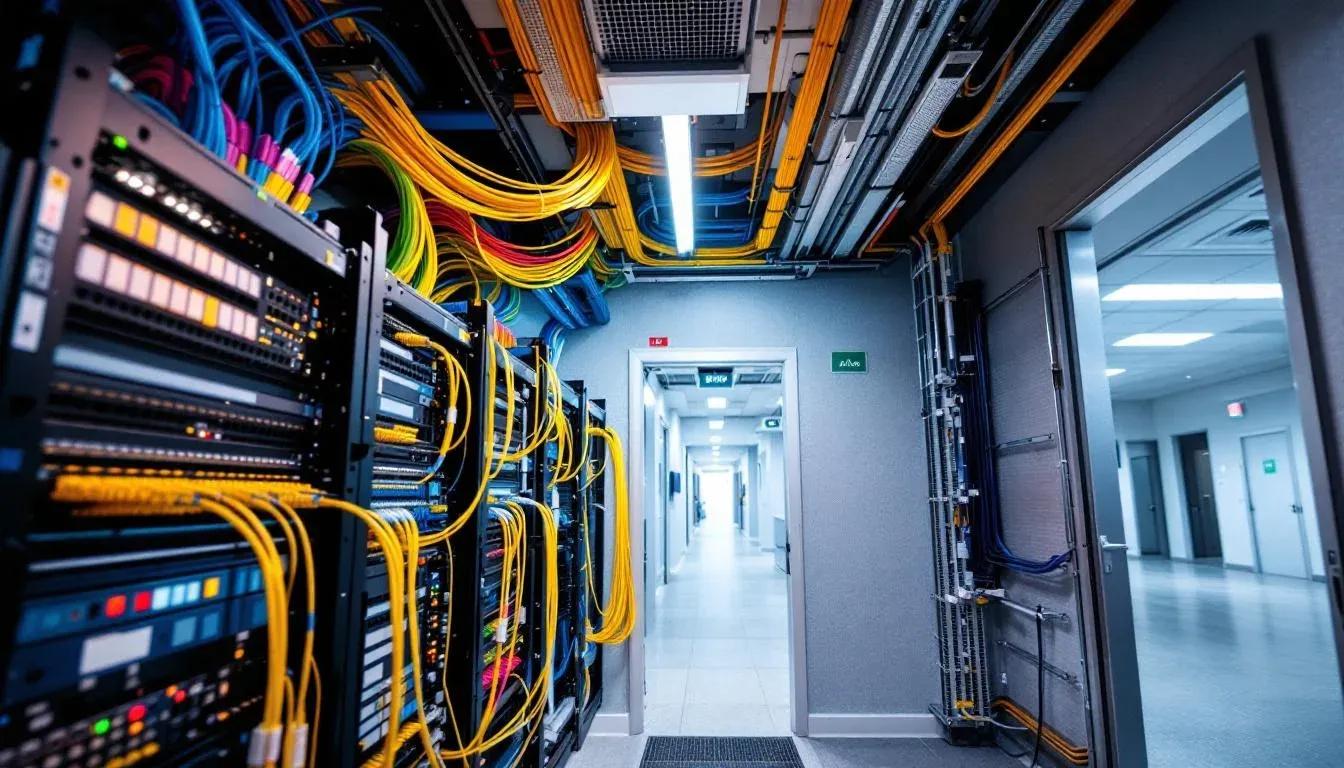
Finally, we have the most important part of the entire system—the one nobody ever sees. Structured cabling is the network of high-quality copper and fiber-optic wires that acts as the digital circulatory system for the entire property. This is one area where you absolutely cannot cut corners.
A poor cabling job will cripple even the most expensive, high-end equipment. It creates bottlenecks that slow everything down. A professional, well-planned installation ensures your building's infrastructure can not only handle today's demands but is also ready for whatever technology comes next. It’s the invisible foundation that makes everything else possible.
Driving Business Growth with a Tech-Forward Property
Investing in a major technology overhaul isn't just about adding shiny new amenities. It’s a hard-nosed business decision that directly pumps up your bottom line. When you create a premium living experience with a superior tech stack, your property becomes a high-performing asset, not just another place for students to sleep.
The logic is simple. Today’s students don’t just prefer modern tech—they flat-out require it. A property that delivers a flawless digital experience automatically becomes the most attractive option around, giving you a powerful competitive edge that pays dividends for years.
Increasing Occupancy and Justifying Premium Rents
In a crowded market, you have to stand out. Imagine a prospective student touring multiple properties. The one with blazing-fast Wi-Fi, smart security, and modern conveniences is the one they'll remember. This premium experience lets you fill vacancies faster and, just as importantly, justify higher rental rates.
The numbers back this up. The global student accommodation market was valued at USD 11.83 billion in 2024 and is on track to hit USD 15.94 billion by 2030. With preleasing in the US already at a staggering 93.7% and rents climbing, properties with top-tier tech are in the perfect spot to command the best prices.
Think of your technology package as a core asset. You'd market a new fitness center or rooftop pool, right? A robust student housing solution is a major selling point that proves your property's value and commands a higher price.
This tech-forward reputation attracts a steady stream of applicants, cutting down on the costs and headaches of unfilled units. For property owners looking to grow, simplifying things like the landlord registration process on a modern platform can be a great first step.
Boosting Tenant Satisfaction and Reducing Churn
Happy residents stay longer. It's a fundamental truth in property management. And nothing sours the student living experience faster than technology that doesn't work. A dropped video call during a lecture, a lagging connection during an online exam, or a key fob that won't cooperate are the kinds of daily frustrations that send tenants packing at the end of their lease.
When you provide a stable, high-performance tech environment, you get rid of those common pain points. The result? A huge jump in resident satisfaction, which directly leads to better retention and way less churn.
Reduced turnover means:
- Lower Marketing Costs: You aren’t constantly spending money to find new tenants.
- Fewer Vacancy Days: High retention keeps your occupancy consistently near 100%.
- Reduced Administrative Work: Your staff spends less time on paperwork and unit turnovers.
This creates a stable, predictable revenue stream. Plus, happy residents are your best marketers—they leave good reviews and tell their friends about your property.
Unlocking a Significant NOI Uplift
At the end of the day, every investment has to be measured by its impact on Net Operating Income (NOI). A modern student housing solution boosts NOI from both directions: it increases revenue while cutting operational costs.
Here’s how the financial uplift works:
-
Increased Revenue
- Higher Rents: Premium tech justifies premium rates.
- Maximized Occupancy: A desirable property stays full.
- New Revenue Streams: You can offer tiered internet speeds or smart home upgrade packages.
-
Decreased Operating Expenses
- Operational Efficiency: Smart thermostats and automated lighting cut down on utility bills.
- Lower Staff Workload: A single managed provider for all tech issues frees up your property managers.
- Reduced Turnover Costs: High retention means less spent on cleaning, repairs, and marketing between leases.
This dual impact is a powerful financial engine that grows your property's value. You can dig into a full breakdown of the financial returns from tech upgrades in our dedicated article. By investing strategically in technology, you’re not just making an upgrade—you’re building a more profitable and resilient business.
Smart Financing for Your Technology Upgrade
Let's get right to the most common question property owners have when they think about a full technology overhaul: "What's this going to cost me?" It's a perfectly fair question. Traditionally, a project like this meant writing a massive, six-figure check—a capital expenditure (CapEx) that could easily drain cash reserves and put other important property improvements on hold.
The old-school way forces you to buy every piece of hardware outright: routers, switches, cameras, the works. But here’s the problem with that approach—technology gets old, fast. That top-of-the-line system you buy today might feel ancient in just three years. You're left with a huge sunk cost and the looming expense of doing it all over again.
Thankfully, there's a much smarter, more sustainable way to fund a modern student housing solution.
The Shift from CapEx to OpEx
The biggest game-changer in financing these projects is the move away from a huge, one-time capital expense and toward a predictable monthly operating expense (OpEx). This is all thanks to a model called Network-as-a-Service (NaaS).
Instead of buying the tech, you subscribe to it. It’s a lot like switching from an old landline phone you owned to a modern cell phone plan. You get the latest device, ongoing service, and support, all wrapped into one simple monthly fee, often with zero down payment.
This model completely removes the financial barrier to entry. It turns a scary upfront cost into a manageable line item in your budget. That frees up your capital for things like renovating the lobby or upgrading apartment finishes—investments that also make a big impact on residents.
This subscription approach bundles everything you need to keep your property’s tech running perfectly.
What Does a NaaS Subscription Include
A good NaaS agreement rolls all the critical pieces into a single, no-nonsense service. It almost always includes:
- All Necessary Hardware: Everything from the latest Wi-Fi 6E access points to high-def security cameras and network switches is provided and owned by your service partner.
- Professional Installation: Expert technicians take care of the entire rollout, from running structured cabling to configuring the system, making sure it’s optimized from day one.
- Software and Licensing: All the necessary software, firmware, and security updates are managed for you. No surprise fees, no compliance headaches.
- 24/7 Monitoring and Support: Your network is watched around the clock. If something hiccups, technicians can often spot and fix it remotely before your residents even know there was an issue.
- Future-Proof Technology Refreshes: This is a huge one. As part of your subscription, the provider replaces aging equipment with the newest models down the line, so your property never feels outdated.
This all-in-one model makes budgeting a breeze and gets you out of the business of owning technology that's constantly losing value. You get all the perks of a world-class infrastructure without the financial drain and logistical headaches of ownership.
Let's break down the two approaches side-by-side.
Comparing Financing Models CapEx vs NaaS
| Feature | Traditional CapEx Model | Network-as-a-Service (NaaS) Model |
|---|---|---|
| Initial Cost | High upfront investment (often six figures) for all hardware and installation. | Zero or low initial cost. Frees up capital for other property improvements. |
| Budgeting | Unpredictable. Separate costs for maintenance, support, and eventual replacement. | Predictable monthly fee. A simple, fixed operating expense that covers everything. |
| Technology Upgrades | A new, large CapEx project is required every 3-5 years to stay current. | Included in the subscription. Hardware is refreshed automatically as part of the service. |
| Ownership & Risk | You own the equipment and carry all the risk of it becoming obsolete or failing. | The provider owns the hardware. You get the benefit without the risk of depreciation. |
| Support & Management | Often requires an in-house IT team or costly third-party contracts for ongoing support. | 24/7 monitoring and support are built into the monthly fee. |
The bottom line is clear. While CapEx gives you ownership, NaaS gives you performance and peace of mind.
By choosing a NaaS model, you're not just buying a service—you're getting a long-term technology partner. This is a strategic financial move that ensures your property stays competitive and appealing to tech-savvy students for years to come, all while supporting your operational stability and future growth.
Choosing the Right Technology Partner for Your Property
Picking a vendor for your student housing solution is one of the most critical decisions you'll make for your property's future. This isn’t just about hiring a contractor to pull some cable; it's about finding a long-term partner who will manage the digital heartbeat of your community.
A great partner becomes an extension of your team, boosting your operational excellence. A poor choice, on the other hand, can create a constant stream of headaches for your staff and, even worse, your residents. The right partner gets that student housing is a different beast entirely. It’s a uniquely high-density world full of demanding users who rely on perfect connectivity for everything from late-night study sessions to streaming their favorite shows.
Look for an End-to-End Provider
Cobbling together a solution with one company for Wi-Fi, another for security, and a third for cabling is a recipe for disaster. It's a classic setup for the blame game. When something inevitably breaks, you'll be stuck in the middle while your vendors point fingers at each other.
The smart move is to find a partner who offers a true end-to-end service. This means they handle everything—from the initial network design and installation all the way through to ongoing, 24/7 support. This unified approach ensures every piece of the puzzle is designed to work together perfectly. More importantly, it gives you a single point of contact and one neck to wring, which simplifies management and troubleshooting immensely.
One of the biggest differentiators you'll find is global, 24/7 support. Student life doesn't stick to a 9-to-5 schedule. When a resident's internet cuts out at 2 a.m. during finals week, you need a partner who answers the call and solves the problem right then and there—without ever waking up your on-site staff.
Critical Questions to Ask Potential Partners
Before you sign on the dotted line, you have to do your homework and vet potential vendors. The quality of their answers will tell you everything you need to know about their experience, their capabilities, and whether they're just trying to make a quick sale.
Get your checklist ready. Here are the non-negotiable questions you absolutely must ask:
- Experience: Can you show me case studies from student housing properties similar to mine? How do you specifically handle the challenges of high-density living?
- Installation Process: Do you use your own W-2 employees for installation, or do you rely on subcontractors? What's your game plan for minimizing disruption to our current residents?
- Scalability: Tell me how your network design can grow with us. How does it handle not just more residents, but also the explosion in the number of devices per student? Can it support what's coming next, like IoT and 8K streaming?
- Future Upgrades: If we go with a NaaS model, what is your standard hardware refresh cycle? How do you keep our property from falling behind technologically without us having to sink in more capital?
- Support: What does your support team look like? Will we have a dedicated account manager? What are your guaranteed response times when a critical issue pops up?
Ultimately, you're not just looking for an installer. You’re looking for a strategic advisor who is genuinely invested in helping you maximize your property's value and deliver a standout resident experience for years to come.
A Student Housing Transformation in the Real World
It’s one thing to talk about the benefits of a modern tech stack in theory, but it’s another to see it in action. Let's look at a real-world example: a 300-unit property we’ll call "The Summit Lofts," located just a stone's throw from a major university.
For years, The Summit Lofts had been a decent, if uninspired, option for students. But the building was starting to feel its age, particularly when it came to technology. The property manager was constantly fielding a barrage of complaints, and the negative online reviews were piling up.
Their problems were frustratingly familiar:
- Constant Wi-Fi Headaches: The internet, supplied by a local cable company, was a joke. It couldn't keep up with hundreds of students trying to stream lectures, game online, and attend Zoom classes all at once. The network was slow, spotty, and a constant source of frustration.
- Sky-High Resident Churn: Fed up with the terrible connectivity and lack of modern perks, nearly 35% of residents were packing up and leaving at the end of their lease. This created a relentless, expensive cycle of finding new tenants.
- Losing to the Competition: Shiny new apartment buildings were popping up nearby, boasting smart locks, blazing-fast internet, and a premium experience. The Summit Lofts was starting to look like a relic.
The Turning Point: A Strategic Overhaul
The owners knew that just slapping a new coat of paint on the walls wasn't going to cut it. They needed a fundamental change, so they brought in a managed technology partner to build a fully integrated system from the ground up.
A critical decision was opting for a Network-as-a-Service (NaaS) model. This meant they could avoid a huge upfront capital investment and instead roll the entire cost into a predictable monthly operating expense. With zero down payment, they could get the project off the ground immediately.
The provider got to work, designing and installing a complete solution. This included property-wide managed Wi-Fi, smart access control for every apartment and common area, and a brand-new IP camera network for security. Best of all, a single team handled everything, ensuring all the pieces worked together perfectly right from the start.
The Results: A Complete 180
The impact was immediate and honestly, pretty dramatic. Within the first year, The Summit Lofts had completely turned things around.
The real proof was in the resident feedback. In the annual satisfaction survey, approval of the property's Wi-Fi shot up from a pathetic 20% to an incredible 95%. The daily flood of angry emails and calls about the internet simply stopped.
Fixing that one core problem created a powerful ripple effect that directly hit the bottom line.
- Tenant Retention Soared: With their biggest frustration solved, resident churn plummeted from 35% down to just 20%. That 15% improvement stabilized occupancy and slashed the costs associated with marketing empty units and turning over apartments.
- Premium Rents Became Possible: The new, high-tech experience gave management the leverage to increase rents by $50 per unit on all new leases. Applicants barely blinked an eye—they saw the value.
- A Major Boost to NOI: When you combine higher rental income with the lower operational costs from keeping tenants happy, the result is a huge lift to the property's Net Operating Income (NOI). And they saw it in the very first year.
Your Questions Answered
It’s completely normal to have a lot of questions when you’re thinking about a major technology upgrade for your property. Let's walk through some of the most common concerns we hear from owners and managers, so you can feel more confident about the entire process.
How Long Does an Installation Take?
Disruption is always a top concern, especially with students already living on the property. An experienced partner gets this and plans the entire installation to be as quiet and out-of-the-way as possible.
The actual timeline really depends on the size of your building and what we’re installing. A full-scale project with new cabling can take anywhere from a few weeks to several months. The key is to work with a partner who can map out a phased rollout, strategically scheduling the noisy, intrusive work during natural downtime like summer or winter breaks. This keeps the impact on your residents to an absolute minimum.
What Happens When Technology Becomes Outdated?
This is probably one of the most critical questions, and it’s where a Network-as-a-Service (NaaS) model really proves its worth. When you buy equipment outright, it starts losing value the second it’s installed. Within a few years, you're right back where you started, facing another huge capital expense to keep up.
With a NaaS subscription, that problem is gone. Technology refreshes are baked right into the agreement. Your provider is on the hook for swapping out aging hardware for the latest and greatest, ensuring your property never falls behind.
It’s a powerful way to future-proof your investment. You get to offer top-tier tech year after year without the financial drain or logistical nightmare of managing depreciating assets.
How Do Residents Get Technical Support?
Here’s a huge operational win: you get to take tech support completely off your on-site team's plate. Your property managers are pros at leasing and community building, not at figuring out why someone’s laptop can’t connect to the network.
A true student housing solution includes dedicated, 24/7/365 support just for your residents.
- A Real Help Desk: Students can call, email, or start a chat with a professional support team anytime.
- Around-the-Clock Help: If a student's Wi-Fi goes down at 2 AM while they're cramming for an exam, they have a number to call for immediate help.
- Less Work for Your Staff: This frees up your on-site team to focus on their actual jobs—running the property and keeping tenants happy.
Providing this level of professional support is a game-changer. It makes your residents’ lives easier and your own operations run much more smoothly.
Ready to turn your property into the go-to place for students? Clouddle Inc delivers the complete technology package that boosts property value and keeps residents happy. Learn more about our zero-down payment options and get a custom quote today.


0 Comments