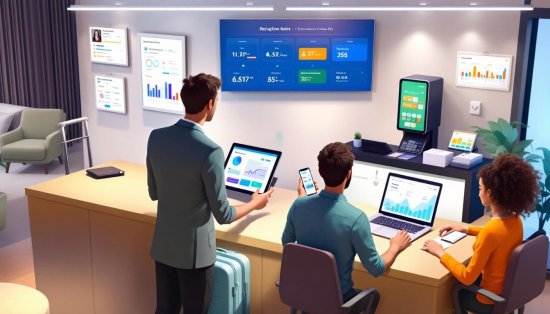

At their core, modern student housing solutions are about bringing everything—Wi-Fi, security, and essential property services—under one roof. Think of it not as a collection of separate amenities, but as a single, smart ecosystem built to make life easier for both students and property managers.
Why Yesterday's Student Housing Fails Today's Students

The market for student housing is caught in a perfect storm. Picture a sold-out concert with thousands of fans still hoping to get in—that's the reality for students hunting for a place to live. This isn't just a small headache; it's a full-blown crisis of supply and demand that heaps pressure on property owners.
This imbalance has been building for years. Last year in the U.S., with over 20 million undergrads, only about 22% found a spot in on-campus or purpose-built housing. This left millions scrambling for the few, often expensive, off-campus options available.
While the U.S. student housing market topped $10 billion in early 2024, the pipeline for new construction is actually shrinking. Projections show a staggering 42% drop in new beds being delivered by 2027. You can get a clearer picture by exploring these in-depth global student housing market trends.
The Disconnect Between Old Properties and New Expectations
Today’s students are digital natives. They grew up with fast, reliable internet as a given, and they bring those expectations with them to college. They don't just want good Wi-Fi; they need it for everything from online classes and research to streaming, gaming, and staying connected with friends and family.
An outdated property with spotty internet and a patchwork of disconnected systems doesn't just frustrate them—it gets in the way of their entire university experience.
The old model of providing four walls and a roof is no longer enough. Modern students view technology not as an amenity, but as a core utility, just as critical as electricity or water.
This new reality creates a cascade of operational headaches. Trying to manage separate vendors for internet, security cameras, and key fobs is a recipe for inefficiency and high costs. When a problem arises, you're stuck in the middle of a frustrating blame game, with your staff and residents paying the price.
Let's quickly summarize the situation property owners are up against. The table below breaks down the core challenges and how a more modern, integrated approach is the only way forward.
The Modern Student Housing Challenge at a Glance
| Challenge | Impact on Your Property | The Modern Solution |
|---|---|---|
| Sky-High Connectivity Demands | Frequent outages, slow speeds, and constant resident complaints. Your network can't handle the load. | A single, professionally managed network designed for high-density use, ensuring reliable Wi-Fi for everyone. |
| Growing Security Risks | Vulnerabilities from lost keys, no real-time visibility, and siloed systems that create blind spots. | Centralized access control and surveillance, giving you a complete view of property security from one dashboard. |
| Operational Inefficiency | Staff wastes time juggling different systems, chasing vendors, and doing manual, repetitive tasks. | A unified platform that automates tasks and provides a single point of contact for support, freeing up your team. |
As you can see, these issues are deeply intertwined. A piecemeal approach just won't cut it anymore.
Key Challenges Facing Property Owners
The pressure to adapt is intense, fueled by three core challenges that older infrastructure simply wasn't built to handle.
Sky-High Connectivity Demands: A single student might be running a laptop for a Zoom class, a tablet for notes, a smartphone, and a smart TV all at once. Now, multiply that by hundreds of residents. A standard residential network will inevitably collapse under that load, especially during peak times like finals week.
Growing Security Risks: Old-school security—like physical keys and standalone camera setups—is full of holes. Without centralized monitoring and access control, it's nearly impossible to securely manage who comes and goes, putting both your residents and your property at risk.
Operational Inefficiency: Juggling different platforms for internet, door access, and security cameras is a massive drain on time and money. Without one system that ties it all together, your staff is stuck putting out fires instead of focusing on what really matters: improving the resident experience.
This is exactly where integrated student housing solutions come in. They’re designed to turn these challenges into opportunities, giving you a powerful, unified tool to boost revenue, keep residents happy, and make your operations run smoothly.
What Are Integrated Student Housing Solutions

When we talk about an integrated student housing solution, it helps to think about the smartphone in your pocket. The camera, the apps, the processor, and the operating system are all designed from the ground up to work together. It’s a seamless experience.
That’s a completely different world from a decade ago, when you might have carried a separate flip phone, a point-and-shoot camera, and a GPS unit. Each device did its one job, but they couldn't communicate, making everything feel clunky and disconnected.
Applying that same "smartphone" thinking to a student property is the core idea here. It’s about building a connected ecosystem where all your property’s technology works as a single, cohesive unit.
It’s Much More Than Just Wi-Fi
A lot of operators think that as long as they provide an internet connection, they’ve checked the box. But a truly integrated solution goes so much further. It’s the invisible thread that ties together every piece of technology that makes a building function for both residents and staff.
You’re no longer juggling separate vendors for your internet, security cameras, and door locks. Instead, you have one unified system where everything is interconnected and managed through a single pane of glass.
An integrated solution isn't just a bundle of tech amenities; it's the central nervous system for your entire property. It combines networking, security, access control, and smart devices into one intelligent platform that you actually control.
This approach is purpose-built for the unique demands of student housing, where a single apartment can easily have dozens of connected devices running at once.
The Core Components of an Integrated System
A powerful student housing solution doesn’t just offer these technologies—it merges them into one managed service. This is where the real value comes from. The key elements typically include:
- Property-Wide Managed Wi-Fi: This is the backbone. It’s not just about signal strength; it’s an intelligently managed network that can handle thousands of devices and prioritize traffic, ensuring everyone has a fast, reliable connection, especially during finals week.
- Centralized Security: This brings all your smart cameras, video surveillance, and real-time alerts into one command center. You get a complete view of your property, from entryways to common areas, all from a single dashboard.
- Smart Access Control: Forget about the hassle of physical keys. This system uses key fobs, key cards, or a resident's smartphone to grant access to the building, individual units, and amenity spaces, which dramatically improves security and simplifies unit turnover.
- Cloud-Based Management: This is the brain behind the entire operation. A cloud platform gives your team the power to monitor network performance, manage who has access to which doors, review security footage, and solve problems from anywhere with an internet connection.
When you bring these pieces together, you create a genuinely better living experience. A resident can use the same credential to open the front door, unlock their apartment, and instantly connect all their devices to their own secure, private Wi-Fi network.
For your team, this unified model puts an end to the operational headache of calling three different vendors to troubleshoot one problem. With a single point of contact and one platform for oversight, you can finally move from constantly putting out fires to proactively managing your property.
The Essential Tech Stack for Modern Properties
Building a successful student housing property today is about more than just a great location. It's about creating a cohesive ecosystem where technology works for you and your residents. Think of it less like a collection of gadgets and more like a championship sports team—each player has a distinct role, but they all work together to win.
This tech stack is your foundation for higher resident satisfaction, smoother operations, and a healthier bottom line. Let's walk through the four essential pillars that every modern property needs to get right.
Property-Wide Managed Wi-Fi
Let's be clear: Wi-Fi isn't an amenity anymore. It’s a core utility, every bit as crucial as water and electricity. For today’s students, a spotty connection isn’t a minor annoyance; it's a roadblock to their studies, social connections, and entertainment. A standard router from a big-box store simply can't handle the demands of a high-density student building.
This is where managed Wi-Fi comes in. It’s a commercial-grade network that is professionally designed, installed, and monitored specifically for the unique challenges of a multi-resident property.
A managed Wi-Fi system is like having an expert traffic controller for your property's internet. It ensures that during peak times, like finals week when hundreds of students are streaming lectures and researching online, the network doesn’t grind to a halt.
It intelligently manages bandwidth, gives every resident their own secure, private network, and lets your team see how everything is performing from a single dashboard. This proactive approach lets you fix issues before residents even know they exist, turning a potential headache into a powerful selling point.
Layered Security and Access Control
In a building full of students, security is about creating a real sense of safety, not just putting a lock on the front door. A modern, layered security strategy combines smart hardware with intelligent software to give you a complete picture and total control over who is coming and going.
This approach boils down to two key components:
- Smart Surveillance: This means placing high-definition cameras in key common areas, parking lots, and entry points. All the feeds are funneled into a single, cloud-based platform, allowing your team to monitor the property in real-time or easily review footage from any device. It's a powerful tool for enhancing safety and deterring unwanted activity.
- Smart Access Control: It’s time to move beyond metal keys. This technology uses more secure and flexible credentials like key fobs, access cards, or even smartphone apps. You can grant or revoke access for a new resident or a maintenance vendor instantly, from anywhere, without ever touching a physical lock. This makes unit turnover incredibly simple and eliminates the security risks of lost or copied keys.
When used together, these layers create a formidable security net that protects your residents, your staff, and your investment.
Cloud-Based Property Management
If the network is your property’s nervous system, then cloud-based software is the brain. When pulling together your tech stack, it’s critical to find the best software for property managers to truly tie your operations together. These platforms bring communication, maintenance requests, and rent payments into one unified, accessible portal.
For your team, this is a game-changer. Gone are the days of juggling spreadsheets, chasing down paper maintenance slips, and playing phone tag. A request submitted by a student through an app can be automatically routed to the right person on your team, who gets a notification directly on their phone. This unclogs workflows and frees up your staff to focus on what really matters—the resident experience.
High-Performance Network Infrastructure
Finally, none of these incredible tools work without a solid foundation. The physical infrastructure—all the wiring, switches, and access points—is what carries the data throughout your building. Skimping here is not an option; you need high-quality, enterprise-grade hardware.
Think of this infrastructure as the highway system for all your property’s data. Using cheap cables or consumer-grade switches is like building a superhighway with a one-lane dirt road in the middle. It creates bottlenecks that will cripple everything, from the Wi-Fi in a student’s bedroom to the security camera feed in the lobby.
Investing in a professionally designed and installed network ensures your property can handle the demands of today and is ready for whatever comes next. For a deeper dive into the specific gadgets involved, you can learn more about smart apartment technology in our detailed guide.
Your 4-Phase Blueprint for a Seamless Tech Upgrade
Overhauling your property’s technology can feel like a monumental project, but it doesn't have to be a disruptive one. The key is breaking the process down into manageable phases. Think of it like building a house: you need a solid foundation and a detailed blueprint before you can even think about putting up the walls.
This guide lays out a clear, step-by-step roadmap for implementing new student housing solutions with minimal interruption to your residents and staff. Each phase builds logically on the last, ensuring a smooth transition from your old, disjointed systems to a new, fully integrated one.
This diagram shows how all the pieces of a modern tech stack fit together.

As you can see, a rock-solid infrastructure is the base that supports everything else—from the property-wide Wi-Fi network to your security systems and cloud management tools.
Phase 1: Assessment and Strategy
First things first: you have to know exactly what you're working with. A proper assessment means digging deep into your property’s physical layout, the construction materials used, and the current state of your network cabling. This isn't just about finding a few dead Wi-Fi spots; it's about building a comprehensive strategy from the ground up.
This initial review should answer some critical questions:
- What are the biggest tech-related headaches for your residents and staff right now?
- How many devices, on average, is each student trying to connect to the network?
- Are there physical roadblocks, like thick concrete walls, that will block wireless signals?
This phase is all about gathering the right intelligence. The goal is to craft a solution that fits your building's unique personality and challenges, not just slap on a generic fix. This is where you develop a clear strategy that lines up perfectly with your operational goals and budget.
Phase 2: Vendor Selection and Partnership
Choosing your technology provider is easily one of the most important decisions you'll make in this process. You're not just buying boxes of hardware; you're selecting a long-term partner who will be responsible for the digital lifeblood of your community. Look for a provider with proven experience in the unique, high-density environment of student housing.
A true partner doesn’t just sell you equipment and walk away. They take full ownership of the entire process—from the initial design and cabling plan all the way to providing 24/7 support for your residents and staff, long after the installation is finished.
Ideally, you want a partner who can manage the whole project from end to end. Having that single point of accountability is priceless. It completely sidesteps the blame game that inevitably happens when you’re juggling separate vendors for networking, security, and support.
Phase 3: Infrastructure Preparation and Deployment
With your strategy defined and your partner chosen, it's time to get your hands dirty and build the physical foundation. This phase involves the real-world work of running new fiber-optic or ethernet cabling, mounting hardware like wireless access points and security cameras, and installing the necessary server racks.
A great partner will coordinate this with military precision to keep disruption to a minimum. They might schedule noisy work like drilling for low-occupancy hours or tackle installations one floor at a time. The aim is a clean, professional installation that your residents barely even notice is happening.
Once the physical hardware is in place, the system is brought to life. This deployment stage is where the network gets configured, the cloud management dashboard is set up, and all the different components—from access control to Wi-Fi—are integrated to work as a single, cohesive system.
Phase 4: Ongoing Management and Support
The job isn't done just because the power is on. The final—and arguably most important—phase is the ongoing management and support of the system. Technology is never "set it and forget it." It needs constant monitoring, updates, and fine-tuning to keep it running at its best.
This is where the real value of a managed service provider becomes crystal clear. They’ll proactively watch over the network's health, apply critical security patches, and offer a dedicated support line for your residents and staff. So, when a student can't get online at 2 a.m. while cramming for an exam, they have an expert to call who can solve the problem on the spot—without ever waking up your on-site team. This long-term management is what ensures your investment continues to pay dividends for years to come.
How Smart Tech Investments Boost Your NOI
Thinking about a technology upgrade as just another expense is a mistake. It’s actually one of the most direct investments you can make in your property's financial health. When done right, student housing solutions boost your Net Operating Income (NOI) in three distinct and powerful ways. This isn't about fuzzy, long-term benefits; it's about generating real, measurable returns.
Once you connect the dots, you’ll see how a smarter building leads directly to a healthier bottom line. Let's break down exactly how these investments pay off, making the business case for a tech refresh crystal clear.
Attracting and Retaining Premium Residents
In a crowded market, your amenities are what make you stand out. And today, flawless, property-wide Wi-Fi isn't just a perk—it's the number one deciding factor for student renters. When you can promise a fast, reliable connection for every student and every single one of their devices, you’re delivering a premium experience they are absolutely willing to pay more for.
This gives you the justification to set higher rental rates, which immediately boosts your revenue. Just as important, happy residents are far more likely to renew their leases. That simple fact drastically cuts your turnover costs and the marketing dollars you'd otherwise spend trying to fill empty units. Keeping vacancy low is one of the fastest ways to strengthen your NOI.
Driving Significant Operational Efficiency
One of the biggest silent killers of your budget is operational friction. Think of all the time and money spent on manual tasks, chasing down problems, and just plain inefficient workflows. A single, integrated technology platform attacks these hidden costs head-on by automating key processes and giving your staff their time back.
Think about the real-world impact:
- Reduced Staff Workload: Smart access control completely eliminates the nightmare of managing physical keys. No more re-keying, lockouts, or chaos during move-in and move-out.
- Proactive Maintenance: With cloud-based network monitoring, your tech partner can spot and resolve issues before a resident even knows there's a problem. This means fewer support calls and frustrated maintenance tickets for your team.
- Simplified Vendor Management: Having one point of contact for all your property’s tech—from the network to security and support—ends the frustrating and time-consuming task of juggling multiple vendors.
On top of your core property management systems, tools like efficient billing software can add even more to your revenue and operational savings. For a detailed guide on running the numbers, check out our post on how to calculate the ROI for properties upgrading with technology.
Future-Proofing Your Asset Value
The student housing market is on fire and continues to draw major investment. The US market shows 91.6% occupancy with average rents climbing to $1,017—a 3.4% jump year-over-year. And with fundamentals like 93.7% preleasing before the school year even starts, the message is clear: property owners need the right technology to manage these high-density assets well. You can see more on these global student housing trends on businessresearchinsights.com.
By investing in a modern tech infrastructure today, you aren't just solving today's problems. You are positioning your property for long-term success.
A building equipped with modern, scalable technology is inherently more valuable than one with an outdated, piecemeal setup. This makes your property more attractive to potential buyers and commands a higher valuation when it's time to sell.
This forward-thinking approach ensures your property stays competitive, desirable, and profitable for years. It’s the smartest way to protect and grow the value of your investment.
Finding a Tech Partner You Can Actually Trust
Picking a technology provider is one of the biggest calls a property owner has to make. This isn’t just about buying equipment or comparing prices. You’re choosing a partner who will become a crucial part of your team and directly impact your residents' daily lives.
Get it right, and your operations run smoothly. Get it wrong, and you're in for a world of constant headaches, resident complaints, and finger-pointing. You're handing over the keys to the digital kingdom of your property, so you need to look past the sales pitch and dig much, much deeper.
Look for True End-to-End Ownership
The first sign of a great partner is their ability to handle the entire project, from the initial blueprint to the late-night support call. A company that only sells hardware or only manages software is a recipe for disaster. When something breaks, you'll be caught in a frustrating game of telephone as your network vendor and software provider blame each other.
Instead, find a partner who takes complete ownership of the whole system. This means they are responsible for:
- Consultation and Design: They should start with a detailed site survey to map out a plan based on your building’s unique layout and the number of residents.
- Structured Cabling: They must be experts at installing the physical wiring—like fiber-optic and ethernet cables—that forms the foundation of your network.
- Hardware and Software Integration: They need the skill to make everything work together seamlessly, from the Wi-Fi access points and security cameras to your cloud management dashboard.
- 24/7/365 Support: Problems don’t wait for business hours. A real partner provides round-the-clock support for both your on-site team and your residents.
This all-in-one approach gives you a single point of contact. When there's an issue, you have one number to call and one team that’s on the hook to fix it. If you need more guidance on what to look for, our guide on how to choose a managed service provider breaks down more essential criteria.
Prioritize Deep Industry Experience
Student housing is a completely different beast compared to an office building or a hotel. The sheer density of users is intense, the demand for bandwidth never stops, and the residents’ expectations are incredibly high. A provider without specific, hands-on experience in this environment is guaranteed to underestimate the challenges.
A partner who gets student housing knows that a network outage at 2 AM during finals week is a full-blown emergency. They plan for these worst-case scenarios and build systems with the resilience and support needed to handle them.
Ask potential vendors for case studies and references from other student properties they work with. A proven track record in high-density housing shows they have what it takes to deliver a solution that won’t buckle under pressure.
Make Sure the Solution Can Scale
Your technology needs to solve today's problems without boxing you in tomorrow. As you add more properties to your portfolio or as new tech emerges, your system has to adapt without forcing you into a costly and disruptive overhaul.
A forward-thinking partner designs a system with the future in mind. This involves using enterprise-grade equipment that can handle more users and offering flexible service agreements. Whether you plan to expand or want to integrate new smart-building features later, your partner should be able to scale their services right alongside you, protecting your investment for years to come.
Your Questions Answered: Student Housing Tech Upgrades
Making a big technology investment naturally comes with a lot of questions. We get it. Here are some straightforward answers to the things property owners and managers ask us most often about bringing their student housing into the modern era.
How Much Disruption Will an Installation Cause?
This is usually the first question out of everyone's mouth, and the answer is: a lot less than you're probably picturing. A good technology partner knows that their job is to be practically invisible to your residents.
They'll work around your schedule, not the other way around. This often means scheduling the bulk of the work during summer or winter breaks, or even during low-traffic daytime hours. By tackling the project methodically—say, one floor or one wing at a time—the impact on students' daily lives is kept to an absolute minimum. The right partner handles all the coordination, so it feels like a smooth, professional upgrade, not a chaotic construction project.
What if We Have an Old Building?
Older, historic buildings are fantastic candidates for a technology overhaul, but they definitely need a specialized touch. The first step is always a thorough site survey. Technicians will walk the property to map out everything from the construction materials and existing wiring to potential trouble spots like thick concrete walls that can block Wi-Fi signals.
An experienced partner doesn’t see an old building as a problem; they see it as a puzzle. They'll design a custom cabling and hardware plan that respects the building's character while delivering a flawless, high-performance network.
This careful, upfront planning avoids the "one-size-fits-all" approach that so often fails in unique properties. You end up with a top-tier technology experience that feels perfectly integrated into the building's original charm.
Can We Integrate Our Existing Systems?
Maybe. It really depends on the age and type of your current equipment. In some situations, newer, standards-based systems—like certain models of security cameras or specific access control hardware—can be folded into a new, unified platform. This can be a smart way to manage your initial budget.
However, trying to force old, proprietary tech to play nice with a modern system usually creates more headaches than it's worth. It can lead to system instability and keep you from getting the full benefit of your upgrade. A good partner will start by auditing all your existing technology to give you a clear-eyed assessment of what can stay and what should go to guarantee a reliable, seamless solution.
Who Handles Support When Things Go Wrong?
This is one of the biggest perks of a true managed solution: that responsibility shifts from your team to your technology partner. When a student's Wi-Fi goes down at midnight or a key fob mysteriously stops working, they don't call your front desk staff. Instead, they have a dedicated 24/7/365 support line to call, staffed by actual experts.
This model delivers two huge wins:
- Immediate Expert Help: Residents get their problems solved faster by technicians who know the system inside and out.
- Reduced Staff Burden: Your on-site team is free from playing first-line IT support, letting them focus on what they do best—managing the property and keeping residents happy.
This kind of support is the bedrock of a successful student housing technology plan. It ensures that whenever an issue pops up, it’s handled quickly and professionally, day or night.
Ready to deliver the modern, connected experience today's students demand? Clouddle Inc provides end-to-end managed technology solutions that boost your NOI and future-proof your property. Learn how we can transform your student housing portfolio.