
A single system failure during peak season can cost a hotel thousands in lost bookings and damaged reputation. At Clouddle, we’ve seen firsthand how 24/7 hospitality IT support transforms operations by keeping guest-facing systems running without interruption.
Your property management system, Wi-Fi network, and security infrastructure can’t afford downtime. When these systems fail, guests notice immediately, and your revenue suffers just as fast.
Why Your Systems Can’t Wait for Business Hours
Guest-facing systems fail at the worst possible times. A payment processor crashes during Friday evening check-in. Wi-Fi drops during a conference event with 200 attendees. A security door lock malfunctions at 2 AM. None of these emergencies respect the nine-to-five schedule, yet most hotels still operate IT support on a clock that does. This disconnect between when problems occur and when help arrives costs money and damages reputation. Hotels that rely on daytime-only IT support face revenue loss, guest dissatisfaction, and operational chaos during peak periods when systems carry the heaviest load.
The Real Cost of System Downtime
Downtime in hospitality hits hard and fast. When your property management system fails, front desk staff cannot process check-ins, access guest records, or authorize payments. When Wi-Fi drops, guests immediately complain and leave negative reviews. According to a Hotel Internet Services survey conducted in 2025, more than 90% of guests consider Wi-Fi very important, and 58% say Wi-Fi quality influences their booking decisions. A two-hour outage during peak arrival halts dozens of transactions and damages your reputation across review platforms within hours.
IBM’s Cost of a Data Breach Report 2025 quantifies the broader risk: hospitality breaches now average over million in costs, and outages often trigger these security incidents. The financial impact extends beyond immediate lost revenue to include refunds, regulatory scrutiny, and long-term customer attrition.
Why Peak Hours Demand Immediate Response
Friday and Saturday nights, holiday weekends, and conference events concentrate guest arrivals into narrow windows. During these periods, every minute of downtime multiplies the damage. A payment system outage for 15 minutes during a 50-guest arrival wave creates bottlenecks that ripple through the entire evening. Mobile key provisioning depends on real-time network connectivity; when Wi-Fi fails, guests cannot enter their rooms. Security systems, occupancy sensors, climate controls, and door locks all rely on the same infrastructure. A single network hiccup cascades across dozens of interconnected systems.
Why Staff Cannot Solve These Problems Alone
Your front desk team and maintenance staff lack the specialized knowledge to diagnose and fix layered infrastructure problems. Modern hotel systems involve cloud services, edge devices, and on-premise infrastructure that interact in complex ways. Staff members cannot troubleshoot payment failures, network routing issues, or security system conflicts without expert support. Forcing untrained staff to handle these problems wastes time and frustrates guests further. The problems that occur at 2 AM or during peak arrivals require immediate access to specialists who understand hospitality technology stacks.
What separates hotels that maintain guest satisfaction from those that suffer reputational damage is the speed at which they resolve these incidents. The next section examines which systems demand round-the-clock monitoring and why they cannot tolerate even brief interruptions.
Critical Systems That Need Round-the-Clock Monitoring
Property Management and Payment Processing
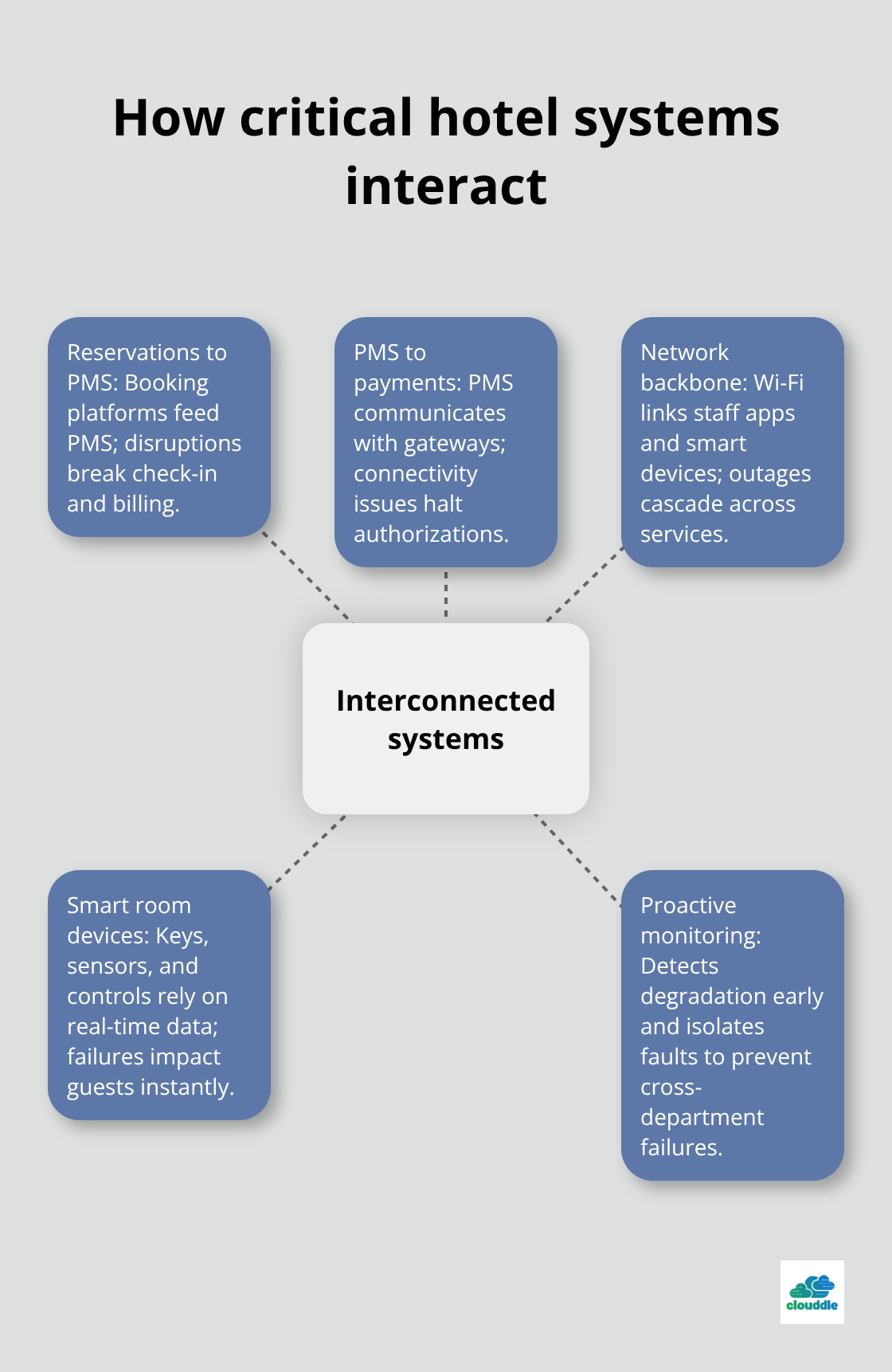
Your property management system handles every guest transaction from reservation to checkout. When it crashes during peak arrival, front desk staff cannot process payments, access guest preferences, or issue room keys. Payment authorization systems depend on real-time connectivity to card networks; a network interruption stops revenue collection instantly. The PMS communicates directly with cloud-based booking platforms and payment gateways, so network outages trigger downstream failures in reservations and billing. A single connectivity problem cascades across multiple departments and halts operations that guests depend on immediately.
Wi-Fi and Network Infrastructure
Wi-Fi infrastructure carries guest traffic, staff applications, and critical backend services simultaneously. A single network outage disconnects mobile check-in, digital room keys, in-room entertainment, and staff management tools. During peak periods, your network supports 200+ simultaneous connections while maintaining the bandwidth that security systems, occupancy sensors, and climate controls require. 92% of guests say that a strong WiFi connection is their top priority when booking a hotel, making network reliability a competitive differentiator. Network failures don’t just frustrate guests-they damage your reputation across review platforms within hours.
Security Systems and Access Control
Security systems including door locks, camera feeds, and access controls run 24/7 and cannot tolerate interruptions. When a security door lock fails at 2 AM, staff have no way to grant guest access without physical intervention, creating safety risks and operational chaos. Occupancy sensors and emergency protocols depend on real-time connectivity; downtime creates blind spots and prevents staff from responding to genuine emergencies. A two-minute network hiccup during Friday evening check-in halts multiple check-in processes, delays room assignments, and triggers guest frustration before the problem is even resolved.
How Systems Interact and Fail Together
These systems interact in layers: reservation data flows from booking platforms into your PMS, which communicates with payment processors, Wi-Fi networks, and smart room devices. A failure at any layer cascades across the entire guest experience. Proactive monitoring identifies degraded performance, capacity constraints, and potential failures before they impact guests. Specialists who understand how these systems interact isolate problems quickly and restore service without cascading failures across departments.
Hotels without 24/7 monitoring treat every incident as a crisis, forcing staff to guess at solutions while guests experience broken services and mounting frustration. Understanding what systems require constant attention sets the stage for evaluating which support providers can actually deliver the expertise your property needs.
Finding the Right Partner for Round-the-Clock Support
Hospitality Experience Matters More Than Generic IT Knowledge
Selecting a 24/7 IT support provider for hospitality requires more than checking a box on a vendor list. Most generic IT firms treat hospitality like any other industry, missing the unique demands of property management systems, guest-facing networks, and security infrastructure that operate continuously. You need a provider with genuine hospitality experience, not theoretical knowledge. Ask potential vendors about their experience managing property management systems during peak arrivals, handling Wi-Fi outages across multi-property portfolios, and supporting payment systems that cannot tolerate downtime. Request specific examples of incidents they’ve resolved and metrics proving their response times. A provider claiming 24/7 support but staffing with generalists who lack hospitality expertise will cost you more in incident resolution time and guest frustration than the contract savings justify. Verify that their support team includes specialists who understand how reservation platforms, PMS systems, network infrastructure, and security controls interact within hospitality environments. Check their certifications and partnerships with major hospitality technology vendors to confirm they possess depth rather than surface-level familiarity.
Response Times Must Measure in Minutes, Not Hours
Response time commitments separate providers who can actually help from those who merely answer the phone. Demand service level agreements that specify response times for critical systems like payment processing and property management, measured in minutes rather than hours. A provider offering four-hour response times on your PMS is worthless during a Friday evening check-in crisis. Look for tiered SLAs that distinguish between critical incidents affecting guest services and routine maintenance issues. The 2024 Lodging Technology Study highlights that technical talent shortages plague the industry, making vendor partnerships essential for smoother implementation and ongoing support.
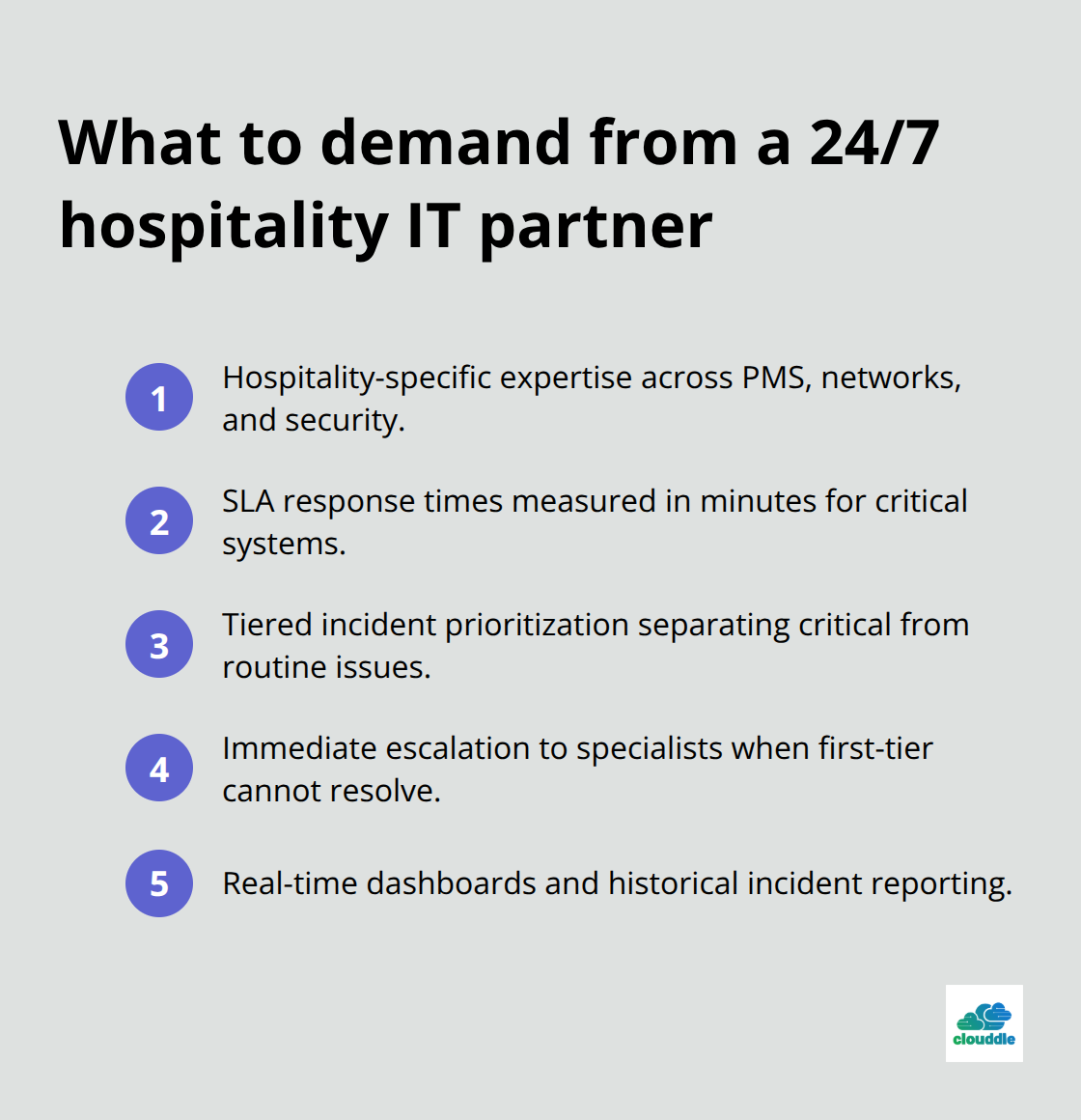
Ask what happens when their first-tier support cannot resolve an issue-do they escalate to specialists immediately or waste time troubleshooting with junior staff?
Proactive Monitoring Prevents Crises Before They Start
Proactive monitoring should detect problems before guests experience them, not after complaints arrive. A competent provider monitors network performance, system capacity, security threats, and hardware health continuously, alerting your team to degraded conditions that precede outages. This prevents the cascade of failures across payment systems, Wi-Fi networks, and access controls that devastates operations during peak periods. Request dashboards showing real-time system status and historical incident data so you can track whether the provider actually prevents problems or simply responds faster when they occur. Specialists who understand how these systems interact isolate problems quickly and restore service without cascading failures across departments.
Final Thoughts
The financial case for 24/7 hospitality IT support is straightforward: downtime costs far more than prevention. A two-hour outage during peak arrival costs thousands in lost transactions, refunds, and negative reviews that persist for months. IBM’s Cost of a Data Breach Report 2025 shows hospitality breaches average over $4 million, and many stem from systems that lacked proper monitoring and rapid response.
Guest satisfaction depends on system reliability, not on how friendly your staff appears during an outage. Guests expect seamless mobile check-in, reliable Wi-Fi, and secure room access as baseline requirements, not luxuries. When these systems work invisibly, guests focus on their experience and leave positive reviews; when they fail, even exceptional service cannot recover the damage.
The right partner understands that hospitality technology operates differently than generic business IT (your systems interact in layers where a single failure cascades across payment processing, room access, and guest communications simultaneously). You need specialists who comprehend these interactions, not generalists who treat your property like any other client. We at Clouddle provide managed IT services for hospitality that combine 24/7 monitoring, rapid response, and deep expertise in property management systems, networking, and security infrastructure.


0 Comments