Build-to-rent properties that lack modern connectivity lose tenants to competitors. Today’s renters expect fiber-fast internet, smart home controls, and seamless digital experiences as standard amenities-not luxuries.
At Clouddle, we’ve seen firsthand how build-to-rent networking directly impacts occupancy rates and rental premiums. Properties with robust infrastructure attract quality tenants, reduce turnover, and command higher rents in competitive markets.
What Modern Renters Demand From Connected Properties
The Non-Negotiable Connectivity Standard
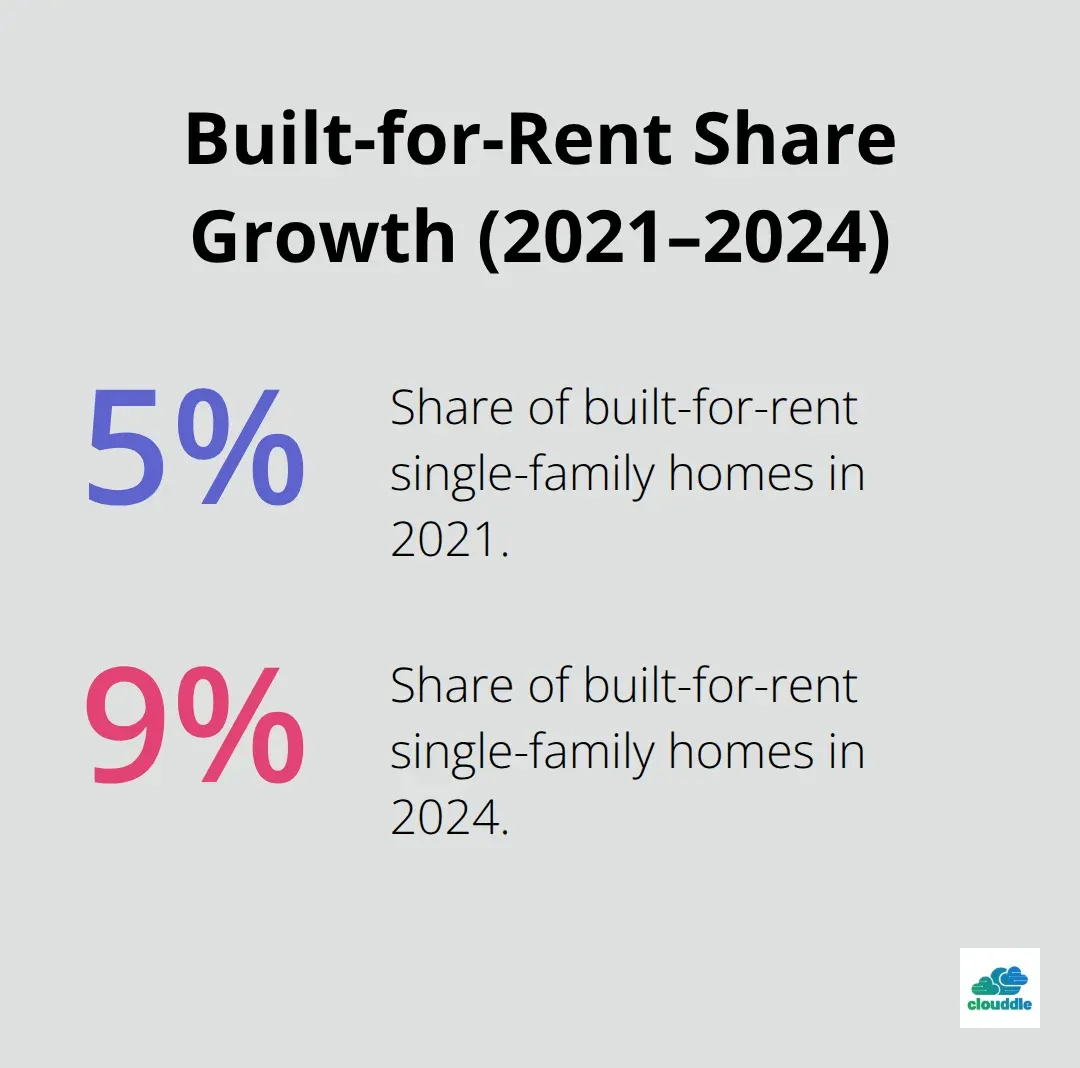
Today’s renters don’t compromise on connectivity. According to the National Association of Realtors, build-to-rent communities command a rental premium, and high-speed internet now drives that premium. The share of built-for-rent single-family homes grew from 5% in 2021 to 9% in 2024. These younger renters work remotely, stream content, and operate smart devices simultaneously-activities that expose weak networks instantly. A property with dead zones in bedrooms or patchy coverage in common areas loses tenants within weeks to competitors offering full-site fiber connectivity.
Smart Home Controls as Standard Features
Smart home controls follow close behind broadband as a tenant expectation. Voice-activated thermostats, lighting systems, and security features are no longer optional amenities. Renters expect to adjust their environment without manually walking to a panel or downloading five different apps. Properties that force tenants to manage heating through a landlord call or lighting through disconnected systems feel outdated. The competitive reality is stark-renters in markets like Texas, Florida, Arizona, and North Carolina have options, and they choose properties where connectivity and controls work seamlessly from day one.
Turnover Costs and Tenant Retention
The practical implication for property operators is direct: infrastructure investment reduces turnover costs significantly. The typical single-family renter stays about 5.6 years, substantially longer than multifamily renters, but only when the property meets expectations. A tenant satisfied with broadband speed and smart home integration stays. One frustrated by buffering or clunky controls leaves early, triggering turnover costs that easily exceed $3,000 per unit.
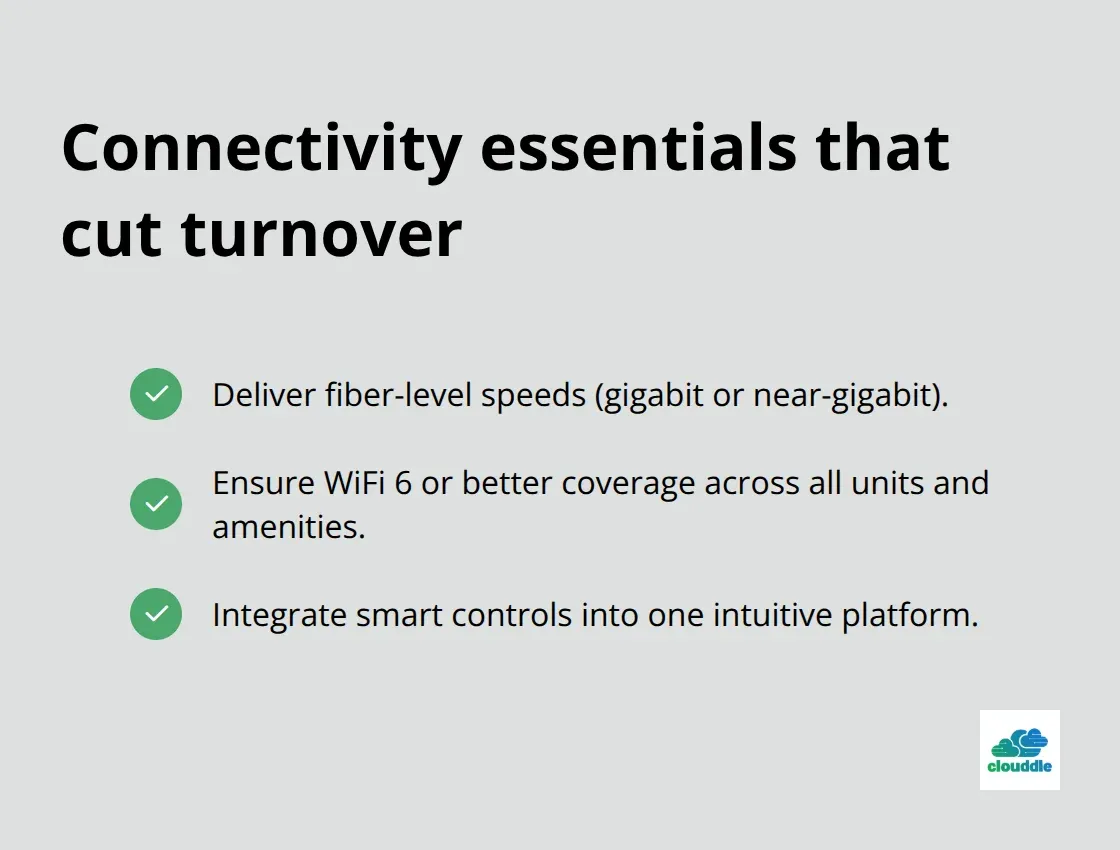
Properties must deliver fiber-level speeds (gigabit or near-gigabit capable), ensure WiFi 6 or better coverage across all units and amenity spaces, and integrate smart controls into a single platform tenants can manage intuitively.
Infrastructure as a Competitive Differentiator
Operators who treat connectivity as an afterthought-relying on consumer-grade routers or fragmented systems-compete on price alone, which erodes margins. Those who architect connectivity infrastructure as a core service differentiator attract longer-term, higher-quality tenants willing to pay premium rents for the convenience and performance they expect. The investment in robust networking infrastructure pays back through occupancy stability, reduced marketing spend, and the ability to command rents that reflect the true value of modern, connected living. This foundation sets the stage for understanding what infrastructure actually supports these tenant expectations.
What Infrastructure Actually Needs to Support Connected Living
Fiber Connectivity as the Non-Negotiable Foundation
Fiber connectivity forms the backbone of tenant-ready infrastructure, and there’s no middle ground here: properties without it will lose market share to those that have it. Operators often ask whether gigabit speeds matter for residential tenants, and the answer is unambiguous-yes. Modern households in build-to-rent communities operate 8–12 connected devices simultaneously, from work-from-home setups to streaming, gaming, and smart home automation. A property offering reliable internet services outperforms one relying on cable or DSL by measurable margins in tenant satisfaction and retention.
Network Architecture That Eliminates Dead Zones
The infrastructure must deliver fiber directly to each unit when possible, with redundant pathways to prevent single points of failure. WiFi 6E access points positioned strategically throughout units and common areas eliminate dead zones that frustrate tenants immediately. Network segmentation matters operationally: separate bandwidth tiers for residents, guests, and IoT devices prevent congestion during peak hours and improve security isolation. Operators who implement QoS (Quality of Service) prioritization ensure video conferencing and online work maintain performance even when other residents stream simultaneously. This isn’t optional engineering-it’s the baseline requirement that separates competitive properties from struggling ones.
Unified Smart Home Platforms That Tenants Actually Use
Smart home integration must operate through a single, intuitive platform rather than fragmented apps that force tenants to juggle multiple logins and interfaces. Thermostats, lighting, door locks, and package delivery systems should respond to voice commands or a unified mobile app without requiring separate vendor accounts. Properties that achieve this seamless control see measurable improvements in tenant satisfaction scores and reduced maintenance request volumes because tenants feel genuinely in control of their environment.
Future-Proofing Against Rapid Technology Evolution
The infrastructure must future-proof for WiFi 7 and evolving smart device standards without requiring complete replacement in 3–5 years. Operators should choose commercial-grade hardware with clear upgrade pathways, implement edge computing to process data locally rather than sending everything to the cloud, and maintain API-driven architecture that supports third-party integrations. All three approaches protect the investment and position properties to adapt as tenant expectations shift. The competitive window for catching up narrows continuously as tenant expectations shift faster than many operators anticipate, making the infrastructure decisions operators make today directly determine whether their properties attract premium tenants or compete on price alone.
How Connected Infrastructure Translates to Revenue and Tenant Stability
Premium Rental Rates From Modern Connectivity
Properties equipped with fiber connectivity and unified smart home platforms command measurable rental premiums that directly offset infrastructure investment. Build-to-rent communities with full-site coverage attract tenants willing to pay 10–15% above comparable properties lacking modern connectivity, according to industry data on BTR rental premiums. A 100-unit property charging $2,500 per month can add $250–375 per unit monthly through premium positioning alone. Over a 12-month lease cycle, that amounts to $300,000–450,000 in additional annual revenue from the same physical asset.
Capturing High-Value Tenant Segments
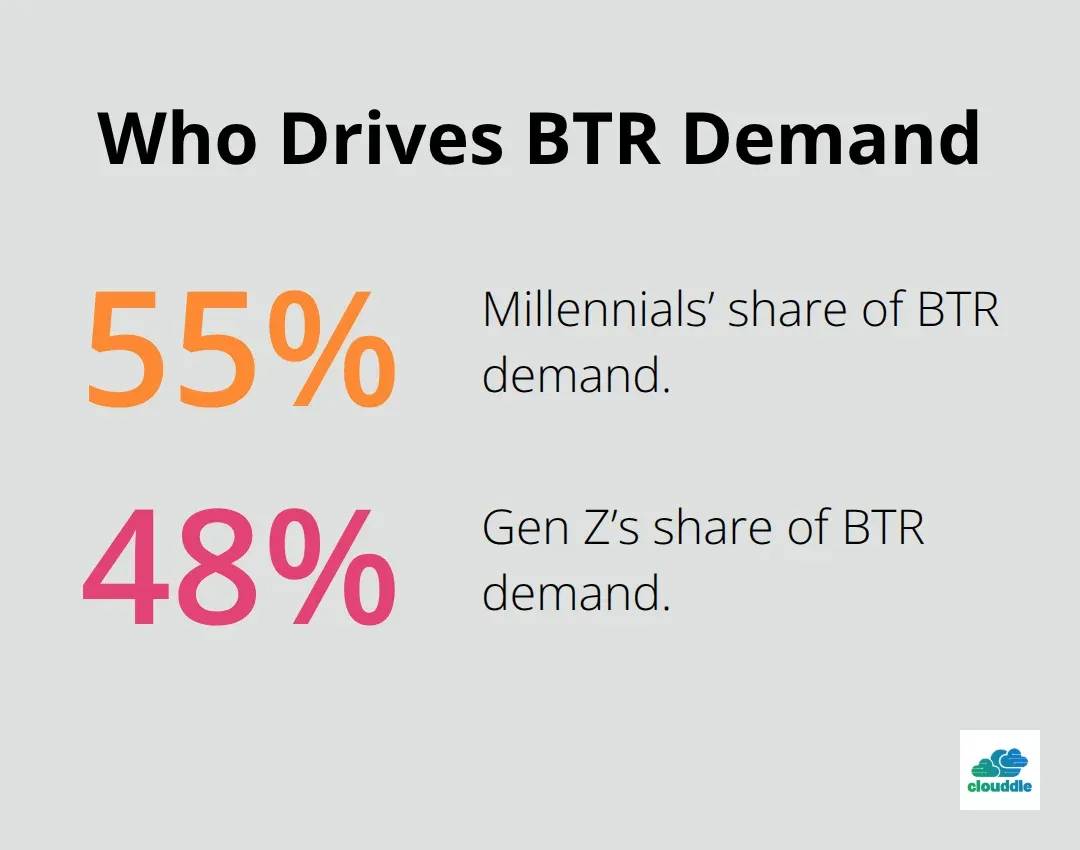
Quality tenants-Millennials and Gen Z renters who represent 55% and 48% of BTR demand respectively-actively search for properties offering seamless digital experiences. They compare properties on connectivity quality before considering price, and operators who lead with infrastructure quality capture these higher-paying segments.
Properties lacking fiber or offering fragmented smart controls lose these tenants to competitors in the first screening round, forcing operators to compete on price and accept lower-quality tenant pools.
Reducing Turnover Costs Through Extended Tenure
Properties maintaining fiber connectivity and integrated controls experience measurably longer average tenant tenure. Reducing turnover costs through extended tenant tenure shows that cumulative turnover rates for renters in single-family detached houses were about 4% higher than in multifamily units. Extended tenure eliminates recurring turnover costs that run $3,000 or higher per unit, directly improving net operating income. A 50-unit property reducing annual turnover from 30% to 15% through superior infrastructure eliminates approximately $225,000 in annual turnover costs while maintaining stable occupancy and cash flow.
Infrastructure as the Primary Tenant Filter
Operators should understand that infrastructure quality now functions as the primary tenant acquisition filter. Renters in competitive markets like Texas, Florida, Arizona, and North Carolina evaluate properties first on whether they support remote work, streaming, and smart device operation simultaneously. Properties failing this baseline test exit the consideration set regardless of price or amenities. Operators investing in commercial-grade fiber delivery, WiFi 6E coverage across all units and common areas, and unified smart home platforms position themselves to attract premium tenant segments and stabilize occupancy at higher rents. This infrastructure foundation becomes the competitive moat that separates market leaders from price-competing operators in build-to-rent markets.
Final Thoughts
Build-to-rent properties that invest in robust connectivity infrastructure today secure their competitive position for years ahead. Tenants in Texas, Florida, Arizona, and North Carolina actively choose properties offering fiber connectivity, unified smart controls, and seamless digital experiences. Properties without this foundation lose renters to competitors and compete on price alone, eroding margins and occupancy stability.
The financial case proves itself through measurable returns. Properties command 10–15% rental premiums through superior infrastructure, generating $300,000–450,000 in additional annual revenue on a 100-unit asset. Extended tenant tenure eliminates $3,000-plus turnover costs per unit, and reducing annual turnover from 30% to 15% saves approximately $225,000 annually. Build-to-rent networking forms the operational backbone that enables these outcomes through fiber delivery to each unit, WiFi 6E coverage across all spaces, network segmentation for security and performance, and unified smart home platforms.
Operators who architect connectivity as a core service differentiator rather than an afterthought position themselves to capture higher-paying renters and maintain longer lease cycles. We at Clouddle transform connectivity for build-to-rent properties by delivering seamless, high-speed internet and smart home solutions that meet modern tenant demands. Explore how we help property owners enhance tenant experiences while generating measurable returns through premium positioning and operational efficiency.
For more information visit us at hppts://www.couddle.com or email at Solutions@clouddle.com


0 Comments