
Hotels face mounting pressure from cyber threats, guest connectivity demands, and fragmented systems that drain resources. Managed IT solutions for hotels address these challenges head-on, keeping operations running smoothly while protecting sensitive data.
At Clouddle, we’ve seen firsthand how the right technology infrastructure transforms hotel operations. This guide walks you through what managed IT delivers and why it matters for your bottom line.
Why Hotels Must Address Three Critical Operational Vulnerabilities
Data Breaches Expose Hotels to Massive Financial and Reputational Risk
Data breaches in hospitality hit record levels, with the ITRC tracking 3,205 compromises in 2023, and the average cost per breach now exceeds $4.45 million across all industries. Hotels store payment card data, guest personal information, and operational credentials across dozens of disconnected systems, creating multiple entry points for attackers. A single compromised POS system or unpatched server exposes thousands of guest records and triggers regulatory fines under GDPR and PCI-DSS compliance requirements. One breach destroys guest trust and racks up legal costs that dwarf the price of preventive infrastructure.
Guest Connectivity Expectations Have Become Non-Negotiable
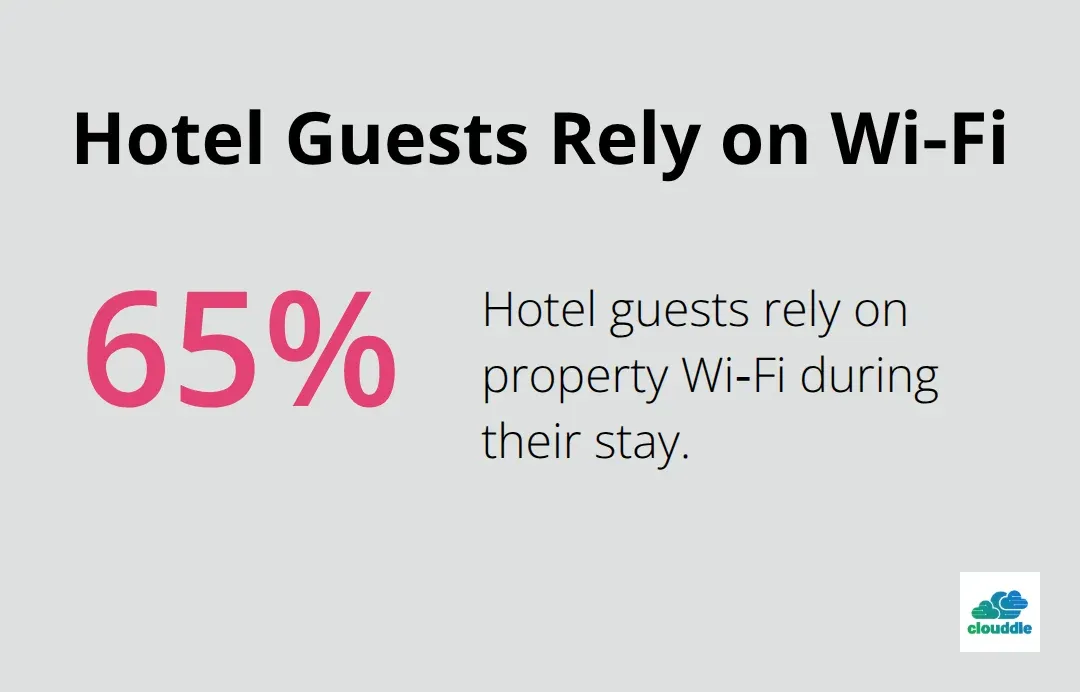
About 65 percent of hotel guests rely on property Wi-Fi during their stay, and poor connection directly damages online reviews and repeat bookings. Guests expect seamless handoff between lobby, room, and meeting spaces without dropping connection or resetting passwords.
Network outages cost hotels an estimated $5,600 per minute in lost revenue and service disruption, not counting the damage to reputation from negative reviews posted in real time. Properties running legacy systems or undersized bandwidth often fail to deliver consistent speeds across all areas, particularly during peak occupancy when multiple guests stream video simultaneously.
Fragmented Systems Create Hidden Operational Drag
Most hotels operate 15 to 25 separate technology platforms: property management systems, channel managers, Wi-Fi networks, security cameras, phone systems, HVAC controls, and guest-facing apps. Each system requires its own patches, monitoring, and vendor support, forcing staff to juggle multiple login credentials and resolve conflicts between incompatible platforms. A housekeeping update in the PMS doesn’t automatically sync with mobile devices, creating double entries and scheduling errors. When the internet drops, staff lose access to room status, guest preferences, and payment processing simultaneously.
Hotels with in-house IT teams spend 60 to 70 percent of their time on reactive troubleshooting rather than strategic projects that drive revenue. Smaller properties often lack dedicated IT staff entirely, leaving general managers or front office staff to handle network issues while serving guests. This fragmentation means downtime cascades across operations: a router failure disrupts guest Wi-Fi, mobile check-in, room automation, and staff communication all at once. The operational complexity grows worse as properties add new technologies like mobile keys, smart thermostats, and in-room tablets without integrating them into a cohesive infrastructure plan.
These three vulnerabilities-security exposure, connectivity demands, and system fragmentation-demand a unified solution that consolidates monitoring, updates, and support under one provider. Managed IT solutions eliminate the need for properties to patch systems individually, monitor networks manually, or maintain expensive in-house technical teams.
What Managed IT Providers Actually Handle
24/7 Monitoring Stops Problems Before They Reach Guests
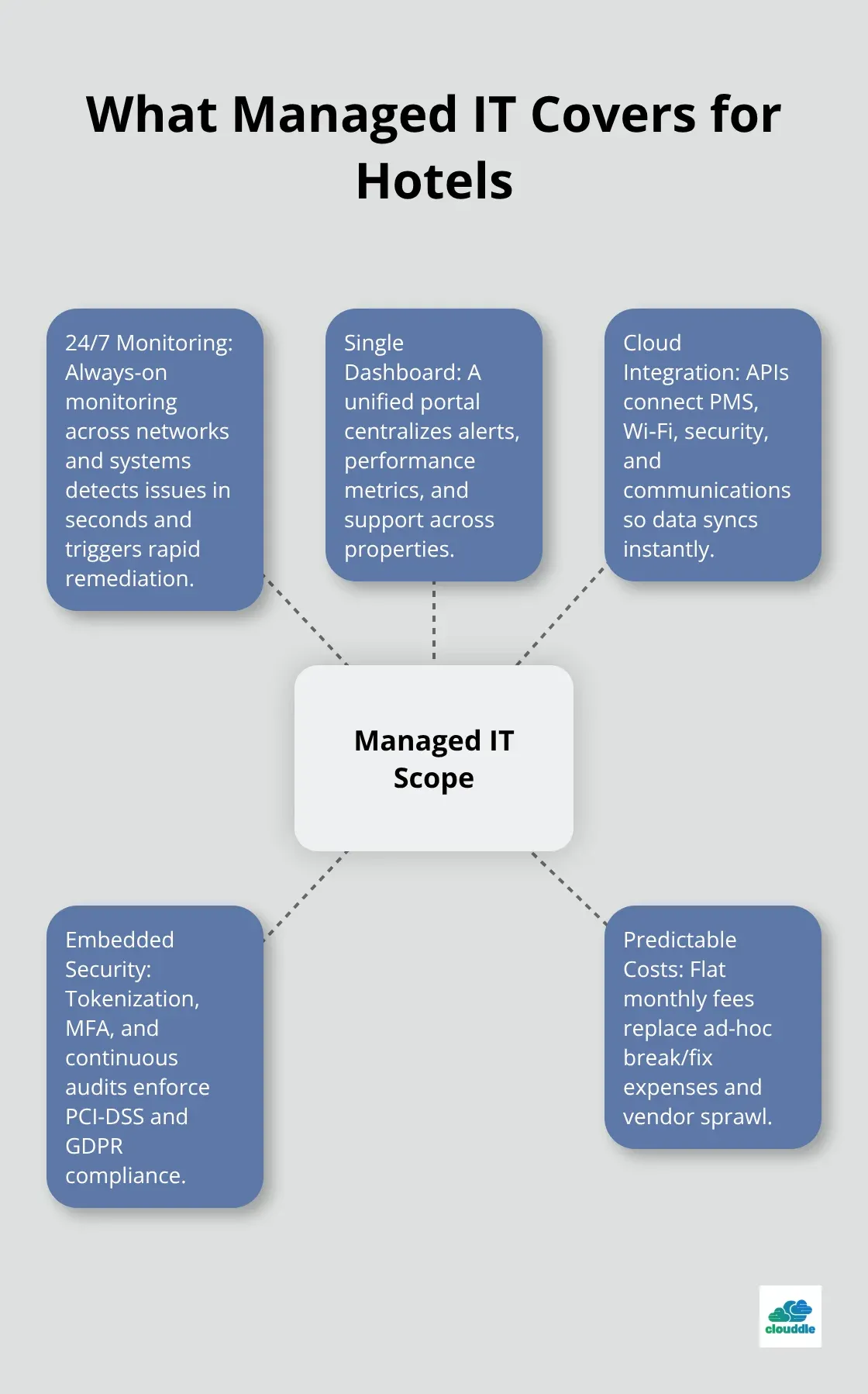
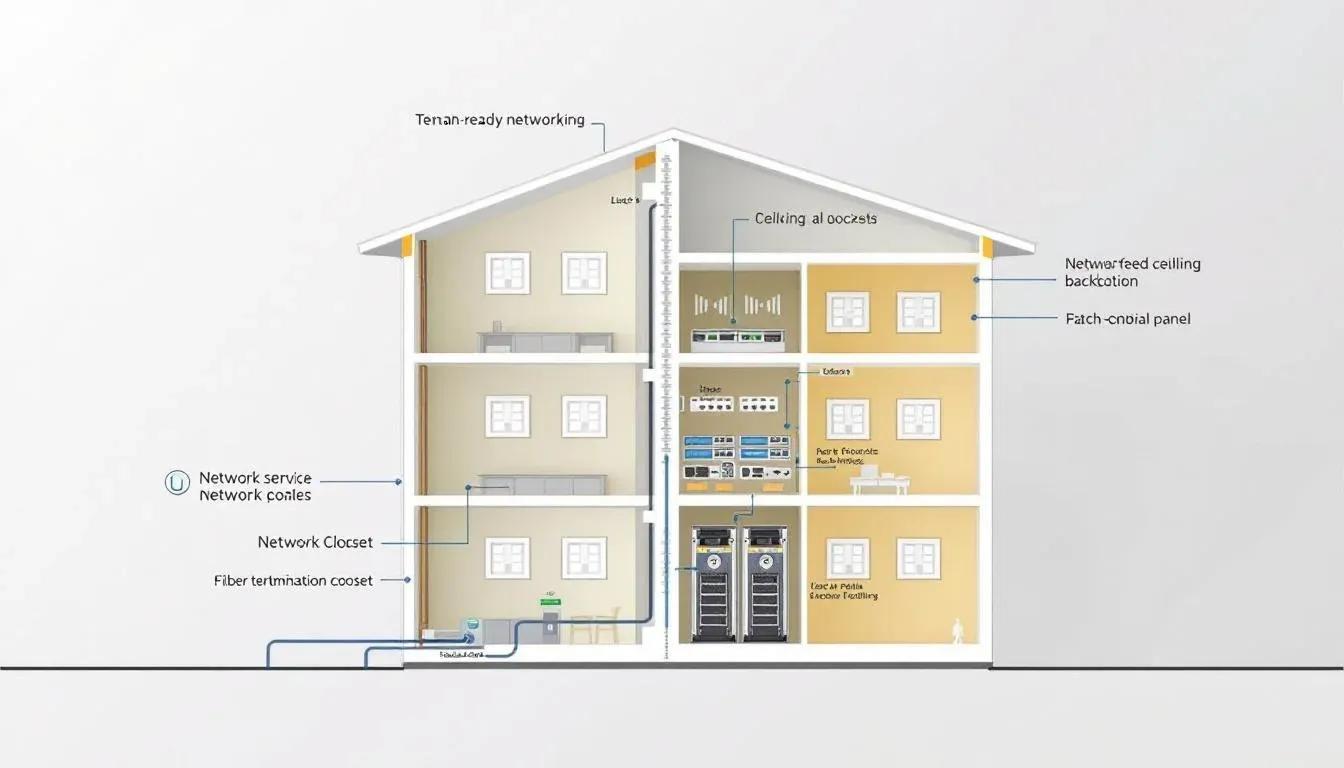
A managed IT provider takes ownership of your entire technology stack, not just Wi-Fi or individual systems. Proactive 24/7 monitoring runs continuously across routers, servers, security cameras, POS terminals, phone systems, and guest-facing applications. When a network issue emerges at 2 a.m., the provider’s operations center detects it automatically and either fixes it remotely or dispatches a technician before guests wake up. SONIFI, which manages guest technology for over 1.1 million hotel rooms across North America, operates a dedicated Network Operations Center that monitors systems continuously and maintains a network of 200+ certified technicians for on-site response. This model eliminates the reactive cycle where staff discover problems through guest complaints. Real-time monitoring feeds alerts to the provider’s team, enabling them to patch vulnerabilities, clear bandwidth bottlenecks, and resolve conflicts between systems hours before they impact operations.
Single Dashboard Replaces Fragmented Vendor Management
For properties with multiple locations, a single provider dashboard shows network health, Wi-Fi performance, and security status across all sites simultaneously. This replaces the fragmented vendor relationships that plague most hotels. Staff no longer toggle between separate portals to check system status or request support. One interface consolidates alerts, performance metrics, and historical data so managers spot trends and address issues proactively rather than waiting for failures.
Cloud Integration Connects Disconnected Systems
Cloud-based integration is where managed IT delivers its strongest competitive advantage. Instead of maintaining separate vendors for your PMS, Wi-Fi, security, and communications, a managed provider connects these systems through APIs and cloud infrastructure so data flows seamlessly. Cloud-based integration connecting PMS, Wi-Fi, security, and communications systems ensures room status updates sync with mobile check-in apps and housekeeping tablets within seconds. Guest preferences recorded during booking flow directly to front desk systems and in-room tablets, eliminating manual entry errors. Network monitoring tools integrate with your access control system to flag unauthorized connection attempts instantly.
Embedded Security Replaces Bolted-On Protection
Cybersecurity becomes embedded throughout rather than bolted on: tokenization protects payment data at every transaction point, multi-factor authentication secures staff logins, and automated security audits run continuously against GDPR and PCI-DSS compliance standards. Hotels that consolidate to a single managed provider report staff spending 60 to 70 percent less time on IT troubleshooting, freeing front desk and housekeeping teams to focus on guest service.
Predictable Costs and Single Point of Contact
Predictable monthly costs replace surprise hardware replacements and emergency service calls. A single point of contact handles implementation, ongoing optimization, and scaling as your property grows, replacing the vendor juggling that consumes hours of your general manager’s time each month. This unified approach transforms IT from a cost center that drains resources into infrastructure that supports revenue growth and operational efficiency. With systems working together seamlessly, your team can focus on what actually drives guest satisfaction and repeat bookings.
How Managed IT Cuts Real Costs Without Sacrificing Operations
Staff Costs Vanish When You Outsource IT Operations
Managed IT solutions eliminate the largest expense most hotels overlook: the hidden cost of in-house technical staff. A dedicated IT manager in hospitality earns $64,068 annually, plus benefits, training, and equipment. Adding a network technician pushes the annual commitment to $120,000 to $140,000 for a single property. For multi-property operators managing ten locations, this structure balloons to $1.2 million yearly before accounting for redundancy, vacation coverage, or specialized expertise in security and cloud infrastructure.
Managed IT providers replace this fixed payroll with a predictable monthly fee typically ranging from $2 to $10 per room per month, eliminating severance obligations, benefits administration, and the constant churn of finding and retaining technical talent during industry-wide shortages. A 200-room property paying $5 per room monthly spends $12,000 annually instead of hiring a full-time technician earning $65,000 plus overhead. The math accelerates for larger portfolios: a 50-property chain with 100 rooms each saves $3.9 million annually compared to staffing one technician per location.
Downtime Prevention Pays for Managed IT in One Incident
Network outages cost hotels approximately $5,600 per minute in lost revenue, guest service disruption, and reputation damage. A single two-hour Wi-Fi failure at a 300-room property during peak season translates to $672,000 in direct losses, not counting the negative reviews that suppress bookings for weeks afterward. Properties with in-house IT teams struggle with detection lag: staff typically discover outages through guest complaints rather than proactive network monitoring, meaning 30 to 45 minutes pass before anyone begins troubleshooting.
Managed IT providers detect the same failure within seconds through continuous monitoring and either resolve it remotely or dispatch a technician before guests notice service degradation. Over twelve months, preventing just two major outages pays for a managed IT contract entirely. Properties consolidating fragmented vendors under one managed provider report 40 to 50 percent fewer unplanned incidents because systems integrate seamlessly rather than conflicting with each other.
Staff Reclaim Hours Previously Lost to Troubleshooting
Staff reclaim 60 to 70 percent of time previously spent on reactive troubleshooting, redirecting those hours toward revenue-generating activities like guest service, marketing, and operational improvements that actually move the needle on profitability. Front desk teams stop fielding Wi-Fi complaints and focus on upselling upgrades. Housekeeping staff no longer wait for IT to restore mobile device access when systems fail.
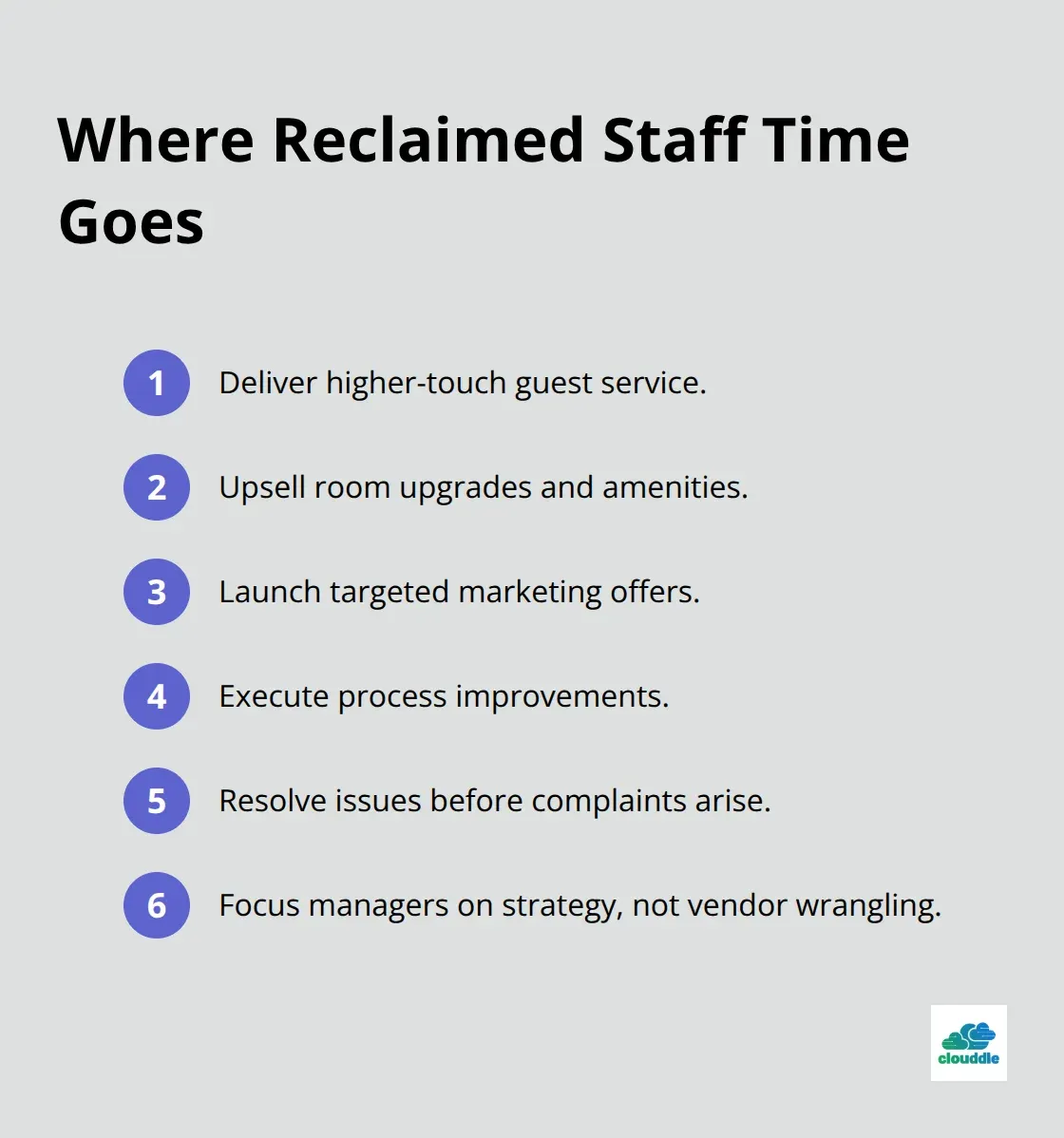
General managers concentrate on strategy instead of vendor management and emergency calls at midnight.
Final Thoughts
Managed IT solutions for hotels eliminate the operational friction that drains profitability and frustrates staff. Hotels that consolidate fragmented systems under a single managed provider stop losing revenue to preventable outages, reduce security exposure that triggers million-dollar breaches, and free their teams to focus on guest service instead of vendor management. The financial case is straightforward: preventing two major network failures pays for a managed IT contract entirely, while eliminating in-house IT payroll saves properties $50,000 to $140,000 annually depending on property size.
The competitive advantage compounds over time. Properties with reliable connectivity, integrated systems, and proactive security monitoring attract guests who expect seamless experiences and retain staff who aren’t burned out troubleshooting technology failures. Your general manager reclaims dozens of hours monthly previously spent on emergency calls and vendor disputes, your front desk team upsells confidently knowing the Wi-Fi won’t fail during peak season, and your housekeeping staff sync room status instantly across devices without manual workarounds.
Implementation starts with auditing your current technology stack and identifying which systems create the most friction. Most properties benefit from consolidating under a single managed provider rather than attempting piecemeal upgrades, and a reputable provider handles the transition without disrupting guest operations while training your staff on the new systems. Contact Clouddle to explore how seamless connectivity and smart infrastructure transform property operations and guest experiences.
For more information visit us at hppts://www.couddle.com or email at Solutions@clouddle.com

0 Comments