
If you want to successfully manage apartment buildings today, you have to make a fundamental shift in thinking. It’s no longer about just keeping the lights on and the plumbing working. The game has changed. Winning now means building a connected, efficient, and desirable digital ecosystem that not only attracts but also keeps high-value residents for the long haul. This all starts with a rock-solid digital backbone, especially a property-wide WiFi network.
The New Reality of Managing Apartment Buildings
Welcome to the modern era of property management, where your tenants' expectations are set by their digital lives, and your profitability is directly tied to technology. The old playbook—manual checklists, a patchwork of disconnected systems, and basic amenities—is quickly becoming a relic. The focus has shifted to creating a smooth, integrated living experience powered by smart technology.
This change is especially critical in high-density properties like Multi-Dwelling Units (MDUs), student housing, and build-to-rent communities. For these residents, fast and reliable internet isn't just a nice-to-have; it's the fourth utility, right up there with water and electricity. A property-wide managed WiFi network is the central nervous system that makes everything else possible.
Embracing a Tech-Driven Strategy
A tech-forward strategy is about more than just offering an internet plan. It’s about intentionally building your entire operation on a single, unified digital foundation. This foundation pulls together all the different functions that used to be siloed and inefficient.
Thinking this way delivers some powerful results:
- Smarter Operations: With one reliable network, your staff can manage maintenance tickets, check building systems, and communicate with residents from anywhere on the property—no more running back to the office.
- New Revenue Streams: Property-wide WiFi can be turned into a new source of income. Offering tiered internet packages creates ancillary revenue that flows directly to your Net Operating Income (NOI).
- Better Tenant Retention: Imagine a new resident moving in and having their internet working the second they walk through the door. This instant-on, hassle-free connectivity is a huge competitive advantage that solves a major move-in headache and keeps people happy.
The table below breaks down the fundamental shift in property management, highlighting how technology creates superior outcomes in key operational areas.
Traditional vs Modern Apartment Management
| Management Pillar | Traditional Approach | Modern Tech-Enabled Approach |
|---|---|---|
| Connectivity | Tenants find their own ISP; spotty common area WiFi. | Property-wide, instant-on managed WiFi for all residents and staff. |
| Operations | Manual processes, paper logs, staff tied to the office. | Cloud-based platforms for maintenance, communication, and access control. |
| Tenant Experience | Reactive maintenance, limited community engagement. | Proactive service, digital amenities, and a seamless resident journey. |
| Ancillary Revenue | Limited to laundry, parking, and storage fees. | Monetized WiFi tiers, smart apartment packages, and on-demand services. |
As you can see, the modern approach isn't just an upgrade—it's a complete re-imagining of how a property functions, creating value at every turn.
The scale of this evolution is staggering. The global property management market is expected to jump from $23.7 billion in 2024 to an incredible $57.57 billion by 2035, with the residential sector driving much of that growth. And with the 2024 apartment construction boom adding an estimated 629,000 new units to the market, the competition for good residents will be fierce. Smart technology is no longer optional.
The new reality of managing apartment buildings often involves adapting to evolving industry standards and leveraging technologies specifically designed for property management companies. By doing so, you transform a property from a collection of units into a connected community that drives higher value and long-term profitability.
Building Your Digital Foundation with Property-Wide WiFi
If there's one investment that forms the absolute bedrock of a modern apartment community, it's property-wide managed WiFi. This is no longer a perk or a nice-to-have amenity. For today’s renter, reliable internet is the fourth utility—just as essential as electricity, water, and heat. You simply can't manage a successful apartment building today without getting this piece right.
For Multi-Dwelling Units (MDUs), student housing, and the fast-growing build-to-rent sector, connectivity isn't just a feature; it’s a make-or-break factor for signing leases and keeping residents happy. These communities are packed with people whose entire lives—from remote work and online classes to streaming entertainment and social connections—run on the internet. A single, powerful property-wide network is the only way to meet that non-negotiable demand.
Meeting the Demands of Modern Renters
The old way of doing things—leaving residents to battle it out with retail Internet Service Providers (ISPs)—is a recipe for chaos. It creates a stressful move-in day scramble, spotty service quality from unit to unit, and a support headache for your tenants and on-site staff. A centralized, managed WiFi solution cuts through all that noise.
A well-designed property-wide network gives residents exactly what they want:
- Instant-On Connectivity: Imagine this: a new tenant walks through the door, and their internet is already on. Secure, high-speed WiFi is ready to go. That alone removes one of the biggest moving-day frustrations.
- Seamless Coverage: Residents can walk from their apartment to the gym, then to the pool, and up to the rooftop lounge without their connection ever dropping. It just works, everywhere.
- Dedicated Support: Instead of spending hours on hold with a giant ISP, residents have a single, expert point of contact for any issue. This small detail makes a huge difference in their overall experience.
This isn't just about providing internet access. A strong digital backbone becomes the central nervous system for your entire property, improving operations, unlocking new revenue, and building powerful tenant loyalty.
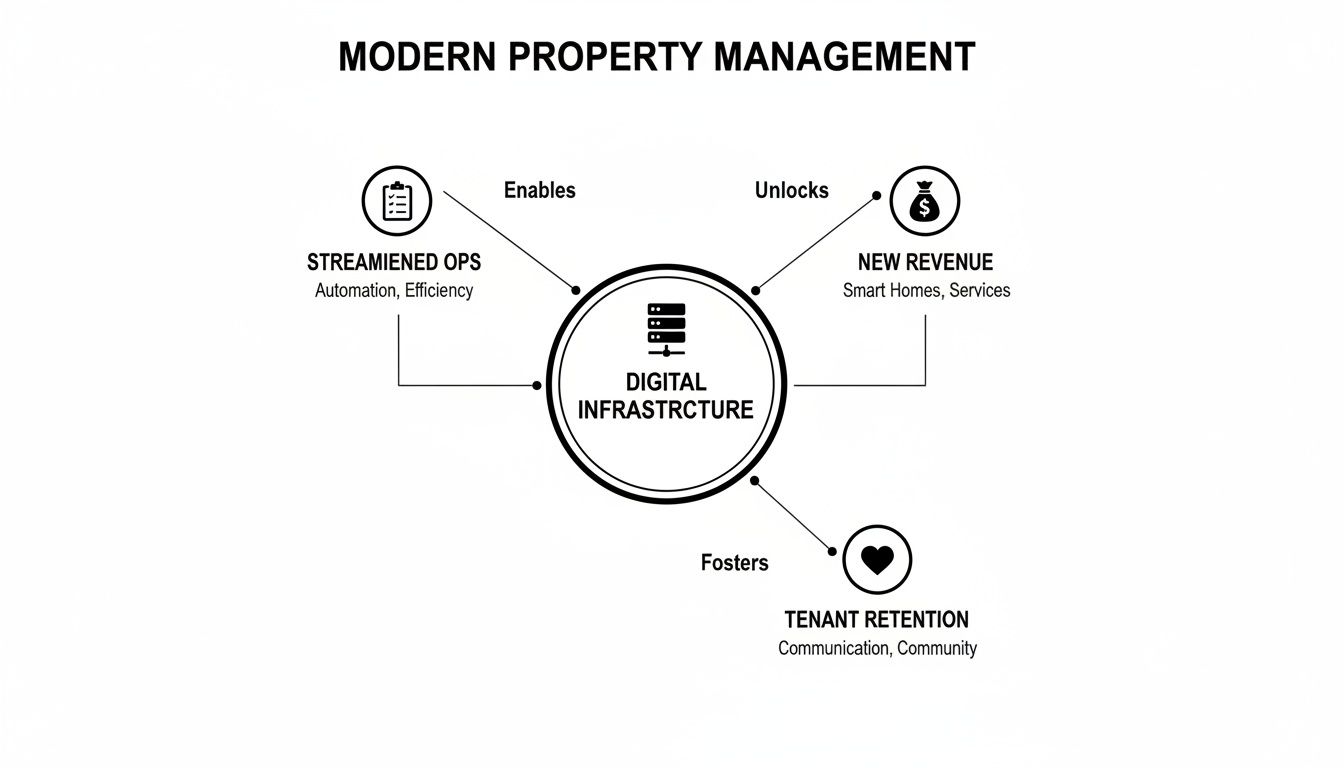
As you can see, a great network is the foundation that makes everything else—from smart security cameras and access control to efficient maintenance reporting—work better.
Demystifying the Technology Behind Managed WiFi
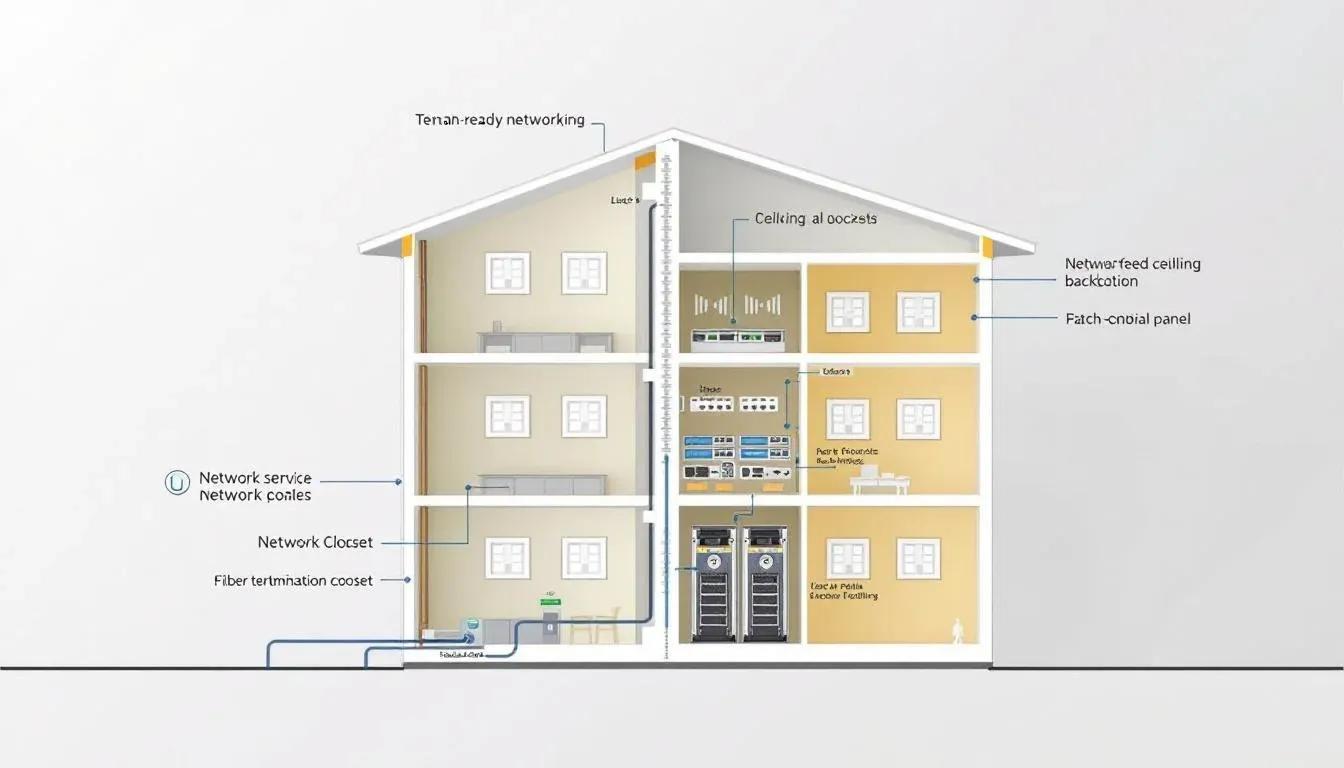
Putting in a property-wide solution might sound like a massive technical undertaking, but the core idea is pretty simple. It all starts with a high-capacity fiber backbone that brings a huge stream of internet into your building. From that main hub, the signal is distributed across the property through a grid of strategically placed wireless access points (APs).
Getting AP placement right is both an art and a science. A professional design ensures you have strong, even coverage everywhere, with no frustrating dead zones or interference between units. This is especially vital in buildings with tricky layouts or materials like concrete and steel, which are notorious for blocking WiFi signals. If you want to dig deeper, our complete guide to deploying WiFi for apartment buildings breaks down all the technical details.
A property-wide network has to be engineered for density. Unlike a single-family home, a network in an MDU, student housing, or build-to-rent community must support hundreds or even thousands of devices at once—laptops, smart TVs, phones, IoT sensors, and building systems—without ever slowing down.
The Rise of Network-as-a-Service (NaaS)
In the past, building a network like this required a massive upfront capital expenditure (CapEx) for all the hardware, cabling, and professional installation. That high price tag put it out of reach for many property owners. But a newer financial model has completely changed the game: Network-as-a-Service (NaaS).
With NaaS, you transform this digital infrastructure from a huge one-time purchase into a predictable, manageable operating expense (OpEx). For anyone managing apartment buildings, this approach offers some incredible advantages.
Key Benefits of the NaaS Model
| Feature | Description | Impact on Management |
|---|---|---|
| Zero Upfront Cost | The provider fronts the cost for all hardware, installation, and setup. | You preserve your capital for other property improvements and investments. |
| Predictable Monthly Fee | One single, fixed payment covers everything from hardware to 24/7 support. | Budgeting becomes incredibly simple, with no surprise repair bills. |
| Managed Upgrades | The provider is responsible for keeping the technology up-to-date. | Your property is future-proofed, so you won't get stuck with obsolete tech. |
| Expert Support | Includes round-the-clock monitoring and support for both your staff and residents. | This frees up your on-site teams to focus on what they do best—managing the property. |
By choosing a NaaS model, property managers can deploy a best-in-class connectivity solution right away, making their communities more competitive and valuable from day one. It removes the financial hurdles and operational headaches, turning a superior digital experience into an accessible and powerful tool for managing modern apartment buildings.
How Managed WiFi Directly Increases Your NOI
A property-wide WiFi network is much more than just a modern amenity; it’s a direct pipeline to a healthier bottom line. For any owner or operator focused on managing apartment buildings, this kind of technology provides a powerful and practical blueprint for boosting Net Operating Income (NOI). The financial upside comes from two key strategies working together: creating new, high-margin ancillary revenue and cutting operational costs across the board.
Let's unpack exactly how this digital backbone translates into real dollars, turning a capital investment into a genuine profit-generating asset for your property.
Creating New Ancillary Revenue Streams
The most straightforward way managed WiFi boosts your NOI is by turning connectivity into a revenue stream you control. Instead of letting residents hand their money over to the big internet service providers, you can own the entire experience and capture that value yourself. This works exceptionally well in student housing, build-to-rent communities, and traditional multifamily properties where residents not only expect but will gladly pay for premium, hassle-free service.
Here’s a simple way to structure it:
- Tiered Internet Packages: Offer a few different speed and performance tiers. You might include a solid base-level service in the rent or offer it for a low monthly fee, while charging more for premium, gigabit-speed packages perfect for gamers or households with multiple streamers.
- Instant-On Service Fees: The "move-in ready" experience is a massive selling point. You can easily monetize this convenience by charging a one-time activation fee for instant internet access the moment a new resident walks through the door.
- Monetizing the Premium Experience: Let's be honest, residents are tired of spotty service and sitting on hold with customer support. By offering a professionally managed network with dedicated, 24/7 support, you're selling a far superior experience that justifies a premium price.
This approach doesn't just add a new line item to your revenue; it makes your property significantly more attractive to prospects, which helps reduce vacancy loss. If you’re looking for other strategies, you can learn more about how to increase NOI in our detailed guide.
A recent study found that 84% of residents said high-speed internet was important to them, and 75% were willing to pay more in monthly rent for it. This data confirms that property-provided internet isn't just a cost center—it's a marketable asset that residents value and will pay for.
Slashing Operational Costs Across the Board
While new revenue is exciting, the operational savings unlocked by a unified network are just as impactful on your NOI. A single, reliable WiFi network becomes the backbone for your entire operational toolkit. It allows you to consolidate services, make your staff more efficient, and get rid of redundant third-party costs.
Think of it like this: instead of juggling separate, often costly systems for every smart device or operational tool, you can power them all from one centrally managed network.
Powering Your Operational Technology
A dependable, property-wide network makes a world of difference for your on-site teams. Maintenance staff can carry tablets to receive, update, and close out work orders in real-time from anywhere on the property. No more trekking back to the office to file paperwork, which means tasks get completed much faster.
That same network infrastructure can support a whole range of PropTech solutions that cut your direct costs:
- Cloud-Based Security Cameras: Modern IP security cameras can run securely on your private WiFi network. This completely eliminates the need for expensive, individual data plans for each camera, saving you hundreds or even thousands of dollars every month.
- Smart Building Sensors: IoT devices like smart thermostats in common areas, leak detectors in utility closets, and automated lighting systems all connect to the same network. The data they gather leads directly to lower utility bills and helps you catch small issues before they become costly emergency repairs.
- Access Control Systems: Today’s access control systems operate over the network, allowing you to manage permissions, issue digital keys to residents, and monitor entry points remotely without needing specialized, expensive wiring.
By bringing all these functions onto one network, you get rid of a messy and expensive web of individual service contracts. This move not only simplifies vendor management but also creates a more secure and robust operational environment—a critical piece of successfully managing apartment buildings today.
The Payoff: Smart Building and Security Integrations
A powerful, building-wide WiFi network is more than just an amenity; it's the backbone for a truly intelligent and secure property. Once you have this digital foundation in place, you can go far beyond just offering internet access. This is where you can start layering on integrated smart technologies that completely change the game for both residents and your on-site team.
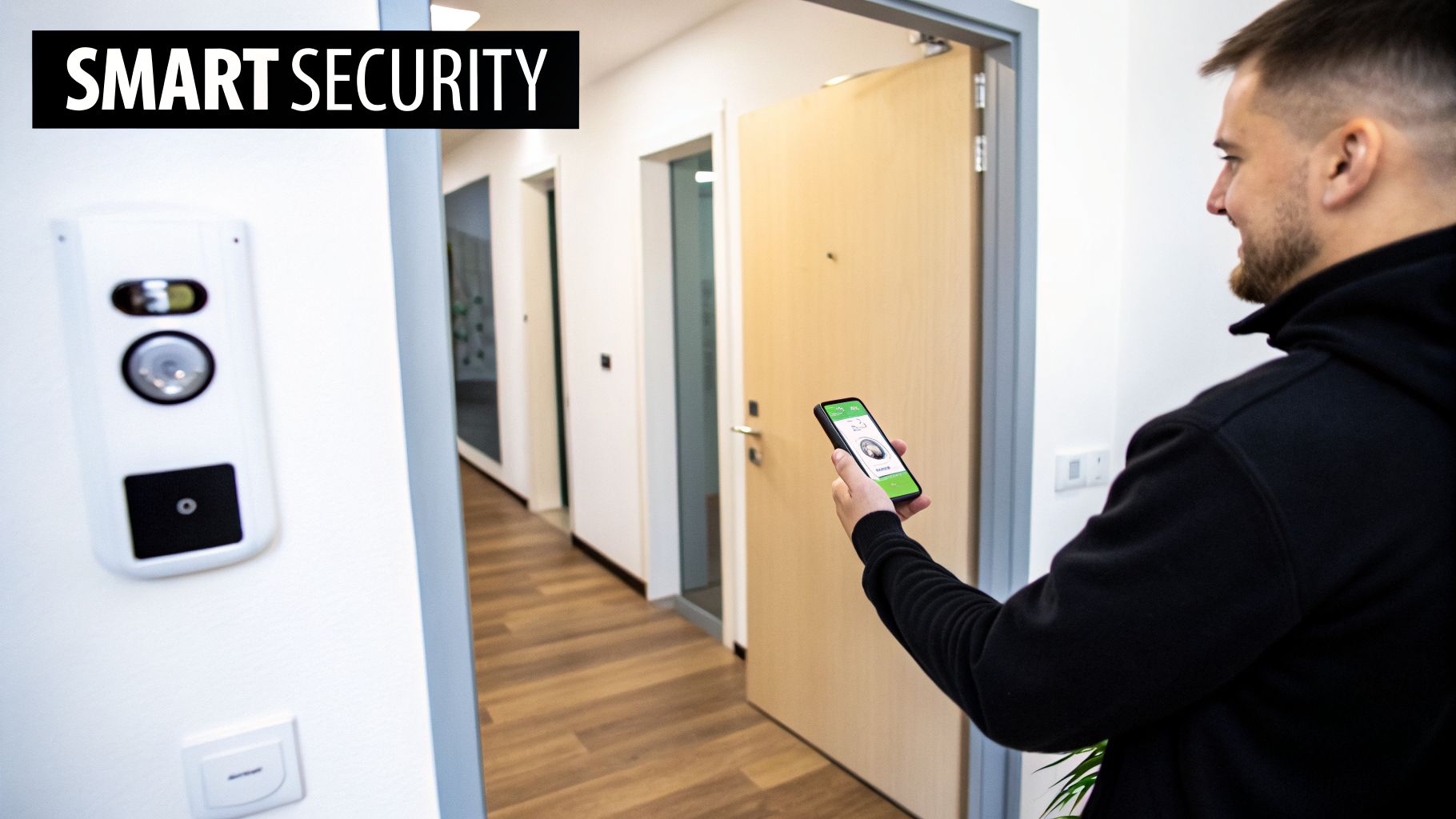
Let's move past the theory and look at practical applications that run on this unified network. These tools make your building safer, more convenient, and far more efficient to manage.
The Power of Cloud-Based Access Control
One of the most immediate and satisfying upgrades is cloud-based access control. Simply put, it turns a resident's smartphone into their key. This one move gets rid of physical keys, which are a constant headache—they’re expensive to replace and a pain to manage.
With a system running on your property-wide WiFi, your team can:
- Grant and Revoke Access Remotely: Instantly onboard a new resident or deactivate a former tenant’s access right from a central dashboard. No more changing locks.
- Issue Temporary Digital Keys: Residents can give secure, time-limited access to guests, dog walkers, or maintenance staff without having to hand over a physical key.
- Monitor Entry Logs: See a clear, time-stamped record of who is using common areas like the gym, pool, or package room. It’s a huge boost for accountability and security.
This isn't just a shiny new convenience. It's a fundamental security upgrade that gives both residents and your management team real control. Integrating systems like these is a key part of any modern smart apartment technology strategy.
Bringing All Your Security Under One Roof
High-definition IP security cameras are another area where a unified network shines. In the past, installing a good camera system meant running two sets of wires everywhere—one for power and one for data. It was expensive, disruptive, and messy.
By using your managed WiFi network, you can place cameras where you actually need them, not just where it’s easy to run a cable. These modern cameras operate on the same secure network as your other property tools, giving you crystal-clear video feeds that you can check from anywhere. This approach also gets rid of the need for separate, costly cellular data plans for each camera, which adds up to real monthly savings.
This shift toward integrated tech is often driven by real-world security worries. About 40% of property managers are concerned about online fraud, and 37% worry about data security. A secure, professionally managed network directly addresses these fears by creating a single, protected digital environment. You can learn more about these trends in the full report on multi-family property management trends.
Creating a Truly Connected Property with IoT
The real magic happens when you start connecting an array of Internet of Things (IoT) devices. These are small, smart sensors that give you a constant stream of data, letting you manage the property proactively instead of just reacting to problems.
Imagine what you could do with devices that:
- Detect Leaks: Place smart water sensors in high-risk areas like laundry rooms, boiler rooms, and behind water heaters. You’ll get an alert on your phone the second a leak is detected, letting you stop a small drip before it becomes a catastrophic flood.
- Manage Utilities: Centrally control smart thermostats in common areas and vacant units to optimize heating and cooling. This slashes energy waste and lowers your utility bills.
- Automate Lighting: Program smart lights in hallways, parking garages, and amenity spaces to adjust based on the time of day or whether someone is present. You cut electricity costs without ever compromising safety.
Each one of these devices connects to your central WiFi network and feeds information to a single dashboard. This gives you a complete, real-time overview of your building’s operational health. This data-driven approach is what modern apartment management is all about—shifting from reactive repairs to proactive maintenance that saves money and creates a better community.
It’s All About the Resident Experience
In a competitive rental market, the game isn't just about filling units—it's about keeping them filled. The single most effective way to do that is by creating a standout resident experience. And in today's world, that experience starts with excellent, hassle-free technology.
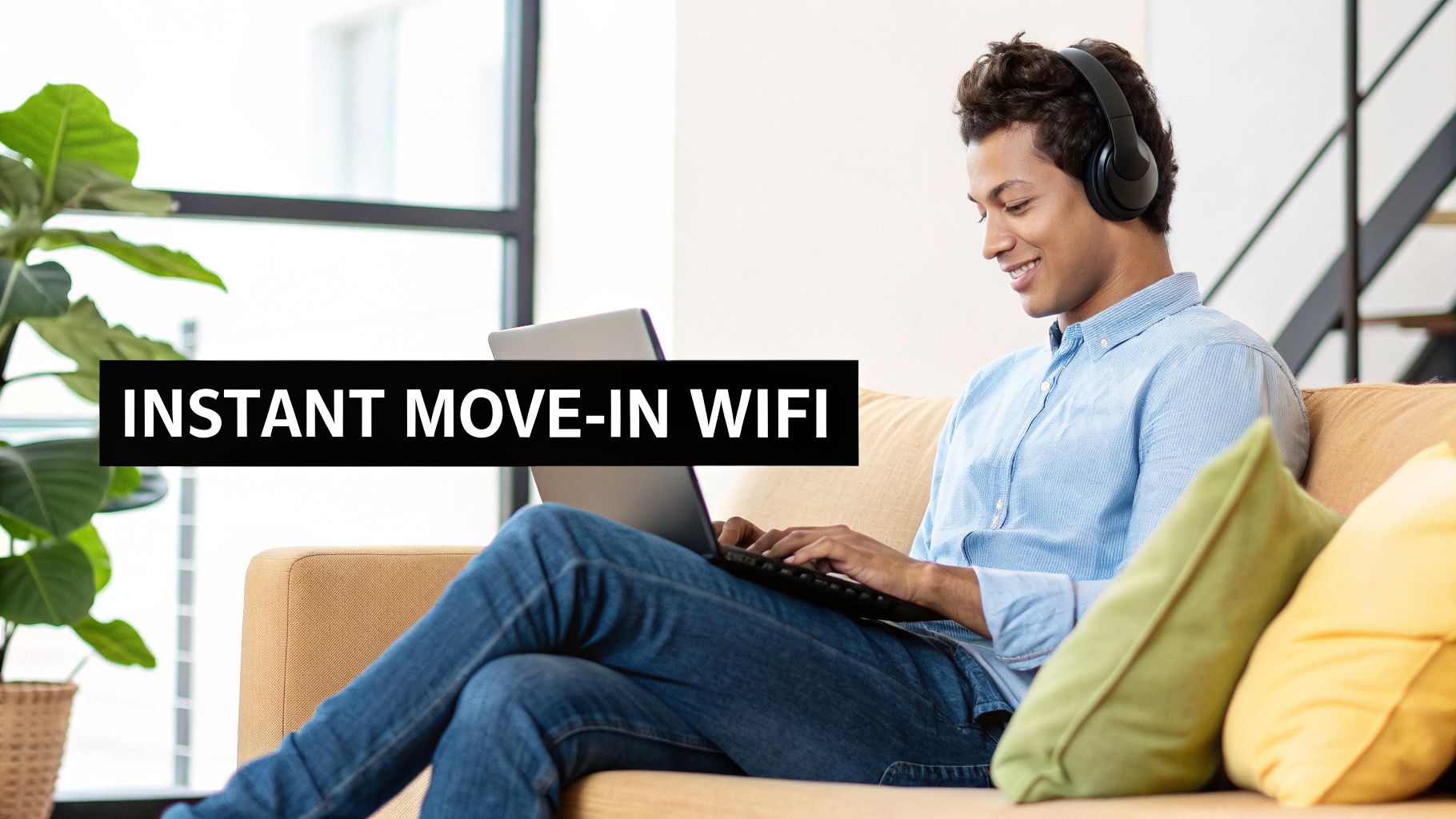
Think about the first impression you make. The move-in day is often chaotic and stressful for a new tenant. Offering instant, building-wide WiFi from the moment they walk in the door completely changes that dynamic. It’s a simple gesture that solves a huge headache, turning a frustrating day into a genuinely positive start to their lease.
The New Utility: Property-Wide Connectivity
For residents in apartment buildings, student housing, and build-to-rent communities, reliable internet isn't just a perk anymore; it's a utility, as essential as water or electricity. It’s the invisible foundation for remote work, online classes, streaming movies, and even competitive gaming. When the internet just works, everywhere on the property, it’s one less thing your tenants have to worry about.
This rock-solid connectivity also becomes the backbone for all your other smart building features. Things like mobile access control for guests, smart thermostats, and cloud-based maintenance requests all fall apart without a strong network. Great WiFi is the thread that ties all these modern conveniences together into a seamless living experience—something you can actively promote. Knowing how to market rental properties and fill vacancies fast often comes down to highlighting these tangible, tech-forward benefits.
From Smart Tech to Stronger Retention
While marketing these features can help you command higher rents, the biggest financial impact comes from slashing your turnover rate. Tenant turnover is the silent killer of profitability, bringing a cascade of costs from lost rent, marketing campaigns, and unit prep. A superior resident experience, anchored by reliable technology, is your best defense.
Research shows that 40% of renters who are uncertain about renewing their lease would commit to staying another year if their property manager invested more in maintaining the property, and 31% would remain if managers were more responsive. Discover more insights about these key retention drivers on parcelpending.com.
This data reveals a direct line between proactive management and resident loyalty. A unified network is a powerful tool here. When a maintenance tech can get a work order on their tablet from anywhere on the property and close it out on the spot, response times plummet. Residents feel heard, their issues are solved quickly, and their overall satisfaction skyrockets.
How to Market a Better Living Experience
When you invest in a property-wide managed WiFi network, you're not just selling internet access—you're selling a modern, convenient lifestyle. This gives you a compelling story to tell prospective residents, helping you attract and retain the kind of tenants who value quality and are willing to pay for it.
Focus your marketing conversations on the real-world benefits:
- Zero-Hassle Move-In: Emphasize the instant-on WiFi. "Your internet will be working the second you walk in the door—no need to schedule and wait for a technician."
- Total Property Coverage: Talk about the freedom it provides. "You can work from our rooftop lounge or stream music by the pool without ever losing your connection."
- A Smarter, Safer Home: Connect the network to other features. "Our high-speed network also powers the smart access system and security cameras, making this a more convenient and secure place to live."
This approach shifts the conversation from a technical feature to a story about a better life. That’s how you build a reputation, reduce turnover, and create a truly thriving community.
Choosing the Right Technology Partner for Your Portfolio
When it comes to bringing modern technology into your apartment buildings, think of it less as a purchase and more as a strategic partnership. The long-term success of your investment hinges almost entirely on the partner you select. This isn't about just buying Wi-Fi hardware; it's about bringing on a team of experts who get the unique pressures and opportunities within your portfolio.
Get this decision right, and your tech stack becomes a unified engine for driving Net Operating Income (NOI) and creating happier, stickier residents. A poor choice, on the other hand, quickly devolves into a mess of finger-pointing between vendors, unreliable service, and a constant stream of resident complaints. The goal is to find one single, accountable partner who can own your property’s entire technology infrastructure—from the network backbone to the smart security systems.
Vetting Partners with an MDU-Specific Lens
You wouldn't hire a commercial roofer to fix a single-family home, and the same logic applies here. Not all technology providers are built for the high-density world of multifamily real estate. A company that excels at wiring corporate offices will likely be out of its depth when faced with a 200-unit apartment building, a packed student housing community, or a sprawling build-to-rent development.
Your vetting process has to filter for deep, proven experience in the Multi-Dwelling Unit (MDU) sector. Look for a partner who can point to a portfolio of properties just like yours. They should be able to speak your language, discussing how they’ve tackled common MDU headaches like signal bleed from concrete walls, managing network traffic during peak evening hours, and ensuring seamless coverage from the parking garage to the penthouse.
A true specialist in MDU, student housing, and build-to-rent communities sees the big picture. They’ll insist on being the single point of contact for networking, security, and cloud services because they know from experience that separating these functions is a recipe for operational failure. This integrated approach isn't a "nice-to-have"; it's essential for effective long-term management.
Key Questions to Ask Potential Partners
To cut through the sales pitches and find a real expert, you need to ask pointed questions. These questions are designed to reveal a provider's true capabilities, their service philosophy, and how they plan to keep your property's tech relevant for years to come.
Essential Partner Vetting Checklist:
- Service Level Agreements (SLAs): "What are your guaranteed uptime percentages? More importantly, what are your exact response times for a network-down emergency versus a standard resident support ticket?"
- End-to-End Capabilities: "Do you handle everything in-house, from pulling the initial fiber and designing the network all the way to providing 24/7 resident-facing tech support?"
- Hardware & Future-Proofing: "What's your plan for hardware lifecycle management? How do you ensure our property stays current with new technology and standards over the next five to ten years?"
- Financial Models: "Can you offer a Network-as-a-Service (NaaS) or a similar OpEx-friendly model to avoid a large upfront capital hit? What, specifically, is included in that monthly fee?"
- Security Protocols: "How do you lock down the network to protect both our sensitive operational data and our residents' personal information? What are your credentials when it comes to data privacy and compliance?"
Choosing a technology partner is one of the most critical decisions you'll make in managing your properties today. The right one becomes an extension of your own team, giving you the expertise and support to transform your buildings into modern, connected, and highly profitable communities.
Answering Your Questions on Property Tech
Stepping into tech-enabled property management is a big move, and it naturally comes with a lot of questions. As experts in the field, we hear the same concerns from owners and managers all the time. Let’s tackle some of the most common ones, especially around property-wide WiFi.
Is Property-Wide WiFi Really a Smart Investment?
Absolutely. In fact, it's one of the smartest upgrades you can make to a multifamily property today. Yes, there's an upfront investment, but a well-designed managed WiFi network delivers returns almost immediately. It opens up new ancillary revenue from residents while simultaneously powering smart building systems that trim your operating budget.
But the real payoff goes beyond direct revenue. Think about tenant turnover. Great internet is no longer a perk; it’s a dealbreaker. When residents have seamless, fast connectivity, they're significantly happier and much more likely to renew their lease. That saves you thousands in marketing and lost rent from vacancies.
What's So Different About WiFi in an Apartment Building?
Setting up WiFi in a multi-dwelling unit (MDU), student housing, or build-to-rent community is a completely different ballgame than in a single-family home. You're dealing with a high-density environment where hundreds of people and devices are all fighting for the same airspace.
A professionally designed, property-wide network is engineered to handle these specific challenges:
- Signal Interference: Concrete, steel, and dozens of personal routers all create a chaotic signal environment that leads to dead zones. A managed system uses a strategic map of access points to blanket the entire property with a strong, reliable signal.
- High-Density Demand: Your network has to handle a flood of simultaneous activity—laptops, smart TVs, phones, and gaming consoles—all hitting peak usage at the same time every evening, without a hiccup.
- Robust Security: In a shared environment, security is paramount. A proper MDU network isolates each resident's traffic and keeps it separate from your own operational network, protecting everyone’s data and privacy.
You’re not just providing internet; you're engineering an experience. A specialized MDU network is built from the ground up for density and rock-solid reliability, ensuring you meet the high expectations of today’s residents.
How Long Will a Modern WiFi System Last?
Think of a quality network installation as a long-term asset. The core infrastructure—the fiber-optic and ethernet cabling running through your walls—is built to last for decades. The active hardware, like your wireless access points and switches, will generally need to be updated every five to seven years as technology evolves.
This is where a Network-as-a-Service (NaaS) model really shines. Instead of facing a huge capital expense every few years, technology refreshes are simply part of your service agreement. Your provider handles the hardware upgrades, ensuring your building never falls behind the tech curve. It’s a fantastic way to future-proof your investment and maintain a competitive edge.
Ready to see how an integrated technology solution can transform your property? Clouddle Inc is a leader in designing and deploying managed WiFi, security, and cloud services for the multifamily industry. Learn how our zero-down Network-as-a-Service model can boost your NOI and resident satisfaction.


0 Comments