
Senior living communities face a real problem: aging infrastructure can’t keep up with resident expectations. Outdated networks create frustration for both residents seeking connectivity and staff managing operations.
NaaS for senior living changes this equation. At Clouddle, we’ve seen how modern networking solutions remove the financial and operational barriers that hold communities back.
Why Modern Networking Matters for Senior Living
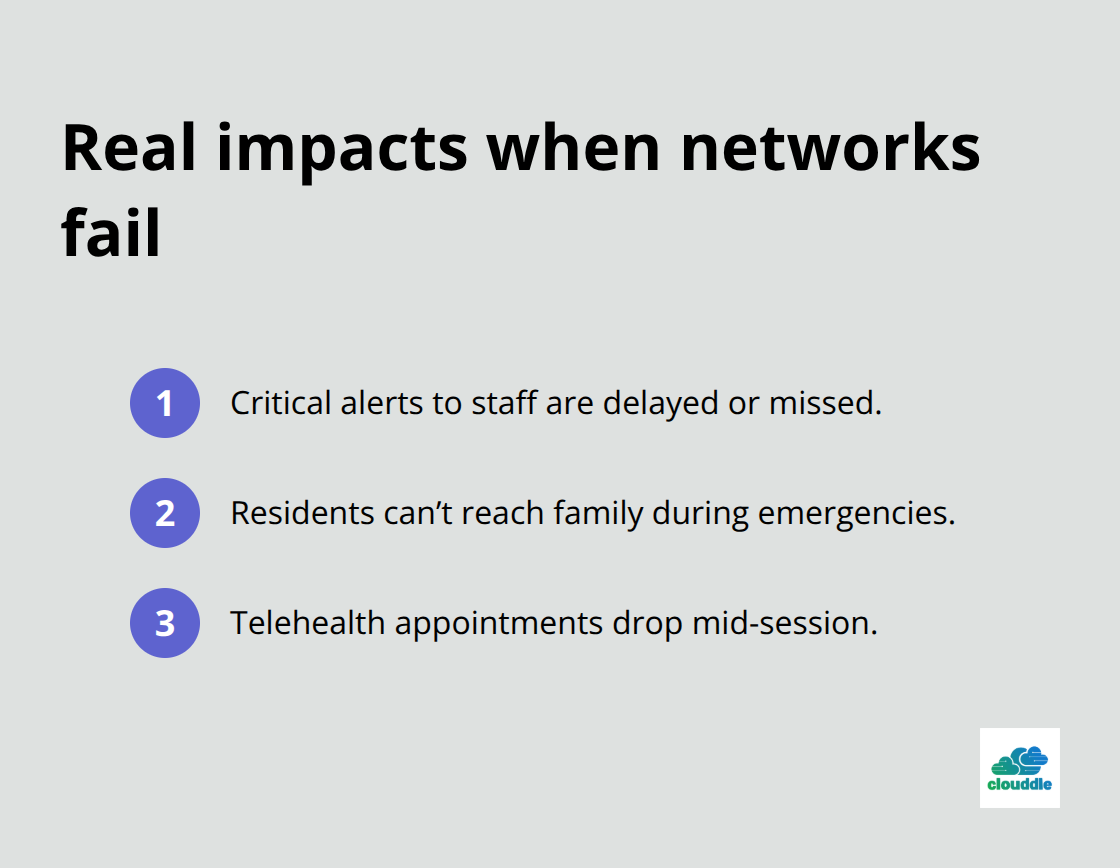
The statistics tell a clear story. According to AARP, residents increasingly expect reliable connectivity that matches what they had at home. When in-building networks fail, it’s not just an inconvenience-staff can’t receive critical alerts, residents can’t reach family members during emergencies, and telehealth appointments drop mid-session.
Real Consequences of Outdated Infrastructure
Croasdaile Village, a 100-acre retirement community in Durham, NC, faced this exact problem with their aging infrastructure. Their legacy networks couldn’t support the modern services residents demanded.
The community deployed 570 Wi-Fi access points and achieved a 20x increase in bandwidth. Residents now receive 1 Gbps connectivity that reliably supports telehealth, remote monitoring, and smart-home controls across the entire campus. This wasn’t optional-it was essential to meet resident expectations and enable the health services the community promised.
The Cellular Coverage Gap Nobody Talks About
Building materials create a hidden problem most senior living operators don’t realize until it’s too late. LEED-certified buildings with low-E glass and underground layouts naturally block cellular signals. LifeSpire of Virginia’s Culpeper community discovered this when staff couldn’t communicate on lower levels using cellular networks because two floors were underground. They upgraded to an active DAS system and saw dramatic improvements in signal strength. The installation took less than a week.
Why Cellular Reliability Matters for Safety
Staff rely on cellular alerts and calls when Wi-Fi is unreliable or unavailable, and delays in emergency communication directly impact resident safety. Legacy networks force communities into a false choice: spend capital on infrastructure upgrades or accept poor service quality. Modern NaaS solutions eliminate that choice entirely by shifting the responsibility to the service provider, freeing your team to focus on what matters most-resident care and community operations.
What NaaS Actually Replaces in Senior Living Operations
The Three Problems NaaS Solves at Once
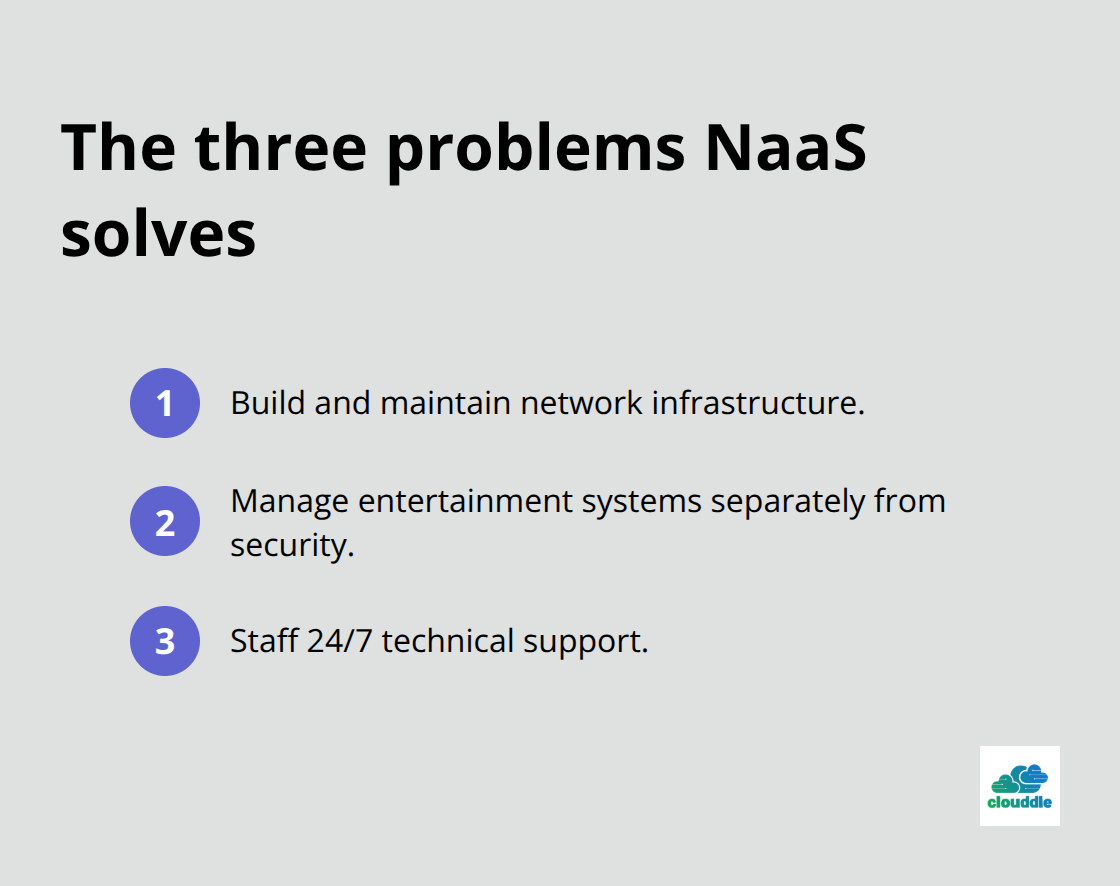
Senior living communities struggle with three expensive, time-consuming problems that NaaS eliminates: building and maintaining network infrastructure, managing entertainment systems separately from security, and staffing 24/7 technical support. Instead of owning equipment that depreciates, hiring IT personnel, and paying for separate vendors for Wi-Fi, cable TV, and security monitoring, communities shift to a service model where the provider handles everything under one contract.
The NaaS market will reach $39.96 billion by 2026, driven by this exact shift-organizations recognizing that OpEx subscriptions beat CapEx ownership. For senior living, this means zero capital expenditure on routers, switches, access points, or cellular equipment. Budget meetings no longer focus on whether to replace aging hardware. Communities stop choosing between upgrading Wi-Fi or funding other operational needs.
How Unified Management Transforms Operations
The practical advantage extends far beyond cost reduction. Croasdaile Village deployed 570 access points and 121 switches across their 100-acre campus-infrastructure that would have required hiring permanent IT staff to manage. Instead, centralized management through a single controller handles everything, and the service provider manages updates, troubleshooting, and 24/7 monitoring. When a resident’s telehealth appointment drops or a staff member can’t receive a critical alert, the support team responds immediately rather than waiting for an on-call technician. Senior living communities operate 24 hours daily with residents who depend on connectivity for health monitoring and emergency communication. Legacy networks fail at night. Modern NaaS solutions do not.
Why Bundled Services Matter for Senior Living
The bundled approach eliminates the coordination nightmare of separate vendors. One contact handles networking problems, connectivity outages, and security breaches rather than juggling contracts with three different companies. For operators managing multiple buildings with different resident needs, unified management reduces operational complexity significantly. Enterprise-grade security protects vulnerable populations through capabilities that individual communities couldn’t afford to build themselves. This integrated model means staff spend less time troubleshooting vendor disputes and more time supporting residents. The shift from capital ownership to service consumption also means communities access the latest technology without waiting for budget cycles or depreciation schedules. When new security threats emerge or connectivity demands increase, the service provider updates systems across the entire campus automatically. This flexibility proves essential as senior living communities expand services like remote monitoring, telehealth, and smart-home controls-each requiring more bandwidth and security than legacy networks can provide. The next section examines how this modern infrastructure directly improves the resident experience and operational efficiency that communities need to attract and retain both residents and staff.
How NaaS Transforms Daily Operations in Senior Living
Connectivity failures in senior living aren’t abstract problems. When a resident’s telehealth appointment drops because Wi-Fi coverage fails on the third floor, that’s a missed medical consultation. When staff can’t receive fall-detection alerts because cellular signals don’t penetrate the basement activity center, that’s a safety gap. Croasdaile Village deployed 570 access points and solved these concrete issues by delivering 1 Gbps connectivity across their entire 100-acre campus, eliminating dead zones in cottages, common areas, and outdoor spaces. The result wasn’t just faster internet. Staff received reliable alerts over both Wi-Fi and cellular networks, residents could stream medical consultations without interruption, and smart-home controls functioned consistently.
Eliminating Operational Friction Through Reliable Coverage
This level of coverage reduces operational friction significantly. When networks work reliably, staff spend less time troubleshooting connectivity and more time on direct care. Residents experience fewer frustrations when calling family members or accessing entertainment services. The practical impact extends to recruitment and retention. Senior living communities competing for staff know that poor technology creates workplace frustration. Modern connectivity attracts younger staff members who expect reliable networks, making facilities more competitive in tight labor markets.
Protecting Vulnerable Residents With Enterprise Security
Senior living residents represent a vulnerable population targeted by fraud and identity theft at higher rates than other age groups. Legacy networks lack the security infrastructure to prevent breaches, leaving resident medical records and financial information exposed. NaaS solutions integrate enterprise-grade security capabilities that individual communities couldn’t afford to build independently. Multi-factor authentication, encryption in transit and at rest, and next-generation firewalls become standard features rather than premium add-ons.
When a resident’s telehealth provider sends sensitive health data across the network, encryption protects that information automatically. When staff members access resident records from multiple locations, centralized access controls prevent unauthorized viewing. The provider manages security updates continuously, patching vulnerabilities before attackers can exploit them. Communities don’t wait for quarterly security audits or budget cycles to address threats.
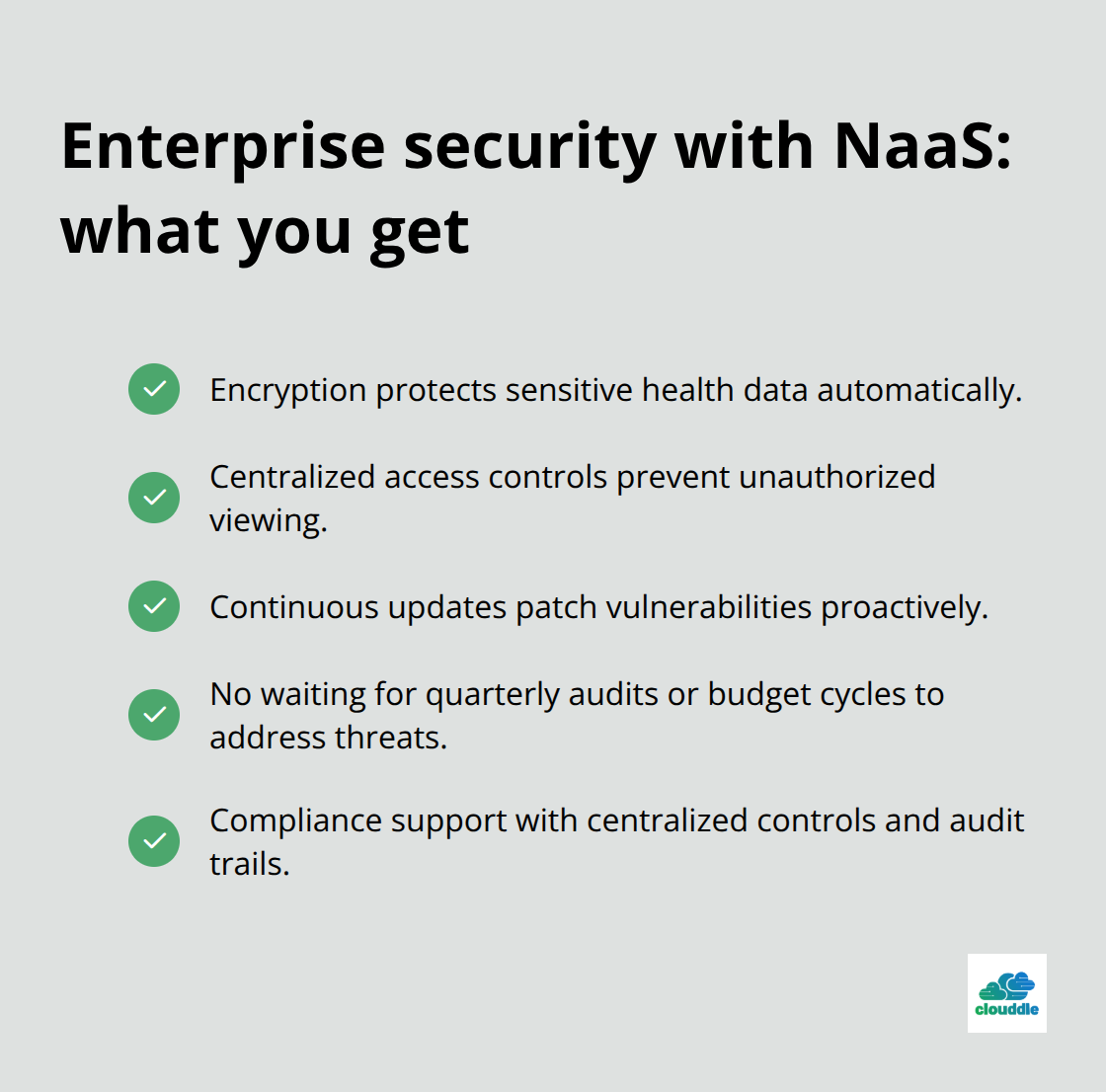
This proactive approach matters because regulatory compliance in senior living carries real consequences. Violations of privacy regulations result in fines and reputation damage that directly impact occupancy and recruitment. Communities operating modern NaaS networks demonstrate compliance through centralized security controls and audit trails that regulators expect.
Simplifying Operations With Unified Management
Managing separate vendors for Wi-Fi, entertainment systems, and security creates operational headaches. When a resident reports poor internet speed, facilities staff must contact the Wi-Fi vendor. When a security camera stops recording, they contact another vendor. When connectivity issues affect both systems simultaneously, troubleshooting becomes a coordination nightmare between companies with different response times and priorities.
NaaS consolidates these functions under one provider with unified management. River Landing, a 56-apartment senior living community, simplified operations dramatically through centralized network management. When issues arise, one support team handles resolution rather than juggling multiple vendor contacts. This unified approach reduces mean time to resolution because the provider sees the complete picture of what’s happening across all systems. Staff training becomes simpler when everyone uses a single management interface instead of learning multiple platforms.
Communities can scale services without adding IT personnel because the provider handles infrastructure management. As senior living communities expand telehealth programs, add smart-home features, or deploy resident monitoring devices, the network scales automatically without requiring capital investment in new equipment or hiring additional technical staff.
Final Thoughts
Senior living communities that adopt NaaS for senior living stop treating connectivity as a luxury and start treating it as operational infrastructure. The shift from capital ownership to service consumption removes the financial barriers that prevented communities from modernizing, and staff attract and retain more easily when they work in facilities with modern infrastructure. Residents choose communities that offer seamless connectivity for telehealth, entertainment, and staying connected with family, while operators focus on care delivery instead of managing vendor relationships and troubleshooting network problems.
Future growth requires networks that scale without proportional increases in IT staffing or capital expenditure. Smart-home controls, remote monitoring devices, and expanded telehealth services demand bandwidth and security that legacy networks cannot provide, and NaaS solutions expand with your community automatically as you add buildings, residents, or services. The provider expands capacity without requiring new equipment purchases or hiring additional technical personnel, which means your team can redirect resources toward resident care and community development.
We at Clouddle understand that senior living operators need solutions that simplify operations while protecting vulnerable residents. Our networking and connectivity services combine infrastructure, security, and support into unified solutions designed specifically for senior living communities, with 24/7 support and flexible contracts that eliminate upfront capital investment.


0 Comments