
Hotels lose guests and revenue when Wi-Fi fails. A spotty connection frustrates travelers, damages your reputation, and drives bookings to competitors.
Wi-Fi analytics for hotels transforms raw network data into actionable insights that directly improve guest satisfaction. At Clouddle, we’ve seen firsthand how properties that monitor and act on connectivity metrics outperform those that don’t.
Why Hotels Must Act on Wi-Fi Data Now
Guest Expectations Have Shifted to Non-Negotiable Standards
Guest expectations for connectivity have shifted from nice-to-have to non-negotiable. According to hotel industry research, 92% of guests cite strong WiFi connectivity as their top priority when booking accommodations, and 84% say free WiFi is a key driver in their booking decisions. These numbers reveal something critical: guests evaluate your property partly on network quality before they even arrive. The 2025 State of Hotel Guest Tech Report found that 35% of Gen Z guests say WiFi speed is more important than bed comfort, signaling a fundamental change in what travelers value during their stay. When your network fails, you’re not just frustrating guests in the moment-you’re damaging the decision-making process for future bookings.
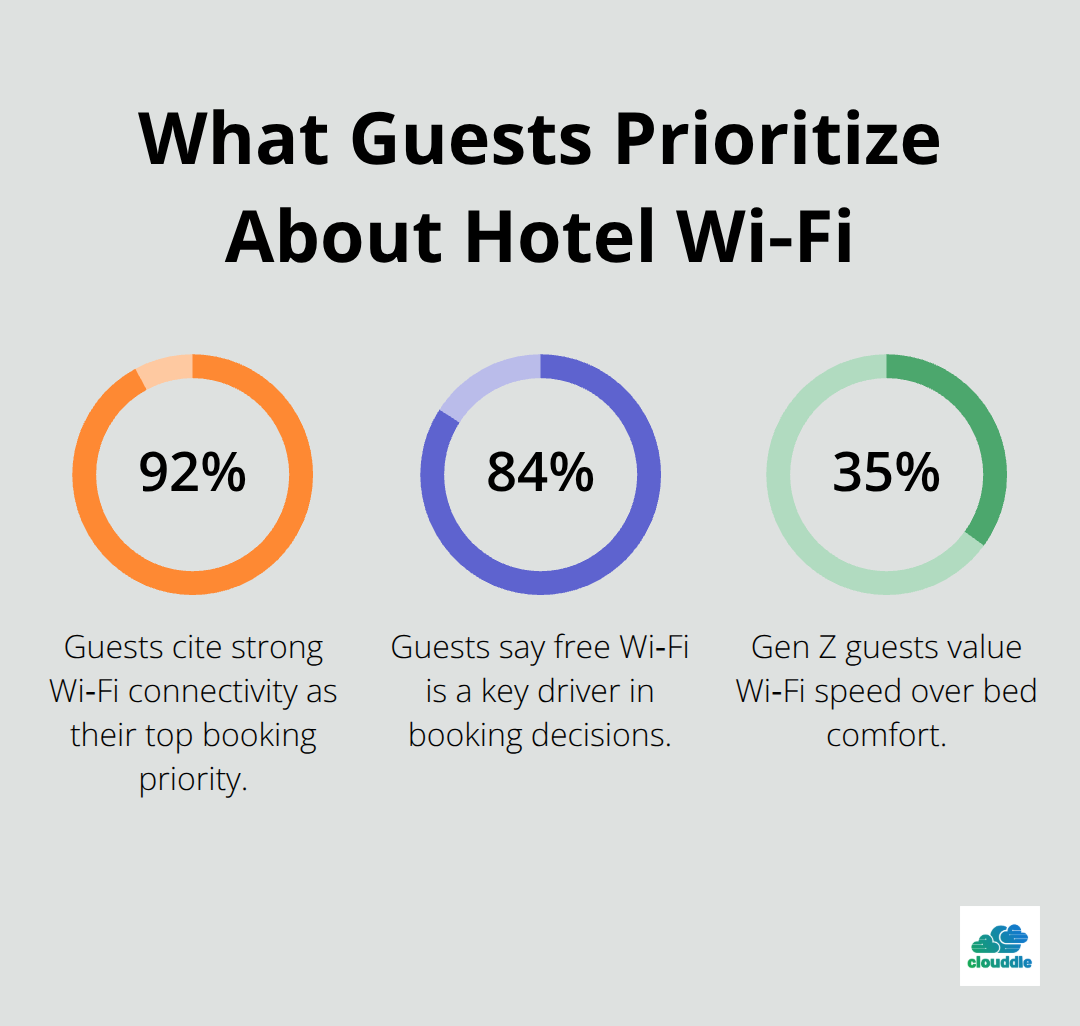
Roughly 70% of travelers will not return to hotels with subpar connectivity, making this a direct threat to occupancy and loyalty.
Wi-Fi Data Exposes Hidden Guest Behavior Patterns
Wi-Fi data reveals patterns about guest behavior that traditional management methods miss entirely. Modern analytics platforms track two critical data types: authorized data from logged-in guests and presence data from detected devices without login. This dual approach shows you exactly where guests congregate, how long they stay in specific areas, and when network demand peaks. For instance, analytics expose whether guests cluster in lobbies, conference spaces, or outdoor areas-insights that directly inform staffing, outlet operations, and space design.
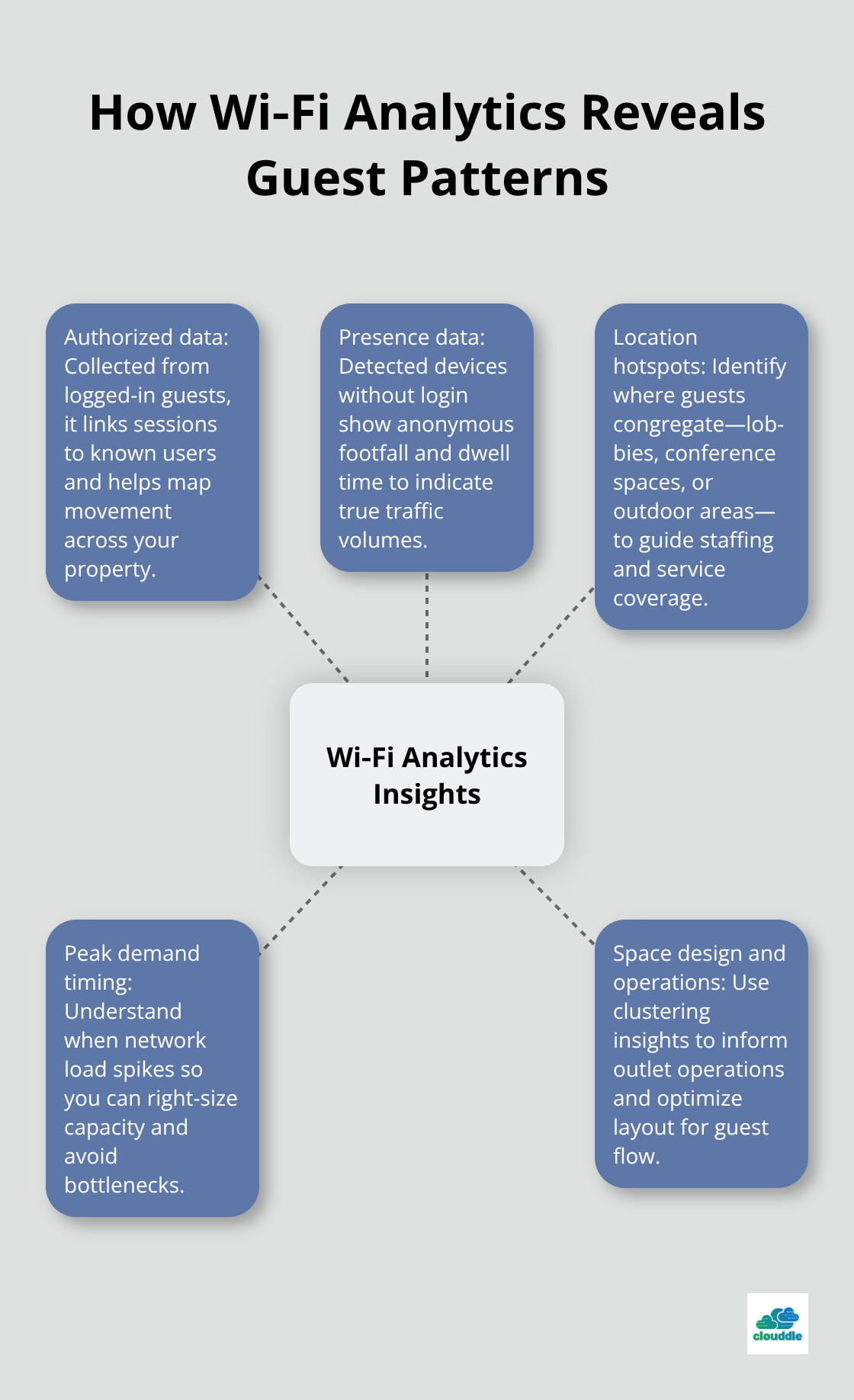
When you combine WiFi analytics with your property management system, you identify guest movement patterns that reveal which amenities drive engagement and which sit underutilized. Revenue management teams can use this data to optimize pricing based on observed demand intensity, while marketing teams can identify the exact moment to send targeted promotions near the spa or restaurant.
Network Failures Trigger Revenue Loss and Reputation Damage
Poor network performance directly translates to lost revenue and damaged reputation because guests share negative WiFi experiences online. Research shows 48% of guests cite online reviews as the main factor in choosing a hotel, and connectivity complaints appear prominently in those reviews. A single incident of network failure can trigger cancellations, negative ratings, and word-of-mouth damage that extends far beyond that one guest. Hotels that monitor network health proactively prevent these reputation crises before they happen. This is where actionable insights from analytics matter most-they allow you to spot performance issues before guests notice them and take corrective action in real time.
How Wi-Fi Analytics Transform Guest Experience Into Revenue
Real-Time Visibility Stops Problems Before Guests Notice Them
Real-time network monitoring across your property reveals exactly where guests experience problems. Most hotels operate without visibility into their network’s actual performance, which means issues go undetected until guests complain in reviews. Analytics platforms track bandwidth consumption, connection stability, and signal strength across lobbies, conference rooms, guest floors, and outdoor areas simultaneously. When you see that your lobby WiFi drops to 20 Mbps during peak checkout hours while guest rooms maintain 80 Mbps, you’ve identified a specific bottleneck worth addressing. This expectation means your analytics dashboard must surface problems within minutes, not hours. Hotels using analytics-driven monitoring catch performance degradation before guests experience it, preventing the negative reviews that cost you far more than the infrastructure upgrade itself.
High-Density Areas Demand Strategic Capacity Planning
Connectivity bottlenecks typically emerge in high-density areas where dozens of devices connect simultaneously. Conference spaces, lobbies, and outdoor patios experience the worst performance because access point placement was designed for guest rooms, not crowd density. Analytics show you exactly when and where these bottlenecks occur, allowing you to prioritize capacity investments where they deliver measurable ROI. You can allocate resources to the spaces that matter most to your guests and your bottom line, rather than spreading upgrades across your entire property.
Personalization Drives Guest Spending Through Data-Driven Segmentation
Analytics enable personalization that directly increases guest spending. When your system detects a business traveler connecting during weekday mornings, you can automatically provision higher bandwidth for their VPN needs, while leisure guests in the evening receive optimized access for streaming. Personalization through WiFi analytics provides the first-party data foundation for targeted strategies. Integration with your property management system means check-in can automatically configure optimal settings for each guest segment, and your captive portal becomes a revenue channel rather than just a login screen. Hotels that tie WiFi analytics to targeted promotions during peak times see measurable increases in restaurant and spa bookings because they reach guests at the exact moment they’re in those physical spaces. This timing transforms casual browsing into actual purchases, turning network data into direct revenue impact.
How to Start Measuring and Acting on Wi-Fi Performance
Establish Baseline Metrics That Connect to Your Business Goals
The gap between hotels that leverage Wi-Fi analytics and those that don’t comes down to one thing: measurement. Hotels operating without visibility into their network performance react to guest complaints instead of preventing them. Track bandwidth consumption across peak and off-peak hours, connection stability by location, and device density in high-traffic areas like lobbies and conference spaces. Most analytics platforms capture this data automatically once deployed, but the real work starts when you decide which metrics directly connect to your business goals.
For a property focused on conference bookings, bandwidth availability during peak meeting times matters more than evening leisure guest streaming speeds. For a resort, outdoor area connectivity and dwell time analytics reveal which amenities drive engagement. The 2025 State of Hotel Guest Tech Report shows that 39% of guests would use a chatbot to request Wi-Fi assistance, indicating that your staff needs instant access to performance data to respond quickly when issues arise.
Display Network Health in Real Time, Not Weekly Reports
Implement a dashboard that displays current network health, recent incidents, and guest-impacted areas in real time. Staff members monitoring network performance during peak hours need immediate visibility into problems, not buried data from weekly reports. Real-time alerts allow your team to spot performance degradation within minutes and take corrective action before guests experience connectivity failures.
Assign specific staff members to monitor network dashboards during peak hours and establish clear escalation procedures when performance drops below acceptable thresholds. Create a feedback loop where frontline staff report guest connectivity complaints directly to whoever manages your network data. This direct communication channel prevents problems from slipping through the cracks.
Select Platforms That Integrate Quickly and Automatically Flag Issues
Selecting an analytics platform requires looking beyond feature lists to implementation speed and integration capability. Most modern platforms integrate with your property management system within 24 to 48 hours, which means you start collecting actionable data immediately rather than months into a deployment. Prioritize platforms that automatically flag performance degradation instead of requiring manual investigation, and those that connect directly to your PMS so guest data enriches network insights.
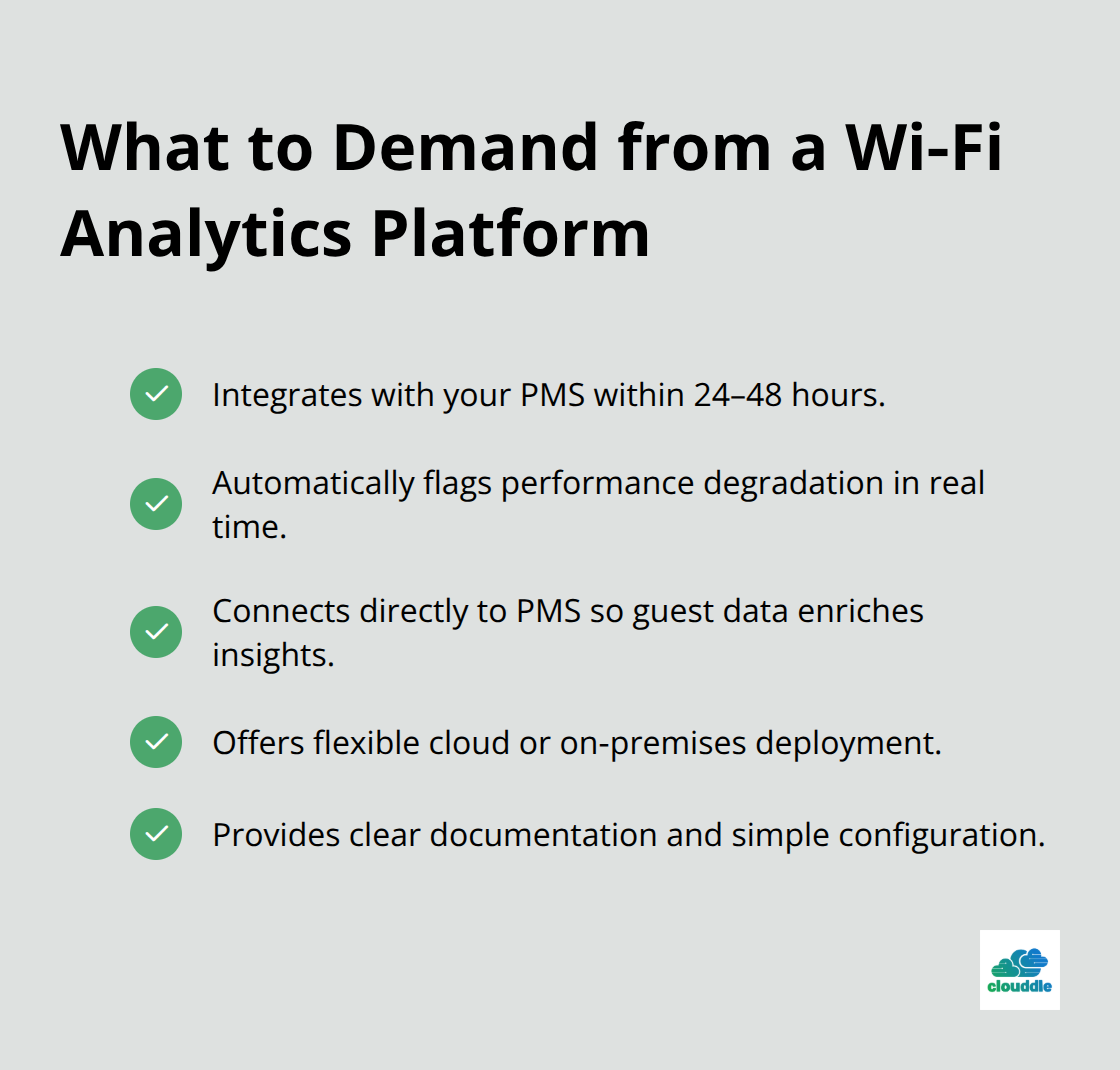
Platforms that offer flexible deployment options (whether cloud-based or on-premises) allow you to match the solution to your property’s specific infrastructure and IT capabilities. Look for vendors that provide clear documentation and straightforward configuration processes to accelerate your go-live timeline.
Train Staff to Interpret Alerts and Respond to Bottlenecks
Staff training matters far more than most hotels realize because the best analytics platform fails if your team doesn’t know how to interpret alerts or respond to bottleneck notifications. Your front desk, marketing, and operations teams all benefit from understanding how network data impacts their daily work. Front desk staff need to know how to troubleshoot basic connectivity issues and escalate complex problems. Marketing teams need to understand how guest location data informs targeted promotions. Operations teams need to recognize when network performance signals the need for infrastructure upgrades.
Hotels that treat Wi-Fi analytics as a cross-functional responsibility see faster problem resolution and better ROI because multiple departments act on the same data. When your entire team understands the connection between network performance and guest satisfaction, accountability spreads across the organization rather than resting on a single IT person.
Final Thoughts
Wi-Fi analytics for hotels transforms network data into competitive advantage that separates high-performing properties from those losing guests to competitors. Hotels that act on connectivity insights gain measurable results: faster problem resolution, higher guest satisfaction scores, and direct revenue increases from personalized services and targeted promotions. Properties investing in real-time visibility today already outperform those waiting for guest complaints to surface problems.
Guests now expect seamless connectivity as a baseline standard, not a differentiator, and your network performance directly shapes occupancy and loyalty. When your infrastructure performs reliably and your team responds instantly to issues, you meet expectations-when you use analytics to personalize experiences and optimize operations, you build loyalty that translates to repeat bookings and positive reviews. The data confirms this: 70% of travelers won’t return to hotels with poor connectivity, while those with strong, analyzed networks see measurable improvements in guest lifetime value.
We at Clouddle understand that implementing Wi-Fi analytics requires reliable infrastructure, seamless integration with your existing systems, and ongoing support to succeed. Our managed networking solutions combine enterprise-grade technology with 24/7 support, allowing you to focus on guest experiences while we handle network performance. Explore how Clouddle can support your property’s growth and transform your network into a lasting competitive advantage.


0 Comments